A balanced jaw does more than shape the profile. It supports the bite, influences how the lips rest, affects breathing space, and plays a major role in overall facial harmony. That is why many patients asking how does cosmetic jaw surgery work are also trying to understand a deeper question: is this procedure only about appearance, or can it improve function as well?
In many cases, cosmetic jaw surgery sits at the intersection of both. A jaw that appears too prominent, too retruded, too long, too short, or asymmetrical may also contribute to bite problems, speech issues, lip incompetence, strain on the jaw joints, or difficulty chewing comfortably. The surgical plan is therefore not simply about changing the shape of the face. It is about repositioning the facial bones in a controlled, medically planned way so the result looks natural and functions properly.
How does cosmetic jaw surgery work in practice?
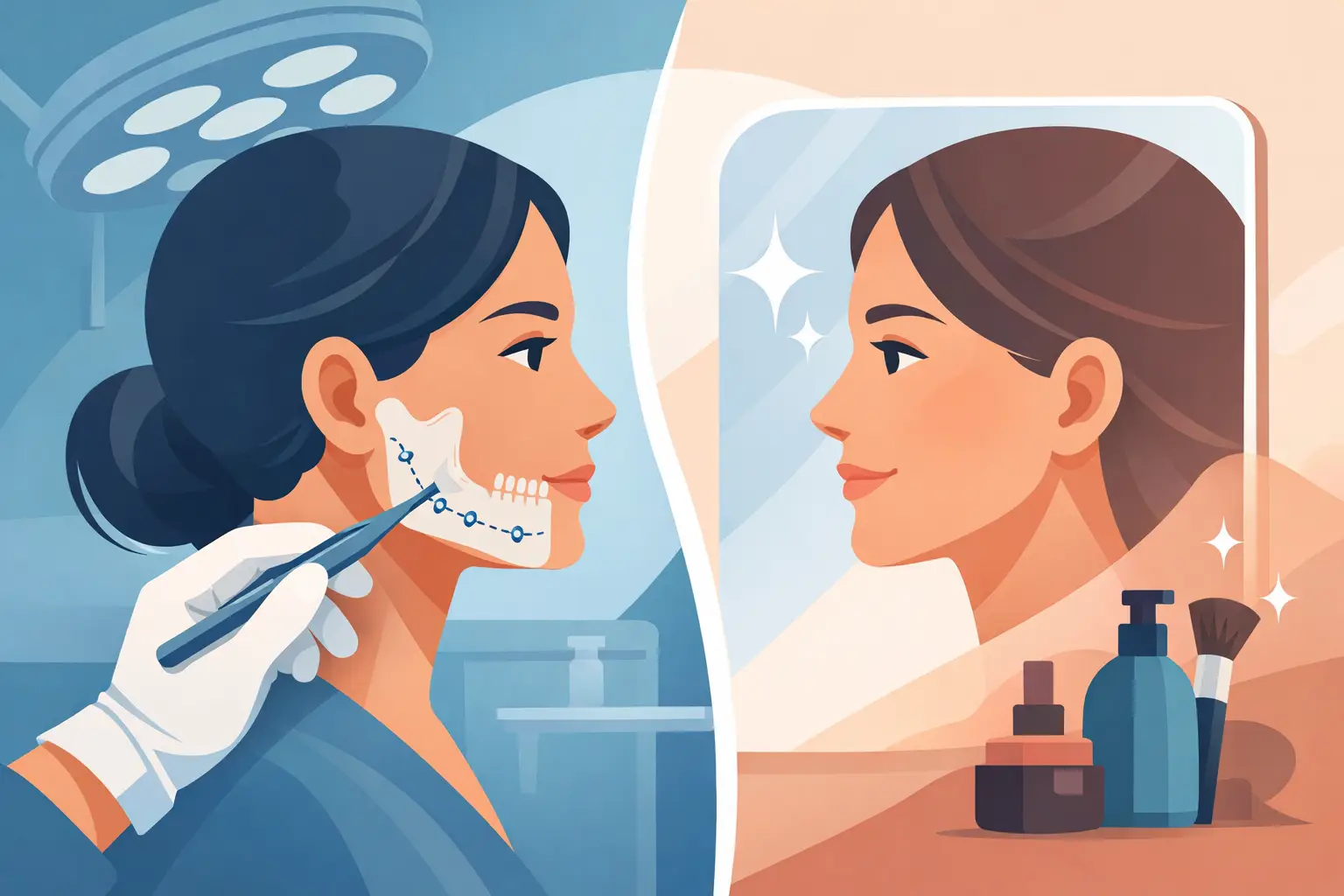
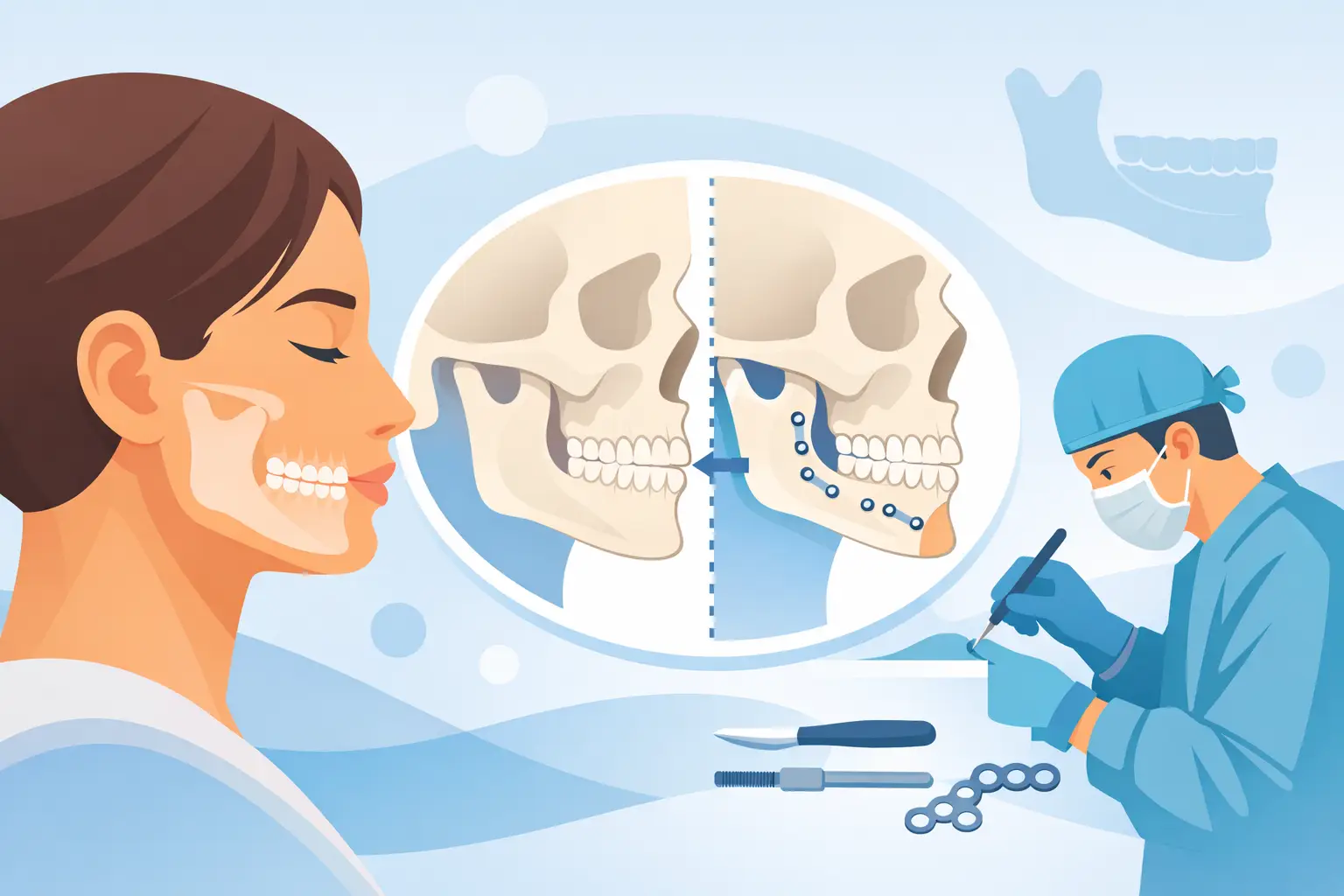
Cosmetic jaw surgery works by moving one or both jaws into a more favorable position. Depending on the problem being treated, the upper jaw, lower jaw, chin, or a combination of these structures may be surgically adjusted. The goal is to improve facial proportions while maintaining or improving the way the teeth meet, the airway functions, and the soft tissues drape over the underlying bone.
This is not a surface-level treatment. The surgeon works on the facial skeleton, which is why detailed diagnosis and planning are essential. Before any operation is scheduled, the patient undergoes a comprehensive evaluation that usually includes clinical examination, dental and facial assessment, photographs, scans, and bite analysis. If orthodontic treatment is needed, that is coordinated as part of the broader plan.
A key point many patients do not realize is that cosmetic jaw surgery is highly individualized. Two people may both feel they have a “weak jawline,” but the reason may be very different. One patient may have a small lower jaw. Another may have a prominent upper jaw, a recessed chin, or an imbalance between jaw position and dental alignment. The treatment only works well when the underlying cause has been correctly identified.
The planning stage matters as much as the operation
The most successful outcomes begin long before surgery. Planning is where the surgeon determines how much movement is needed, which jaw segments should be repositioned, and how those changes will affect both appearance and function.
This stage usually includes analysis of facial proportions from the front and side, evaluation of the smile line and lip support, and study of how the upper and lower teeth fit together. Three-dimensional imaging is often used to assess bone anatomy and simulate surgical movements with a high level of precision. For patients with asymmetry, this is especially important because small differences in bone position can have a noticeable effect on facial balance.
If orthodontics is part of treatment, the teeth may need to be aligned before surgery. This can surprise patients, because the bite may temporarily look worse before it is corrected surgically. That does not mean the treatment is off track. It often means the teeth are being placed in their proper positions so the jaws can then be moved accurately.
Good planning also includes discussion of limitations. Surgery can improve structure and proportions significantly, but it does not create a completely different face. Soft tissue thickness, skin elasticity, age, and natural anatomy all influence the final result. An experienced maxillofacial surgeon will explain what is realistic rather than promise perfection.
What actually happens during surgery?
Most cosmetic jaw procedures are performed under general anesthesia in a hospital setting. The exact technique depends on whether the upper jaw, lower jaw, chin, or multiple areas are being corrected.
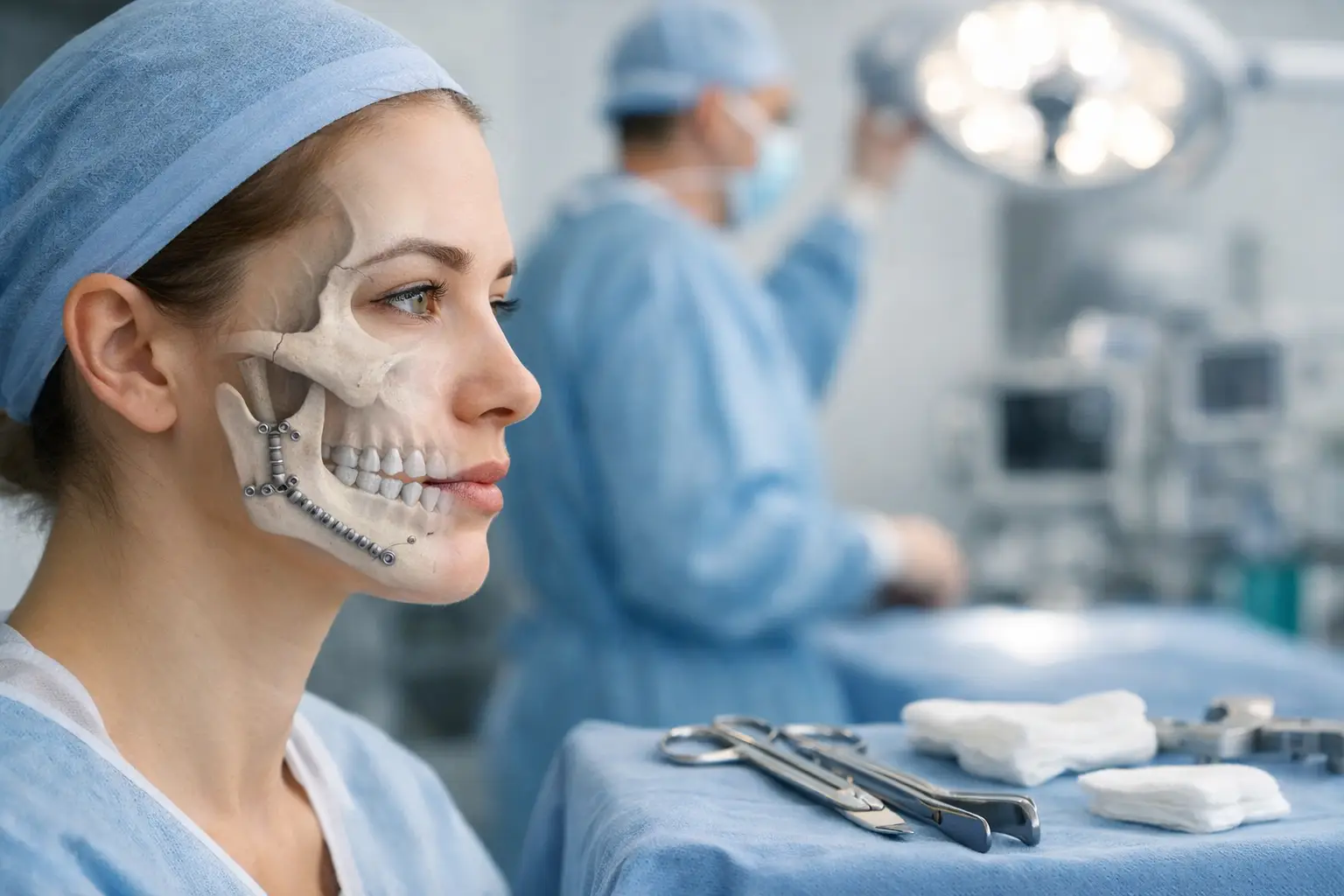
For upper jaw surgery, the bone of the maxilla is carefully mobilized and repositioned. This may be done to correct vertical excess, improve projection, reduce gum show, or address asymmetry. For lower jaw surgery, the mandible is cut in a controlled fashion and moved forward, backward, or rotated into a more balanced position. If chin position is also contributing to the profile, genioplasty may be performed to reshape or reposition the chin independently.
The bones are secured in their new positions using small plates and screws designed for facial surgery. In most cases, incisions are placed inside the mouth, which helps avoid visible external scars. Once the jaws are stabilized, the soft tissues settle gradually over the new bony framework.
Although many people think of cosmetic jaw surgery as a purely aesthetic operation, the surgical movements must respect function at every step. The surgeon is not simply chasing a stronger profile or slimmer lower face. The bite, the airway, the jaw joints, and long-term stability all have to be considered together.
Cosmetic goals and functional goals often overlap
One of the most important things to understand about how cosmetic jaw surgery works is that facial aesthetics cannot be separated completely from anatomy and function. A beautiful result is not only about a sharper side profile. It is about proportion, symmetry, support, and stability.
For example, advancing a retruded lower jaw may improve chin projection and jawline definition, but it may also create a better bite relationship and in selected cases improve airway space. Correcting an overgrown upper jaw may reduce excessive gum display and lengthen facial harmony, while also addressing lip closure and occlusal imbalance. Repositioning an asymmetrical jaw may make the face look more even, but it can also reduce uneven bite forces.
This is why specialist evaluation matters. If a patient is treated based only on appearance without understanding the skeletal relationship, the result may be incomplete or unstable. At a specialist practice such as Aesthetic Reconstructive Jaw Surgery, treatment planning is centered on both appearance and long-term structural function.
Recovery is a process, not a single event
After surgery, swelling is expected and usually most noticeable in the first one to two weeks. Bruising, temporary stiffness, and a sense of facial tightness are also common. Early changes in appearance can be misleading because the tissues need time to settle.
Most patients return to light activities before they feel fully recovered. That is normal. Initial healing happens relatively quickly, but refined healing continues for months. Numbness in areas of the lips, chin, or cheeks may occur depending on the procedure and typically improves over time, although the timeline varies.
Diet is usually modified during early healing, and follow-up visits are important to monitor bone stability, bite position, and overall recovery. If orthodontic treatment is part of the plan, braces or aligner-based finishing may continue after surgery to refine the final bite.
Patients often ask when they will see the final result. The honest answer is that it depends. Major swelling improves within weeks, but final contour and soft tissue adaptation can take several months. Patience is part of the process.
Who is a good candidate?
Not everyone who dislikes their jawline needs jaw surgery. Some patients are better suited to less invasive options, while others have true skeletal discrepancies that cannot be corrected with fillers, dental treatment alone, or cosmetic contouring.
A good candidate typically has a concern that stems from the underlying jaw structure rather than just soft tissue fullness or minor cosmetic preference. They should also be medically suitable for surgery and willing to commit to proper assessment, recovery, and in some cases orthodontic treatment.
Older adolescents may be considered once facial growth is sufficiently complete. Adults of many ages can also be candidates, provided the treatment goals are appropriate and the health profile supports surgery.
The most productive consultation is one where the patient explains both what they see and what they feel. Concerns about profile, asymmetry, bite strain, mouth breathing, or difficulty chewing all provide useful clues. The surgeon can then determine whether jaw repositioning is the right solution or whether another procedure would be more suitable.
Risks, trade-offs, and realistic expectations
Like any major operation, cosmetic jaw surgery carries risks. These can include bleeding, infection, delayed healing, nerve disturbance, relapse, bite changes, and the possibility of revision treatment in selected cases. There are also practical trade-offs, including recovery time, swelling, temporary dietary restrictions, and the need for careful follow-up.
That does not mean patients should be fearful, but they should be well informed. The best decisions are made when the benefits, limitations, and alternatives are discussed clearly. Cosmetic improvement alone is not enough reason to overlook whether the plan is stable, safe, and appropriate.
The right candidate usually feels reassured not by hearing that surgery is simple, but by understanding that it is precise, carefully planned, and tailored to their anatomy.
If you are considering treatment, the most helpful next step is not to compare your face to someone else’s result. It is to learn what your own jaw structure is doing, what can realistically be changed, and whether a specialist surgical plan can bring your appearance and function into better alignment.