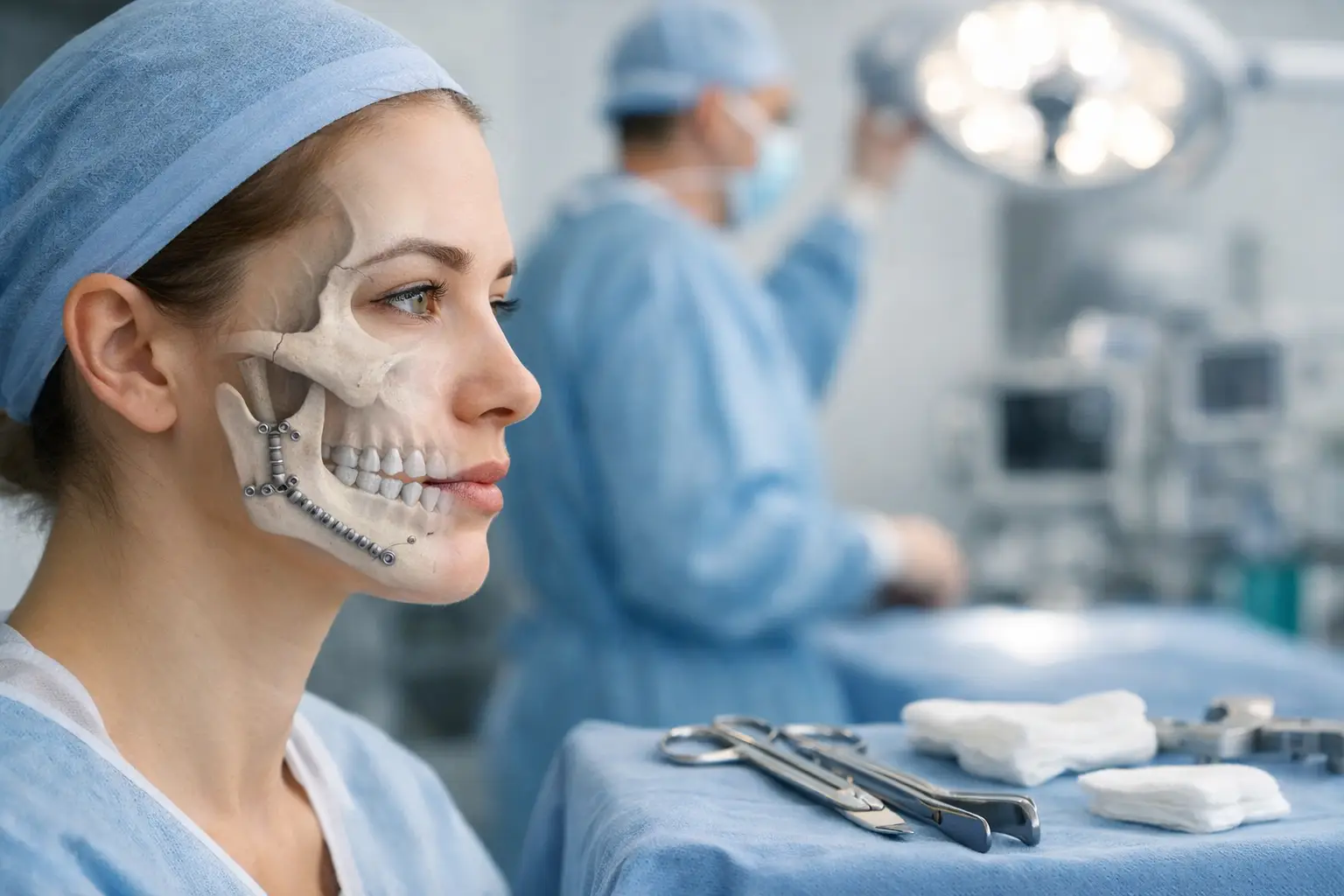
Orthognathic surgery corrects severe jaw misalignments that cannot be addressed through orthodontics alone. The timing of this surgery—whether performed during adolescence or adulthood—significantly impacts surgical planning, treatment duration, and recovery protocols. Each age group presents distinct anatomical considerations, healing patterns, and lifestyle factors that surgeons must address.
The fundamental surgical techniques remain consistent across age groups: repositioning the maxilla (upper jaw), mandible (lower jaw), or both to achieve proper alignment. However, growth status, bone density, and psychosocial factors create important distinctions in how surgeons approach treatment for adolescents versus adults.
Growth Considerations and Timing
Skeletal maturity determines surgical timing more than chronological age. Female patients typically reach jaw growth completion between ages 14-16, while males continue growing until 17-21. Surgeons use hand-wrist radiographs or cervical vertebrae assessments to confirm growth cessation before proceeding.
Operating before growth completion may increase the risk of relapse, as remaining growth can potentially affect surgical corrections. The mandible particularly continues growing after other facial bones stop, making premature surgery problematic for Class III malocclusions (underbites). Conversely, waiting too long in severe cases may compromise facial development and psychological well-being during formative social years.
Adult patients present with fully matured skeletal structures, eliminating growth-related timing concerns. This stability allows immediate surgical planning once orthodontic preparation is complete. However, adults often present with compensatory dental positioning, periodontal issues, or previous dental work that complicates treatment planning.
Growth Modification vs Surgical Correction
Adolescents with developing jaws sometimes benefit from growth modification appliances before considering surgery. Functional appliances, headgear, or palatal expanders may reduce surgical complexity or eliminate the need entirely. These options become ineffective once growth ceases, making early intervention valuable for borderline cases.
Adults lack growth modification potential, making surgery the primary option for skeletal discrepancies. Some adults pursue surgery after unsuccessful teenage orthodontic camouflage treatment, where teeth were moved to mask underlying skeletal problems rather than addressing the root cause.
Pre-Surgical Orthodontic Preparation
Orthodontic decompensation—moving teeth into positions that temporarily worsen the bite but enable optimal surgical correction—takes 12-18 months in adolescents with healthy periodontium. Their robust periodontal ligaments and high cellular turnover facilitate efficient tooth movement.
Adult orthodontic preparation often extends to 18-24 months due to slower biological responses. Dense cortical bone, reduced blood supply, and potential periodontal compromise necessitate gentler forces and longer treatment times. Adults frequently require periodontal therapy before orthodontic movement begins.
Adolescent patients rarely present with missing teeth, extensive restorations, or implants that complicate orthodontic mechanics. Their intact dentitions allow straightforward bracket placement and predictable tooth movement patterns.
Adults commonly have missing teeth, bridges, implants, or extensive restorations that limit orthodontic options. Implants cannot be moved orthodontically, potentially requiring prosthetic replacement after surgery to match new jaw positions. Some adults may need pre-surgical extractions of compromised teeth, which can extend overall treatment time.
Surgical Procedures and Techniques
The core surgical procedures—Le Fort I osteotomy for maxillary advancement, bilateral sagittal split osteotomy (BSSO) for mandibular repositioning, and genioplasty for chin augmentation—apply to both age groups. However, differences in bone quality influence surgical execution.
Adolescent bone has lower density and higher cancellous-to-cortical ratios, facilitating easier osteotomies but requiring careful fixation to prevent displacement. Their thinner cortical plates may require adapted screw placement techniques, which may occasionally involve alternative fixation strategies.
Adult bone presents increased density and thicker cortical plates, requiring more aggressive instrumentation during osteotomies. This density provides strong screw purchase for rigid fixation but increases surgical time and may elevate the risk of unfavourable splits during BSSO procedures. Surgeons often modify techniques based on pre-operative imaging showing bone quality.
Condylar Considerations
Adolescent temporomandibular joints (TMJs) show greater adaptive capacity following mandibular surgery. Their condyles remodel more readily to accommodate new positions, reducing the risk of post-surgical TMJ dysfunction. However, undiagnosed juvenile arthritis or condylar resorption requires careful screening.
Adult condyles demonstrate limited remodelling capacity, making precise surgical positioning important. Pre-existing TMJ degeneration, common in adult orthognathic candidates, may necessitate simultaneous TMJ surgery or staged procedures. Some adults require custom TMJ replacements when severe degeneration precludes conventional orthognathic surgery.
Recovery Patterns and Healing
Adolescents often heal more quickly due to enhanced blood supply and cellular regeneration. Initial swelling peaks around day 3-4 and substantially resolves within 2-3 weeks. Adolescents commonly resume normal activities, including school, within 2-3 weeks post-surgery.
Bone consolidation occurs rapidly in adolescents, with radiographic evidence of healing visible within 6-8 weeks. Their robust periosteum (the membrane covering bone) promotes callus formation and remodelling. Full bone strength returns within 3-4 months, allowing earlier return to contact sports with appropriate protection.
Adult recovery follows a more protracted course. Peak swelling may persist 5-7 days with gradual resolution over 3-4 weeks. Many adults require 3-4 weeks to comfortably return to work, particularly in professional settings that require extensive speaking.
Adult bone healing proceeds more slowly, requiring 10-12 weeks for initial consolidation and 4-6 months for complete remodelling. Factors like smoking, diabetes, or osteoporosis further delay healing. Adults often experience prolonged facial tightness and require prolonged physical therapy to achieve optimal mouth opening.
Neurosensory Recovery
Manipulation of the inferior alveolar nerve during BSSO can cause temporary or permanent changes in sensation. Adolescents demonstrate enhanced nerve regeneration, with most regaining normal sensation within 6-12 months. Permanent numbness is less common in younger patients, though individual experiences vary.
Adults face higher risks of prolonged or permanent neurosensory deficits. Recovery may extend beyond 12 months, with some degree of permanent alteration common. Older adults (beyond 40) show particularly limited nerve regeneration capacity. Pre-surgical counselling must address realistic sensory outcomes based on age-related healing potential.
Psychological and Social Factors
Adolescents undergoing orthognathic surgery during high school or early college face unique social pressures. Timing surgery during summer breaks minimises academic disruption but may coincide with important social events. Pre-surgical orthodontic changes and post-surgical swelling occur during highly self-conscious developmental periods.
Adolescents often show psychological resilience and adaptation. Their primary motivations often include functional improvement and social acceptance. Family support typically remains strong, with parents managing appointments and recovery care. Many adolescents report that peer reactions are more positive than they initially anticipated.
Adults pursue surgery with different motivations, often emphasising functional concerns like sleep apnea, TMJ pain, or difficulty eating. Professional obligations create scheduling challenges, leading many adults to delay surgery due to work commitments. Recovery may coincide with career responsibilities or family caregiving duties.
Adult patients typically demonstrate greater psychological preparedness but may harbour unrealistic expectations about aesthetic outcomes. Some adults struggle with identity changes following dramatic facial modifications. Pre-surgical psychological screening helps identify patients requiring additional support.
Post-Surgical Orthodontics and Retention
Adolescent post-surgical orthodontics typically concludes within 6-8 months. Their responsive tissues allow efficient final detailing and settling. Retention protocols must account for potential late mandibular growth in males, which may occasionally require extended retention or overcorrection.
Adult finishing requires 8-12 months due to slower tooth movement and increased relapse tendency. Compromised periodontal support may limit final positioning options. Adults often require permanent retention with bonded retainers supplementing removable appliances.
Long-term Stability
Adolescents treated after growth completion typically experience good long-term stability when appropriate surgical techniques are used, though individual results may vary. Their adaptive capacity allows minor positional changes without functional compromise. Regular retention monitoring during the late teenage years identifies rare late growth spurts that require intervention.
Adult stability depends heavily on surgical technique precision and adequacy of fixation. Pre-existing TMJ issues or parafunctional habits like bruxism increase relapse risk. Some adults require secondary procedures for minor refinements, particularly for complex movements such as maxillary impaction or asymmetry correction.
💡 Did You Know?
Modern 3D surgical planning allows surgeons to simulate various jaw positions before surgery, helping patients visualize potential outcomes and enabling more precise surgical execution regardless of age.
What Our Orthognathic Surgeon Says
“When evaluating timing for orthognathic surgery, we consider multiple factors, including skeletal maturity, functional impact, and the patient’s readiness for treatment. For adolescent patients, assessing growth patterns and psychological preparedness is particularly important. We also explore whether growth modification approaches might be beneficial before considering surgery.
Adult patients often present with additional considerations, such as existing dental work, periodontal health, or prior orthodontic treatment. Each case requires an individualised treatment approach that addresses both functional goals and aesthetic concerns.
While younger patients tend to heal more rapidly, adult patients often bring strong motivation and commitment to the treatment process. With proper planning and realistic expectations, patients across all age groups can achieve successful outcomes. The key is thorough evaluation, clear communication, and comprehensive support throughout the treatment journey.”
Putting This Into Practice
- Schedule a comprehensive evaluation, including growth assessment, for adolescent patients showing signs of severe jaw discrepancy
- Consider growth modification options for younger patients before committing to surgical plans
- Ensure adult patients undergo a thorough periodontal evaluation before beginning pre-surgical orthodontics
- Plan surgical timing around major life events, academic schedules, or professional obligations
- Prepare age-appropriate recovery spaces and support systems based on patient needs
When to Seek Professional Help
- Difficulty biting or chewing food efficiently
- Chronic jaw or TMJ pain unresponsive to conservative treatment
- Sleep apnea is related to jaw positioning
- An open bite, where teeth don’t meet when the jaws close
- Severe overbite or underbite affecting facial aesthetics
- Speech difficulties related to jaw position
- Facial asymmetry causing functional or aesthetic concerns
Commonly Asked Questions
At what age should we first consult about potential jaw surgery?
Initial evaluation around age 7-8 identifies developing problems early. While surgery waits until growth completion, early assessment allows growth modification attempts and proper treatment timing. Some severe cases benefit from Phase I intervention to minimise eventual surgical complexity.
Can adults be “too old” for orthognathic surgery?
Many healthy adults are suitable candidates for orthognathic surgery across a wide age range, though healing rates typically slow with advancing age. The evaluation focuses on overall health, bone quality, and realistic expectations rather than on chronological age alone. Some patients successfully undergo the procedure in their 50s and 60s, though individual assessment is important.
How do recovery times really compare between teenagers and adults?
Teenagers typically return to normal activities within 2-3 weeks and experience complete healing by 3-4 months. Adults generally need 3-4 weeks for initial recovery and 4-6 months for full healing. Individual factors, such as overall health, significantly influence these timeframes.
What happens if an adolescent needs surgery but hasn’t stopped growing?
Surgeons may recommend waiting despite functional compromise, using interim appliances for symptom management. In severe cases affecting breathing or causing significant psychological distress, surgery proceeds with the understanding that secondary procedures may be necessary after growth completion.
Next Steps
Timing orthognathic surgery requires careful consideration of skeletal maturity, functional needs, and individual circumstances. While adolescents typically heal more quickly and exhibit greater adaptive capacity, adult patients can also achieve positive outcomes with appropriate planning and realistic expectations.
If you or your child experiences jaw misalignment affecting daily function or quality of life, our qualified oral and maxillofacial surgeons provide comprehensive evaluation and personalised treatment planning tailored to each patient’s unique needs and age-related considerations.