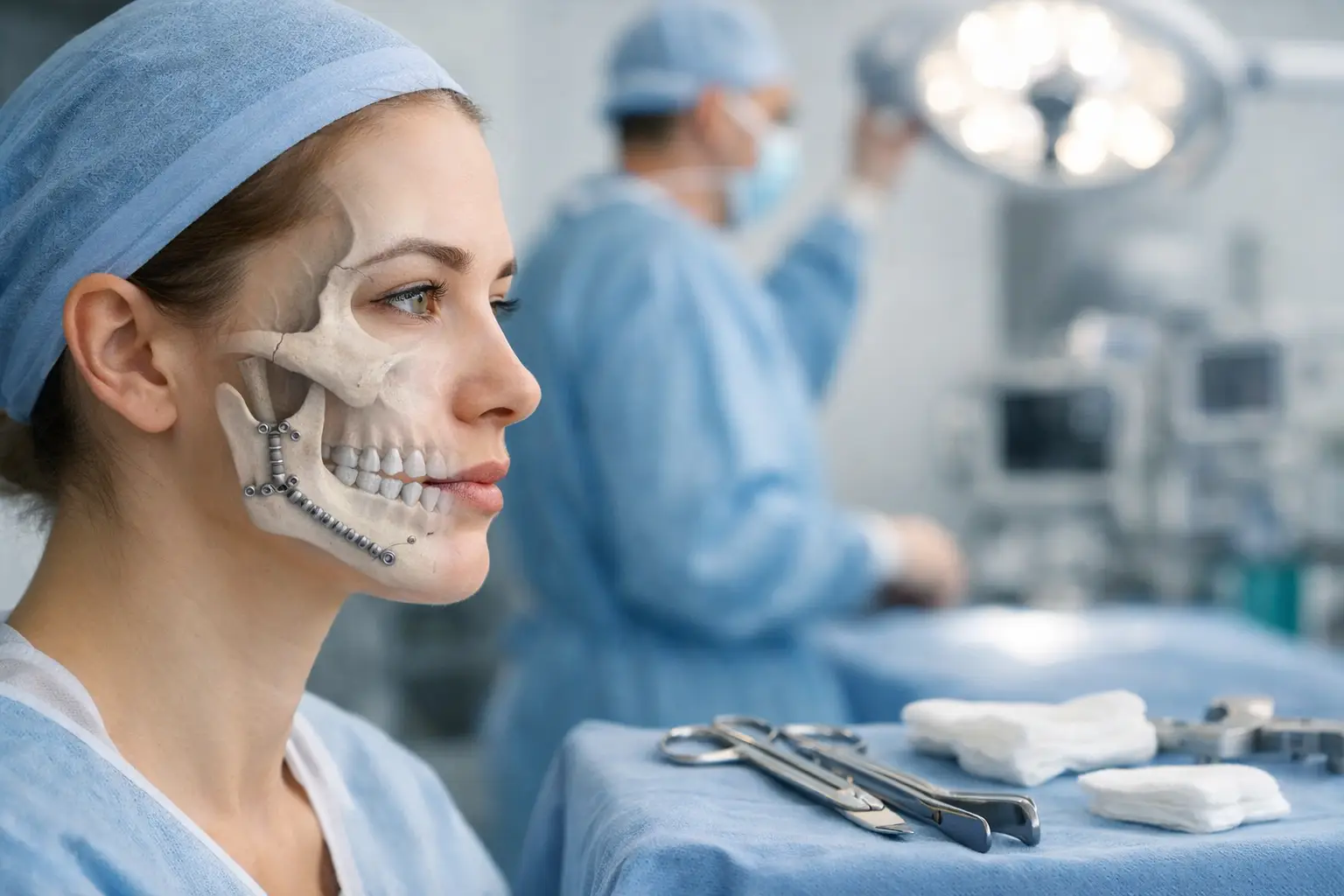
Jaw surgery creates anatomical changes that directly affect tongue position, oral cavity space, and the relationship between upper and lower teeth. These structural modifications alter how air flows during speech and where your tongue contacts surrounding tissues to form sounds. The extent of speech changes depends on the specific procedure performed, pre-existing speech patterns, and individual anatomical variations.
Orthognathic surgery repositions the maxilla (upper jaw), mandible (lower jaw), or both to correct skeletal discrepancies. This repositioning changes the oral cavity’s dimensions and alters the spatial relationships between speech articulators – the tongue, teeth, lips, and palate. Some patients experience immediate improvements in pronunciation, while others require adaptation periods as their neuromuscular system adjusts to the new jaw position.
Types of Jaw Surgery and Speech Impact
Maxillary Advancement (Upper Jaw Forward Movement)
Moving the upper jaw forward increases the space between the tongue and palate. This expanded cavity changes resonance patterns and affects sounds requiring tongue-palate contact. The /s/, /z/, /sh/, and /ch/ sounds often sound different immediately after surgery because the tongue must travel further to reach the palate.
Patients with severe Class III malocclusion (underbite) frequently report clearer speech after maxillary advancement. The procedure corrects the reverse overjet that previously forced compensatory tongue positions during speech. The tongue gains more natural movement space, reducing the lateral lisp patterns common with skeletal underbites.
Mandibular Setback (Lower Jaw Backwards Movement)
Mandibular setback procedures reduce the oral cavity’s anterior-posterior dimension. The tongue experiences less forward space, requiring positional adjustments for sounds like /t/, /d/, /n/, and /l/. These alveolar sounds depend on precise tongue-tip placement against the ridge behind the upper teeth.
The reduced space initially causes tongue crowding in some patients. Speech may sound slightly muffled or imprecise during the first few weeks as the tongue adapts to its new environment. Most patients develop compensatory movements within 4-6 weeks, though some benefit from targeted speech exercises.
Bimaxillary Surgery (Combined Upper and Lower Jaw)
Combined maxillary and mandibular procedures create significant oral cavity changes. The simultaneous repositioning affects all speech articulators’ relationships. Patients often experience temporary changes in both consonant precision and vowel quality.
The /r/ sound frequently requires the most adaptation after bimaxillary surgery. This complex sound involves specific tongue shaping within the oral cavity. The new jaw positions may initially make the habitual /r/ production feel unnatural, requiring conscious adjustment or formal speech therapy.
Speech Changes During Recovery Phases
Immediate Post-Surgical Period (Weeks 1-2)
Swelling, surgical splints, and limited jaw mobility significantly affect speech during initial recovery. Patients communicate through clenched teeth or minimal jaw opening. Consonants requiring lip movement (/p/, /b/, /m/) become difficult to produce clearly. Vowel sounds are distorted due to restricted jaw movement and the inability to achieve normal mouth opening.
Nasal resonance often increases temporarily as patients unconsciously direct more airflow through the nose. This hypernasality typically resolves as swelling decreases and normal oral breathing patterns return. Using written communication or text-to-speech apps helps reduce vocal strain during this period.
Early Recovery Phase (Weeks 3-6)
As swelling subsides and jaw movement increases, speech clarity improves progressively. Patients begin relearning optimal tongue positions for various sounds. The proprioceptive feedback from teeth, now in different positions, requires neural adaptation. Sounds that felt automatic before surgery may require conscious effort.
Fricative sounds (/f/, /v/, /s/, /z/) often normalise first because they depend less on precise tooth contact. Stop consonants (/p/, /b/, /t/, /d/, /k/, /g/) may remain imprecise until full jaw mobility returns. Regular jaw exercises prescribed by the surgical team enhance both movement range and speech clarity.
Long-term Adaptation (Months 2-6)
Most speech adaptations occur naturally through daily communication. The brain’s plasticity allows for efficient adjustments to the new oral anatomy. Patients who had pre-existing compensations due to jaw misalignment often discover improved articulation as they abandon old maladaptive patterns.
Some patients experience persistent changes in voice resonance due to altered oral and nasal cavity relationships. These changes typically enhance rather than detract from speech quality, creating a more balanced resonance pattern. Professional singers or actors may require specialised coaching to adjust to their modified vocal tract.
Speech Therapy Integration
Pre-Surgical Assessment
Speech-language pathologists evaluate existing speech patterns before surgery to identify compensatory behaviours developed due to skeletal discrepancies. Common compensations include tongue thrust during /s/ production, lateral tongue movement for /sh/ sounds, or lip pursing to achieve lip closure with severe open bites.
Documentation of pre-surgical speech helps predict post-surgical therapy needs. Patients with long-standing compensatory patterns often require more intensive intervention than those with newer malocclusions. The assessment also establishes baseline recordings for comparison during recovery.
Post-Surgical Intervention Timing
Formal speech therapy typically begins 6-8 weeks post-surgery, once initial healing is complete, and jaw mobility improves. Earlier intervention focuses on gentle exercises, maintaining tongue flexibility and preventing maladaptive compensations during the healing phase.
Therapy frequency varies based on individual needs. Patients experiencing mild, naturally resolving changes may need only 2-3 sessions for guidance. Those with persistent articulation differences or pre-existing speech disorders benefit from weekly sessions over 2-3 months.
Specific Therapy Techniques
Therapy addresses both articulatory placement and motor planning for speech. Ultrasound biofeedback helps patients visualise tongue position during sound production, accelerating correct placement learning. Electropalatography provides real-time feedback about tongue-palate contact patterns for precise consonant production.
Motor learning principles guide exercise progression. Therapists begin with isolated sound production, advance to syllables and words, then integrate corrected patterns into conversational speech. Home practice programs reinforce new motor patterns between sessions.
Factors Affecting Speech Outcomes
Pre-existing Speech Patterns
Patients with normal pre-surgical articulation typically experience minimal long-term speech changes. The neuromuscular system efficiently adapts to maintain established speech patterns within the new anatomical framework. Temporary changes during recovery rarely persist beyond 3 months.
Individuals with pre-existing speech disorders or compensatory patterns face more complex adjustments. Old habits must be unlearned while establishing new, anatomically appropriate patterns. This dual process extends the adaptation timeline but often results in significantly improved speech clarity.
Magnitude of Surgical Movement
Larger skeletal movements create more pronounced initial speech changes. Maxillary advancements exceeding 8mm or mandibular setbacks over 10mm typically require longer adaptation periods. The tongue needs more time to recalibrate spatial relationships with these substantial anatomical changes.
Minor surgical movements (less than 4mm) rarely cause noticeable speech changes beyond the immediate recovery period. The existing neuromuscular patterns accommodate small positional changes without requiring significant modification.
Age and Neuroplasticity
Younger patients generally adapt more quickly to post-surgical anatomical changes. Adolescent brains demonstrate greater neuroplasticity, allowing rapid establishment of new motor patterns. Adult patients may require more conscious effort and practice to achieve similar adaptations.
Children undergoing early jaw surgery must be monitored for speech development impacts. While young brains adapt readily, the changing oral anatomy during continued growth requires ongoing assessment to ensure normal speech development trajectories.
Common Speech Concerns and Solutions
Lisping After Surgery
New lisping patterns occasionally emerge when tongue-tip sounds contact teeth in different positions. The /s/ and /z/ sounds prove most susceptible to this change. Solutions include tongue placement exercises focusing on central airflow and avoiding lateral tongue escape.
Mirror work helps patients visualise the correct tongue position. Practising with a small straw held between the teeth guides central airstream direction. Most lisps resolve within 6-8 weeks with consistent practice.
Nasal Speech Quality
Altered palatal positioning may temporarily affect velopharyngeal closure patterns. This change creates excessive nasal resonance on oral sounds. Specific exercises targeting soft palate elevation help restore normal resonance balance.
Sustained /a/ sounds while monitoring nasal airflow teach appropriate velar positioning. Alternating nasal and oral sounds (/m/-/b/, /n/-/d/) reinforces the distinction between nasal and oral resonance. Persistent hypernasality beyond 3 months warrants professional evaluation.
Reduced Articulation Precision
Some patients report “mushy” or imprecise speech during recovery. This reduction in clarity stems from unconscious minimisation of articulatory movements to avoid discomfort. A gradual increase in articulatory excursion improves precision without causing strain.
Over-articulation exercises using consonant-vowel combinations rebuild normal movement patterns. Reading aloud with exaggerated clarity for 5-10 minutes daily accelerates the return to precise speech. Recording practice sessions allows self-monitoring of progress.
💡 Did You Know?
The tongue contains eight separate muscles working in complex coordination during speech. After jaw surgery, these muscles must recalibrate their movement patterns to maintain clear articulation within the modified oral space.
What Our Oral and Maxillofacial Surgeon Says
Jaw surgery’s impact on speech varies significantly between individuals. Patients with severe skeletal discrepancies often experience speech improvements as anatomical obstacles to normal articulation are removed. Patience during the adaptation phase and consistent practice with any exercises provided are important.
We coordinate closely with speech therapists when needed, particularly for patients with pre-existing speech concerns or those in professions requiring precise articulation. Most patients achieve their pre-surgical speech clarity within 3 months, with many reporting improved pronunciation of previously difficult sounds.
Early identification of speech concerns allows timely intervention. We encourage patients to communicate any persistent speech difficulties during follow-up appointments rather than assuming they will resolve independently.
Putting This Into Practice
- Record your speech before surgery using standard reading passages to establish a baseline for comparison during recovery
- Practice gentle tongue and lip exercises daily, starting week 2 post-surgery, to maintain flexibility without straining healing tissues
- Keep a speech diary noting specific sounds or words that feel different, and bring this information to follow-up appointments
- Use a mirror during speech practice to ensure symmetrical lip and jaw movements as mobility returns
- Set realistic expectations – most speech adaptations occur gradually over several months rather than immediately
When to Seek Professional Help
- Speech remains significantly unclear 8 weeks post-surgery despite healing progression
- New stuttering or hesitation patterns develop during recovery
- Persistent nasal speech quality beyond 3 months post-surgery
- Inability to produce specific sounds that were clear before surgery
- Voice fatigue or strain during normal daily communication
- Concerns about professional voice use (teaching, singing, broadcasting)
Commonly Asked Questions
How long before my speech returns to normal after jaw surgery?
Most patients achieve clear, comfortable speech within 6-12 weeks post-surgery. Initial improvements occur as swelling resolves and jaw mobility returns. Final subtle adjustments continue for several months as the neuromuscular system fully adapts to the new anatomy.
Will I need speech therapy after orthognathic surgery?
Many patients adapt naturally without formal therapy. Those with pre-existing speech compensations, significant surgical movements, or persistent articulation changes after 2 months benefit from speech therapy evaluation. Professional guidance accelerates the adaptation process.
Can jaw surgery improve chronic speech problems?
Skeletal malocclusions often force compensatory tongue positions that affect speech clarity. Correcting the underlying skeletal discrepancy removes these anatomical barriers to normal articulation. Many patients report clearer speech after surgery than they experienced pre-operatively.
What sounds are most affected by jaw surgery?
Sounds requiring precise tongue-tip placement (/s/, /z/, /t/, /d/, /n/, /l/) and those involving tongue-palate contact (/sh/, /ch/, /j/) show the most change initially. Vowel sounds may also change temporarily due to altered oral cavity dimensions.
Should I practice speaking during the wired-shut phase?
Gentle vocalisation through clenched teeth maintains vocal fold function without straining healing tissues. Focus on humming and vowel sounds rather than forcing consonant precision. Avoid extended conversations that cause fatigue or discomfort.
Next Steps
Jaw surgery’s influence on speech typically represents a temporary adjustment phase. Most patients develop clear, comfortable speech patterns that often exceed their pre-surgical clarity.
If you’re considering jaw surgery and have concerns about speech impacts, our Oral and Maxillofacial Surgeons can discuss your specific situation and expected outcomes during consultation.