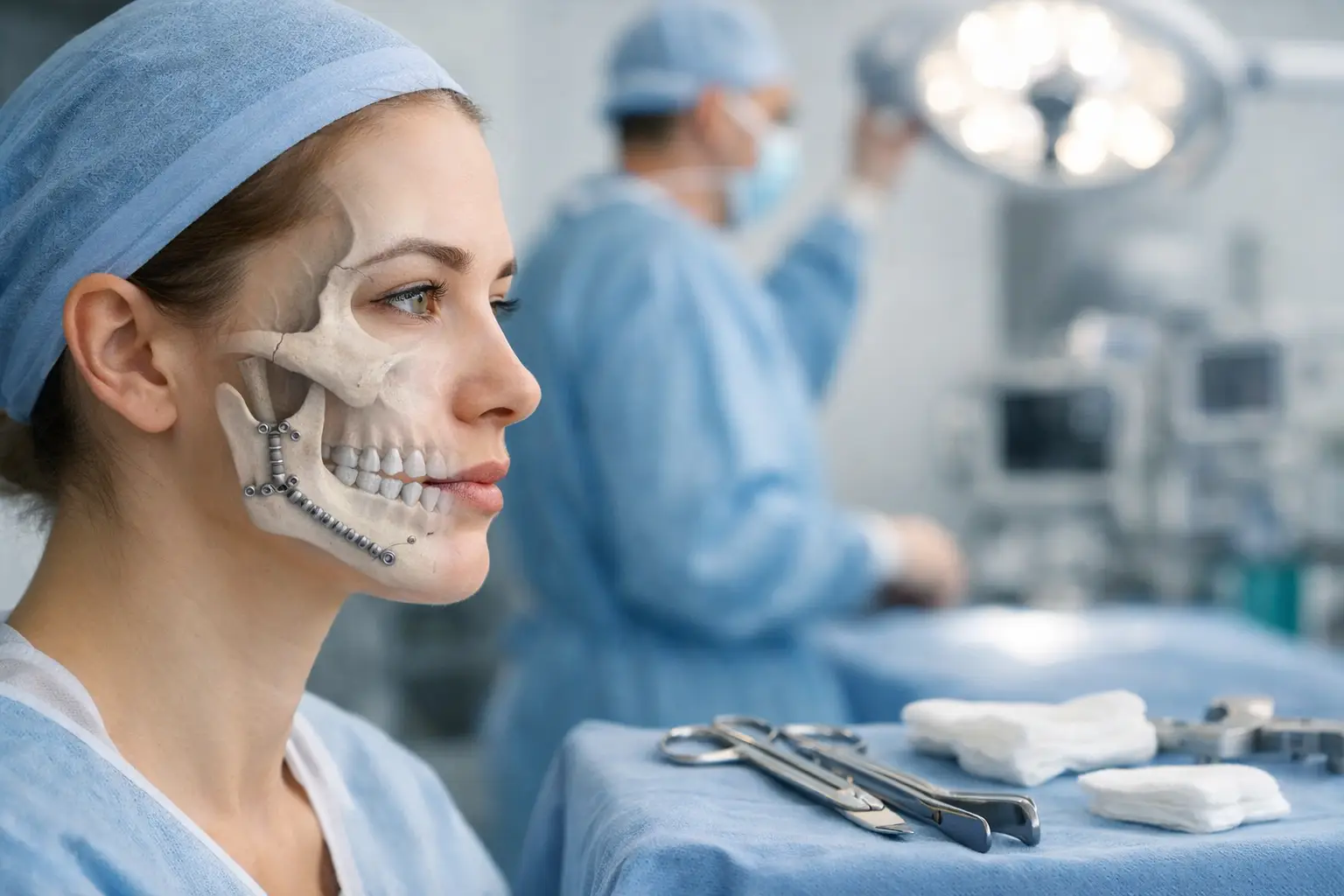
Temporomandibular joint (TMJ) pain affects the jaw joint and surrounding muscles, causing discomfort during eating, speaking, and daily activities. Orthognathic surgery, which repositions the upper jaw (maxilla), lower jaw (mandible), or both, can address TMJ pain when the underlying cause involves skeletal misalignment. The surgery corrects jaw position discrepancies that place abnormal stress on the TMJ, potentially reducing pain and improving function.
TMJ disorders stem from various causes, including muscle tension, disc displacement, arthritis, and jaw misalignment. When conservative treatments like physical therapy, medications, and splints fail to provide relief after several months, and imaging reveals skeletal abnormalities contributing to joint dysfunction, orthognathic surgery becomes a viable treatment option.
TMJ Pain and Jaw Misalignment
The temporomandibular joint functions as a sliding hinge connecting your jawbone to your skull. Proper alignment allows smooth movement during chewing, speaking, and yawning. Skeletal misalignment forces the joint to compensate through abnormal movement patterns, leading to muscle strain, disc displacement, and joint degeneration.
Common jaw misalignments that contribute to TMJ pain include:
- Class II malocclusion (retrognathia): The lower jaw sits too far back, forcing the TMJ to work in a compressed position
- Class III malocclusion (prognathism): The lower jaw protrudes forward, creating tension in the joint capsule
- Asymmetric jaw growth: Uneven development causes one joint to bear more load than the other
- Open bite: Lack of contact between upper and lower teeth forces compensatory muscle activity
- Deep bite: Excessive vertical overlap compresses the joint space
These skeletal discrepancies alter the biomechanics of jaw movement. The muscles work harder to achieve normal function, leading to fatigue, spasm, and pain. An altered joint position may cause the articular disc to slip out of place, leading to clicking, popping, or jaw locking.
Orthognathic Surgery Techniques for TMJ Relief
Orthognathic surgery involves precise cuts in the jaw bones (osteotomies) to reposition them into proper alignment. The specific technique depends on the type and severity of misalignment identified through clinical examination and 3D imaging.
Bilateral Sagittal Split Osteotomy (BSSO) addresses the positioning of the lower jaw. The surgeon makes cuts behind the molars and along the jaw angle, allowing the front portion to slide forward or backwards. This technique effectively treats retrognathia by compressing the TMJ.
Le Fort I Osteotomy repositions the upper jaw. The surgeon separates the maxilla above the tooth roots, enabling movement in multiple directions. Combined with lower-jaw surgery, this creates optimal occlusal and joint positioning.
Genioplasty modifies chin position without directly affecting the TMJ, but can improve overall facial balance and reduce compensatory muscle activity.
During surgery, the surgeon evaluates the TMJ disc position and may perform disc repositioning or removal if severe damage is present. Rigid fixation with titanium plates and screws maintains the new jaw position during healing.
Pre-Surgical Evaluation
A comprehensive evaluation determines whether orthognathic surgery will address TMJ pain effectively. The assessment includes multiple diagnostic components to create a complete picture of jaw function and pathology.
Clinical examination reveals:
- Range of motion measurements (normal opening: 40-50mm)
- Joint sounds during movement
- Muscle tenderness patterns
- Occlusal relationships
- Facial asymmetry
Imaging studies provide detailed anatomical information:
- Cone beam CT scans show bone structure in three dimensions
- MRI visualises soft tissues, including disc position and morphology
- Lateral cephalometric X-rays measure skeletal relationships
Diagnostic models and mock surgery allow precise planning:
- Digital or physical models demonstrate current bite relationships
- Virtual surgical planning simulates jaw movements
- Surgical guides help with accurate bone cuts
The evaluation period typically spans 6-12 months, including orthodontic preparation to align teeth within each jaw. This preparatory phase optimises surgical outcomes and post-operative stability.
Recovery and TMJ Symptom Resolution
Post-surgical healing follows a predictable timeline, with TMJ symptom improvement varying based on pre-existing joint damage and individual healing capacity.
Immediate post-operative period (weeks 1-2):
- Jaw movement remains limited due to swelling and surgical trauma
- Elastic bands maintain occlusion while allowing minimal opening
- Pain medication manages surgical discomfort
- A liquid diet prevents stress on healing bones
Early recovery (weeks 3-8):
- Gradual increase in jaw opening through gentle exercises
- Transition to soft foods as bone healing progresses
- Physical therapy begins to restore normal muscle function
- Many patients report decreased TMJ pain as swelling subsides
Intermediate recovery (months 3-6):
- Bone consolidation allows normal chewing function
- Range of motion approaches pre-surgical levels
- TMJ symptoms continue improving as muscles adapt to the new jaw position
- Orthodontic finishing aligns final tooth positions
Long-term outcomes (6 months and beyond):
- Joint loading normalises in the corrected position
- Muscle activity patterns stabilise
- Residual TMJ symptoms may require ongoing management
- Regular monitoring allows maintenance of correction
Alternative and Complementary Treatments
While orthognathic surgery addresses skeletal causes of TMJ pain, several non-surgical options may provide relief or complement surgical treatment.
Occlusal splints redistribute bite forces and decompress the joint. Custom-fabricated devices worn during sleep or throughout the day can reduce muscle activity and protect teeth from grinding damage.
Physical therapy targets muscle dysfunction through:
- Manual techniques to improve joint mobility
- Strengthening exercises for jaw stabilisers
- Postural correction to reduce compensatory patterns
- Modalities like ultrasound or dry needling for pain relief
Arthrocentesis involves flushing the joint space with sterile solution to remove inflammatory debris and improve disc mobility. This minimally invasive procedure may delay or prevent the need for surgery.
Botulinum toxin injections temporarily weaken overactive muscles, breaking the cycle of spasm and pain. Effects last 3-4 months and require repeat treatments.
Lifestyle modifications support all treatment approaches:
- Stress management techniques reduce clenching behaviours
- Dietary adjustments minimise joint loading
- Sleep position changes prevent overnight compression
- Activity pacing prevents overuse
Surgical Success Factors
Several factors influence whether orthognathic surgery successfully resolves TMJ pain.
Pre-existing joint damage affects outcomes significantly. Patients with minimal degenerative changes experience better pain relief than those with established arthritis or severe disc displacement. Modern imaging helps set realistic expectations.
Surgical precision determines long-term stability. Accurate positioning according to pre-surgical planning prevents relapse and allows optimal joint mechanics. Computer-assisted surgery improves accuracy in complex cases.
Post-operative compliance impacts healing and function. Following dietary restrictions, performing prescribed exercises, and attending follow-up appointments optimise recovery. Non-compliance may compromise results.
Concurrent TMJ procedures address intra-articular pathology. Disc repositioning, discectomy, or joint replacement, when performed with orthognathic surgery, can improve outcomes for patients with structural joint damage.
Age considerations influence healing capacity. Younger patients typically experience faster bone healing and better adaptive potential. However, older patients with good general health can achieve positive results.
💡 Did You Know?
The temporomandibular joint is the only joint in the human body where the right and left sides must work in perfect synchrony – they cannot move independently like other paired joints.
What Our Oral and Maxillofacial Surgeon Says
Our approach to TMJ-related orthognathic surgery focuses on comprehensive treatment planning. We evaluate not just the skeletal misalignment but also muscle function, joint health, and individual patient factors.
Many patients arrive frustrated after trying multiple conservative treatments without success. When imaging reveals apparent skeletal discrepancies contributing to joint dysfunction, surgery often provides the structural correction needed for lasting relief.
The diagnosis determines treatment success. Not all TMJ pain requires surgery, but when jaw misalignment creates persistent mechanical stress on the joint, repositioning the bones addresses the root cause rather than just managing symptoms.
Post-surgical physical therapy plays a vital role in optimising outcomes. We work closely with specialised physiotherapists who understand the unique requirements of post-orthognathic rehabilitation.
Putting This Into Practice
- Document your TMJ symptoms in a daily log, noting pain levels, triggering activities, and any clicking or locking episodes to share with your surgeon during consultation
- Obtain recent dental X-rays and any previous TMJ imaging to provide a complete history of your condition and previous treatments attempted
- Practice optimal jaw posture by keeping teeth slightly apart at rest, tongue gently touching the roof of your mouth, and avoiding clenching behaviours throughout the day
- Prepare questions about your specific type of jaw misalignment, expected surgical outcomes, and recovery timeline based on your imaging findings
- Research physical therapists specialising in TMJ rehabilitation in your area to establish care coordination before surgery
When to Seek Professional Help
- Jaw pain persisting despite conservative treatment for more than six months
- Inability to open your mouth wider than two finger-widths
- Jaw locking in open or closed positions
- Facial asymmetry with associated joint discomfort
- Difficulty chewing due to poor tooth contact combined with joint pain
- Progressive worsening of symptoms affecting daily activities
- Previous orthodontic treatment was unable to achieve a stable bite due to skeletal discrepancy
Commonly Asked Questions
How long after orthognathic surgery will my TMJ pain improve?
Initial improvement often occurs within 6-8 weeks as surgical swelling subsides and jaw position normalises. Maximum benefit typically develops over 6-12 months as muscles adapt to the corrected skeletal position and joint loading patterns stabilise.
Can orthognathic surgery make TMJ problems worse?
While rare, TMJ symptoms can occasionally worsen if surgery creates unfavourable joint positioning or if pre-existing joint damage progresses. Careful pre-surgical planning and evaluation minimise this risk. Surgeons experienced in TMJ considerations achieve better outcomes.
Will I need TMJ surgery in addition to jaw surgery?
Most patients achieve TMJ symptom relief through orthognathic surgery alone. However, severe disc displacement or joint degeneration may require concurrent TMJ procedures. MRI evaluation before surgery helps determine if additional joint treatment is necessary.
What if I have TMJ pain but my bite seems normal?
TMJ pain can occur without obvious bite problems. However, subtle skeletal discrepancies that are not apparent on casual examination may contribute to joint dysfunction. Comprehensive imaging and analysis often reveal misalignments that benefit from surgical correction.
How do I know if my TMJ pain is from jaw misalignment?
Diagnostic imaging combined with clinical examination determines whether skeletal factors contribute to TMJ pain. Signs include changes in bite over time, facial asymmetry, difficulty achieving a comfortable jaw position, and a correlation between bite position and pain levels.
Next Steps
Orthognathic surgery offers a definitive solution for TMJ pain caused by jaw misalignment. Success depends on accurate diagnosis, precise surgical execution, and comprehensive post-operative care.
If you’re experiencing persistent TMJ pain with associated jaw misalignment, our Oral and Maxillofacial Surgeon can provide a comprehensive evaluation and treatment options.