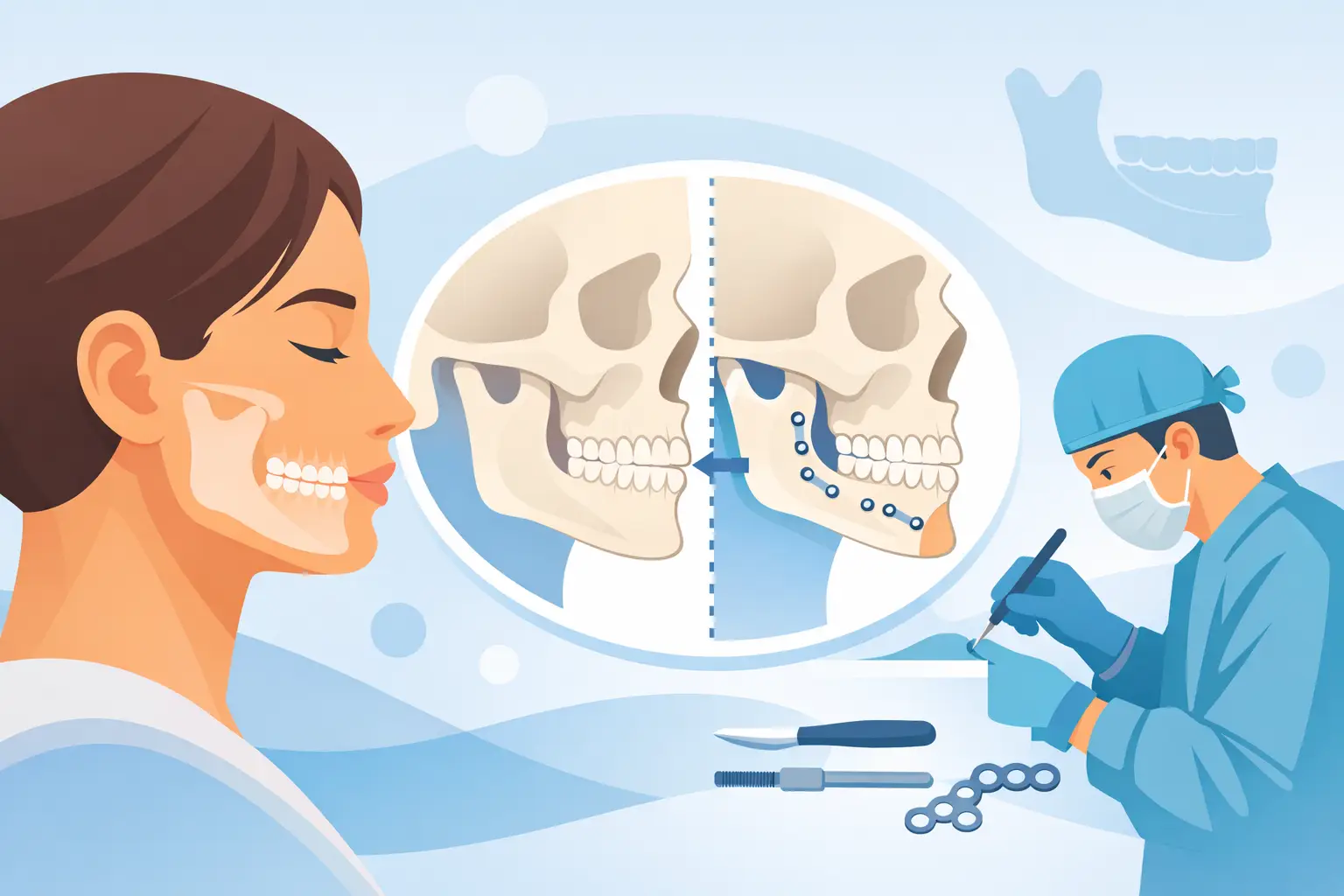
For most patients, the first real question is not whether jaw surgery can improve the face or bite. It is whether the treatment is financially realistic. Aesthetic jaw surgery cost can vary significantly because the procedure is not a single item – it is a carefully planned course of care that may involve diagnostics, orthodontics, hospital treatment, anesthesia, surgical time, and follow-up during recovery.
That is why a meaningful discussion about price has to start with scope. Jaw surgery is highly individualized. Two patients may both be told they need orthognathic surgery, yet one requires a straightforward single-jaw correction while the other needs upper and lower jaw repositioning, chin refinement, and more extensive planning to balance facial proportions, bite function, and airway considerations.
Why aesthetic jaw surgery cost varies so much
The largest driver of cost is complexity. A patient with a mild skeletal discrepancy may need a more limited operation than someone with a severe underbite, asymmetry, open bite, or long-face pattern. The more complex the skeletal movements, the more detailed the planning and the longer the operating time.
Another important factor is whether treatment is being performed for appearance alone or for a combination of aesthetic and functional reasons. In specialist maxillofacial practice, these goals often overlap. A well-planned jaw correction can improve facial balance, but it may also address chewing difficulty, speech concerns, jaw strain, airway restriction, or bite instability. When multiple functional issues are part of the diagnosis, the treatment process can become more involved.
The setting matters as well. Surgeon fees are only one part of the overall expense. Hospital or surgical facility charges, anesthesia fees, imaging, laboratory work, custom surgical planning, and post-operative reviews all contribute to the total.
What is usually included in aesthetic jaw surgery cost?
Patients often assume the quote refers only to the operation itself, but comprehensive jaw surgery care usually includes several phases. The first phase is diagnostic assessment. This may involve clinical examination, photographs, dental impressions or digital scans, X-rays, and 3D imaging to analyze the facial skeleton, bite relationship, and asymmetry.
The second phase is treatment planning. In modern orthognathic surgery, planning may use digital simulation and wafer fabrication to guide precise jaw positioning. This level of preparation supports both safety and accuracy, especially when the objective is to improve function and facial harmony at the same time.
The third phase is the surgery itself. Here, costs typically reflect the surgeon’s expertise, the number of jaws treated, whether additional procedures are performed, the duration of the operation, anesthesia, implants or fixation plates where relevant, and the hospital stay.
The final phase is aftercare. Follow-up is not a minor detail. Recovery after jaw surgery requires monitoring for swelling, healing progress, bite settling, oral hygiene, diet progression, and sensory changes. In more complex cases, long-term review is essential to ensure the result remains stable.
Single-jaw vs double-jaw surgery
One of the biggest pricing differences is whether surgery involves one jaw or both. Single-jaw surgery is generally less costly because it is shorter, less technically demanding in many cases, and may involve a simpler recovery. That said, lower cost does not automatically mean it is the better option.
For some patients, operating on only one jaw may not produce the most balanced functional or aesthetic result. Double-jaw surgery often allows the surgeon to correct skeletal relationships more comprehensively, particularly when the bite problem is paired with facial disproportions such as a recessed midface, prominent lower jaw, vertical excess, or asymmetry. It usually carries a higher fee because planning and execution are more complex, but it may provide the more stable and natural outcome.
This is where experienced surgical judgment matters. The appropriate treatment plan should be based on diagnosis, not on choosing the least expensive route.
Orthodontics can be part of the overall cost
In many jaw surgery cases, orthodontic treatment is required before and sometimes after surgery. This is separate from the operation but closely linked to the final outcome. Teeth may need to be aligned within each jaw so the jaws can be repositioned accurately during surgery.
This can surprise patients who are budgeting for surgery alone. If braces or aligner-based preparation is necessary, the full financial picture should include orthodontic fees, the duration of treatment, and the coordination between the orthodontist and surgeon.
Not every patient follows the same path. Some may be candidates for surgery-first protocols, while others need a more traditional sequence. The right approach depends on skeletal diagnosis, dental compensation, bite instability, and treatment goals.
Additional procedures that may affect pricing
Aesthetic jaw surgery is sometimes combined with other procedures when clinically appropriate. A genioplasty, which reshapes or repositions the chin, is one example. Although it is a separate procedure, it may improve lower facial balance when performed together with jaw correction.
Other patients may need wisdom tooth removal before orthognathic surgery, bone grafting in selected situations, or management of TMJ-related concerns that influence treatment planning. These do not apply to everyone, but when they do, they can affect the total cost and timeline.
Even details that seem minor can change the quote. A revision case, previous facial trauma, congenital asymmetry, or severe skeletal discrepancy often requires more advanced planning than a routine case.
Choosing a surgeon based on cost alone can be risky
It is reasonable to compare fees, but jaw surgery is not a commodity. The procedure changes the facial skeleton, affects the bite, and requires a careful balance between appearance, function, safety, and long-term stability. A lower fee may not represent the same level of specialist assessment, surgical experience, hospital support, or post-operative follow-up.
Patients should also ask what is included. A quote that appears lower at first may not include imaging, splints, anesthesia, hospital charges, or follow-up care. A more complete estimate may look higher but provide a clearer picture of the true cost of treatment.
For a procedure of this scale, value matters more than headline price. Consultant-level expertise, detailed planning, and continuity of care can make a meaningful difference to both the experience and the result.
How to plan financially for aesthetic jaw surgery cost
The most practical first step is a specialist consultation. A proper assessment can clarify whether your concerns are primarily cosmetic, functional, or both, and whether surgery is actually the right treatment. It can also identify whether orthodontics, adjunctive procedures, or staged care will be needed.
From there, ask for a written breakdown. Patients often feel more comfortable when the estimate separates consultation and imaging, pre-surgical planning, surgeon fees, anesthesia, hospital charges, and follow-up. Clarity helps you plan and reduces the chance of unexpected expenses later.
It is also wise to ask about recovery-related costs. Time away from work or school, dietary modifications, medications, and any caregiver support immediately after surgery can all have practical financial implications.
If insurance is involved, the answer may depend on the reason for treatment and the policy terms. Some cases have a functional basis, but coverage rules vary widely. A specialist evaluation and formal documentation are usually necessary before any meaningful insurance discussion can occur.
What patients are really paying for
At its best, jaw surgery is not simply about moving bone. It is about diagnosis, precision, and the ability to treat the face as a functional and aesthetic whole. Patients are paying for surgical planning that accounts for the bite, facial proportions, airway, symmetry, soft tissue response, healing, and long-term stability.
They are also paying for judgment. The difference between an adequate result and an excellent one often lies in the details – how the jaws are positioned in relation to the lips, chin, nose, and dental display, and how those changes will look not just on scans, but in everyday life.
In a specialist setting such as Aesthetic Reconstructive Jaw Surgery, this level of care is built around individualized planning rather than one-size-fits-all pricing. That is especially important in procedures where millimeters matter.
Aesthetic jaw surgery cost is best understood as an investment in a complex treatment journey, not a single event. The right question is not only “How much does it cost?” but “What exactly am I receiving, and is this the right plan for my face, bite, and long-term health?” A careful consultation can give you that answer and help you move forward with greater confidence.