
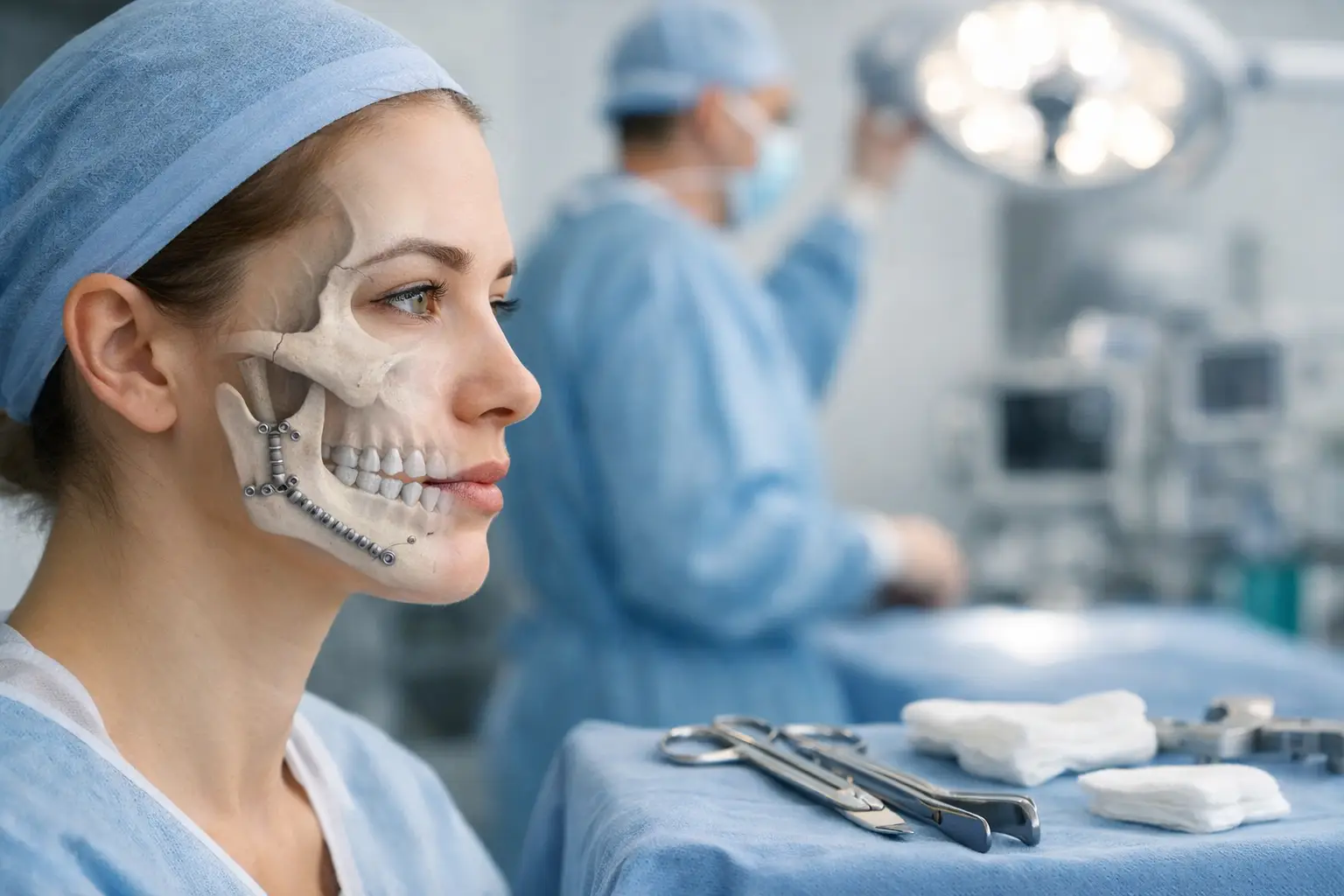
A bite that does not line up properly is rarely just a cosmetic concern. Orthognathic surgery corrective jaw surgery is used to address jaw discrepancies that can affect chewing, speech, breathing, facial balance, and long-term oral health. For many patients, the decision to proceed comes after years of managing symptoms that braces alone could not fully correct.
This type of treatment is highly individualized. Some patients have a lower jaw that is too prominent or too far back. Others have an upper jaw position that contributes to an open bite, crossbite, gummy smile, facial asymmetry, or airway concerns. The goal is not simply to move bone. It is to create a stable, functional bite while improving facial harmony in a way that respects each patient’s anatomy and treatment priorities.
What orthognathic surgery corrective jaw surgery actually treats
Orthognathic surgery is a specialist procedure that repositions one or both jaws when the upper and lower jaws do not align correctly. It is often recommended when there is a skeletal problem rather than only a dental one. In simple terms, if teeth are misaligned because the jaw bones themselves are in the wrong position, orthodontics alone may have limits.
Common concerns that may lead to treatment include difficulty biting or chewing, excessive tooth wear, chronic jaw strain, speech issues, lip incompetence, facial imbalance, and obstructive sleep apnea in selected cases. Some patients also seek assessment because they feel their profile is too retrusive or too prominent, or because their face appears noticeably asymmetric.
That said, not every bite problem requires surgery. Mild to moderate cases may respond well to orthodontic treatment, restorative dentistry, or a combination of conservative measures. A detailed clinical evaluation is what separates a true surgical case from one that can be managed another way.
Who may be a candidate for corrective jaw surgery
Candidates for corrective jaw surgery are usually patients with completed or nearly completed facial growth, significant jaw misalignment, and symptoms or concerns that cannot be predictably addressed with braces alone. Older adolescents may be suitable in selected cases, but timing matters. Operating before growth is stable can affect long-term results.
A good candidate is not defined only by anatomy. Overall health, gum condition, commitment to orthodontic preparation, and readiness for recovery all matter. Jaw surgery is planned treatment, not quick treatment. It requires coordination, patience, and a clear understanding of what surgery can and cannot achieve.
Many patients ask whether the decision is functional or aesthetic. In reality, it is often both. The jaws influence how you bite, breathe, and speak, but they also shape the lower face. A specialist assessment should consider both dimensions together rather than treating them as separate issues.
How planning works before surgery
One of the most important parts of orthognathic surgery corrective jaw surgery happens well before the operating room. Treatment usually begins with imaging, photographs, clinical measurements, bite analysis, and a coordinated surgical-orthodontic plan. This planning stage is where precision matters most.
In many cases, orthodontic treatment is used before surgery to align the teeth in their correct positions over the jaw bones. This can make the bite look temporarily worse before it gets better, which surprises some patients. It happens because the goal is to prepare the teeth for the new jaw position, not to camouflage the underlying skeletal problem.
Virtual surgical planning may also be used to map the intended jaw movements with a high degree of accuracy. This helps the surgical team assess facial proportions, bite relationships, and movement limits before surgery takes place. When treatment is planned carefully, the functional and aesthetic goals are far more predictable.
What happens during orthognathic surgery corrective jaw surgery
The exact procedure depends on the jaw discrepancy. Some patients require upper jaw surgery, some lower jaw surgery, and some need both jaws repositioned. In selected cases, chin surgery may also be considered to refine lower facial balance. These decisions depend on anatomy, bite goals, and facial proportions rather than a one-size-fits-all formula.
Most jaw surgery is performed through incisions inside the mouth, so visible external scars are typically avoided. The bones are repositioned and stabilized with small plates and screws designed for surgical fixation. The intention is to create a new bite relationship that is stable, functional, and compatible with the overall facial structure.
Patients are often concerned about whether the jaw will be wired shut. In modern practice, rigid fixation commonly allows controlled jaw function during recovery, although movement restrictions and dietary modifications still apply. The details vary by procedure and by surgeon preference, which is why individualized counseling is essential.
Recovery and what patients should realistically expect
Recovery is manageable, but it is not minor. Swelling is expected and is often most noticeable in the first one to two weeks. Bruising, fatigue, temporary numbness, nasal congestion after upper jaw surgery, and difficulty eating normal foods are all common parts of early healing.
Most patients return to routine non-strenuous activities within a few weeks, but full recovery takes longer. Bone healing continues over several weeks to months, and final settling of the bite may involve further orthodontic refinement. This is one reason patients benefit from choosing a team that provides continuity from planning through recovery.
Sensation changes deserve an honest discussion. Temporary numbness in the lips, chin, or cheeks can occur after jaw surgery, and in some cases altered sensation may persist long term. The risk depends on the type of movement performed, the anatomy involved, and the extent of surgery. Patients should hear this clearly before treatment, not after.
Diet also changes during healing. Soft or modified foods are usually required, and maintaining nutrition is part of recovery, not an afterthought. Good post-operative instructions, close follow-up, and realistic expectations make a major difference in patient confidence during this period.
Functional benefits and aesthetic changes
One of the reasons patients pursue jaw surgery is that the benefits often extend across several areas at once. A more stable bite can improve chewing efficiency and reduce strain on the teeth. Better jaw position may support clearer speech patterns in some cases. Selected patients with airway compromise may also experience meaningful breathing improvement when treatment is properly indicated.
Aesthetic changes are often significant, even when the primary motivation is functional. Moving the jaws changes the support of the lips, chin, and lower face. This can improve facial balance in profile and from the front, particularly in cases of severe asymmetry, retrusion, or protrusion. At the same time, expectations need to stay grounded. Surgery can improve proportion and harmony, but it does not create a generic ideal face.
This balance between function and appearance is where specialist judgment matters. Overcorrection in pursuit of one goal can compromise another. The best results come from treatment planning that respects the patient’s facial identity while correcting the underlying skeletal problem.
Risks, trade-offs, and why expertise matters
As with any major operation, jaw surgery involves risks. These can include bleeding, infection, relapse, unfavorable bite changes, healing issues, sinus-related symptoms in upper jaw procedures, and nerve-related sensory changes. There is also the practical trade-off of time, since treatment often includes months of orthodontics before and after surgery.
For some patients, the alternative to surgery is to accept a compromised but manageable bite. For others, camouflage orthodontics may improve tooth position while leaving the skeletal imbalance largely unchanged. Neither path is automatically wrong. The right decision depends on severity, symptoms, facial goals, airway considerations, and how much correction is truly needed.
This is why consultation should never feel rushed. A patient considering orthognathic treatment deserves a careful diagnosis, a discussion of alternatives, and a realistic explanation of recovery. In a specialist practice such as Aesthetic Reconstructive Jaw Surgery, that conversation is central to care, because informed patients make better long-term decisions.
When to seek an assessment
If you have been told that braces alone may not correct your bite, or if you live with chronic chewing difficulty, jaw imbalance, facial asymmetry, or airway-related concerns, a specialist evaluation is worth considering. Even if surgery is not the final recommendation, the assessment can clarify what is causing the problem and what options are available.
The right time to ask is usually earlier than patients think. Not because surgery must happen immediately, but because proper sequencing matters. When jaw position, orthodontics, and facial balance are all part of the picture, good outcomes begin with a clear diagnosis and a plan built around you.
Corrective jaw surgery is a major step, but for the right patient, it can be a decisive one. The most reassuring starting point is not a promise of perfection. It is a careful, expert conversation about what can be improved, what recovery involves, and what a stable, confident result should look like years from now.


