When patients search for aesthetic jaw surgery before and after, they are usually looking for more than dramatic photos. They want to know what actually changes, what stays the same, and whether surgery can improve both appearance and function in a predictable, medically sound way.
That is the right question to ask. Jaw surgery is not a cosmetic shortcut. It is a specialist procedure used to correct underlying skeletal imbalance in the upper jaw, lower jaw, chin, or a combination of these structures. For the right patient, the before-and-after difference can be significant, but the most meaningful result is often not a single feature. It is improved facial harmony, a healthier bite, better lip support, and in some cases easier breathing and chewing.
What aesthetic jaw surgery before and after really shows
The phrase itself can be misleading because the change is not only about looks. Before surgery, many patients have concerns that overlap. They may feel their chin is too prominent or too weak, their smile shows too much gum, their face appears long or asymmetric, or their profile feels unbalanced. At the same time, they may also have difficulty biting properly, jaw strain, speech issues, or airway concerns.
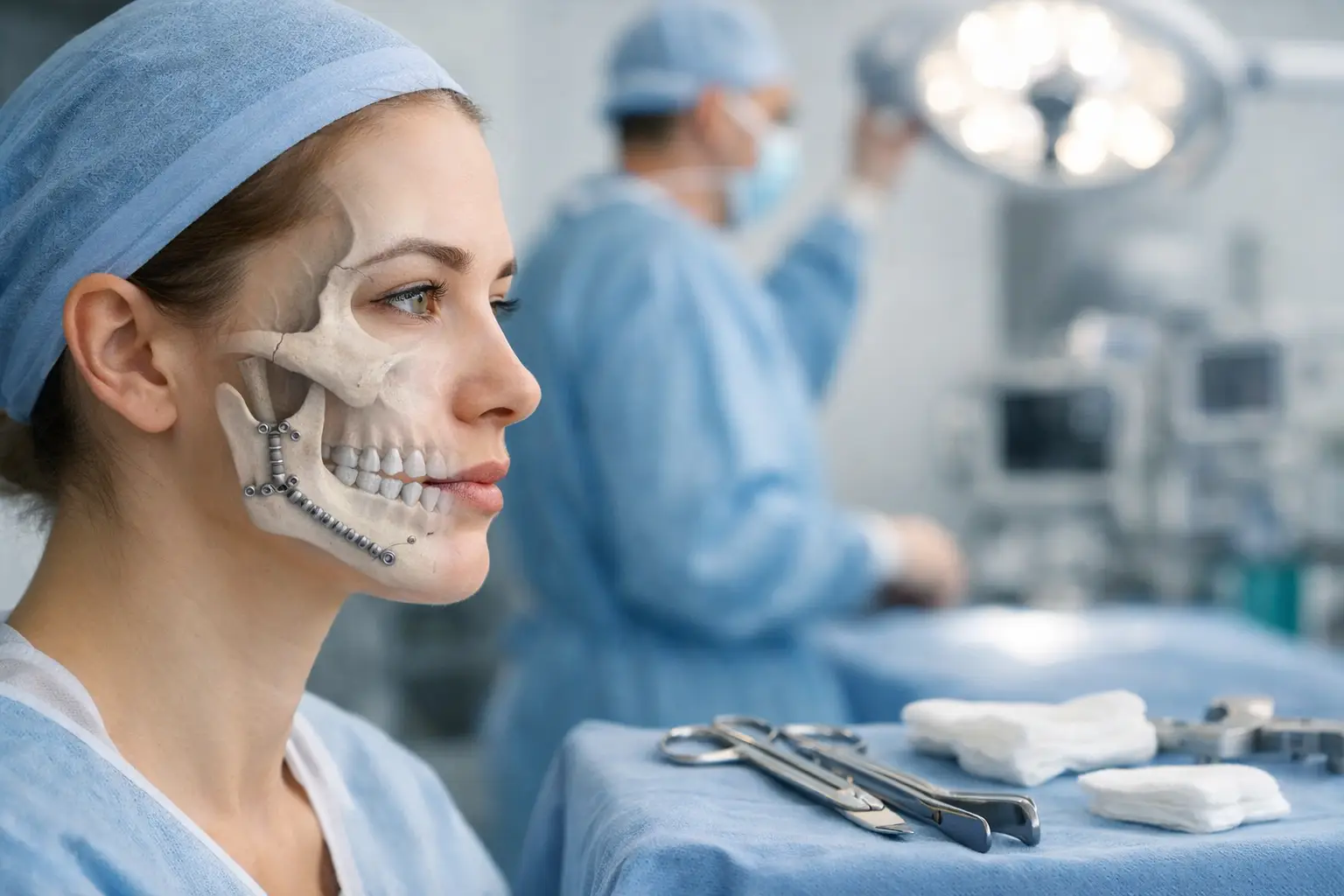
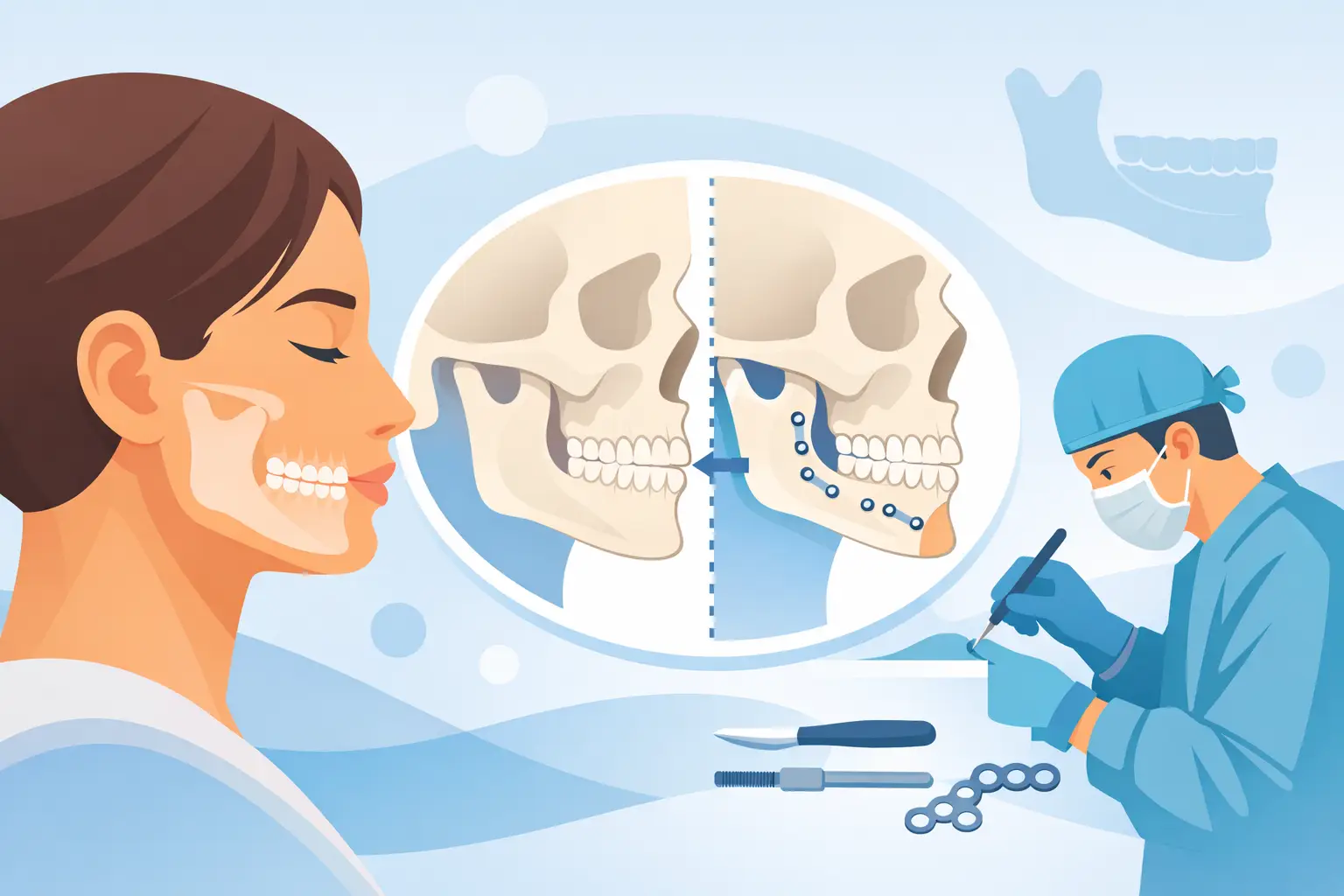
After surgery, the visible improvement usually comes from correcting the foundation of the face rather than adding volume or masking a structural issue. When the jaws are repositioned into a more appropriate relationship, the nose, lips, chin, cheeks, and neck contour can all appear different even when those areas were not operated on directly.
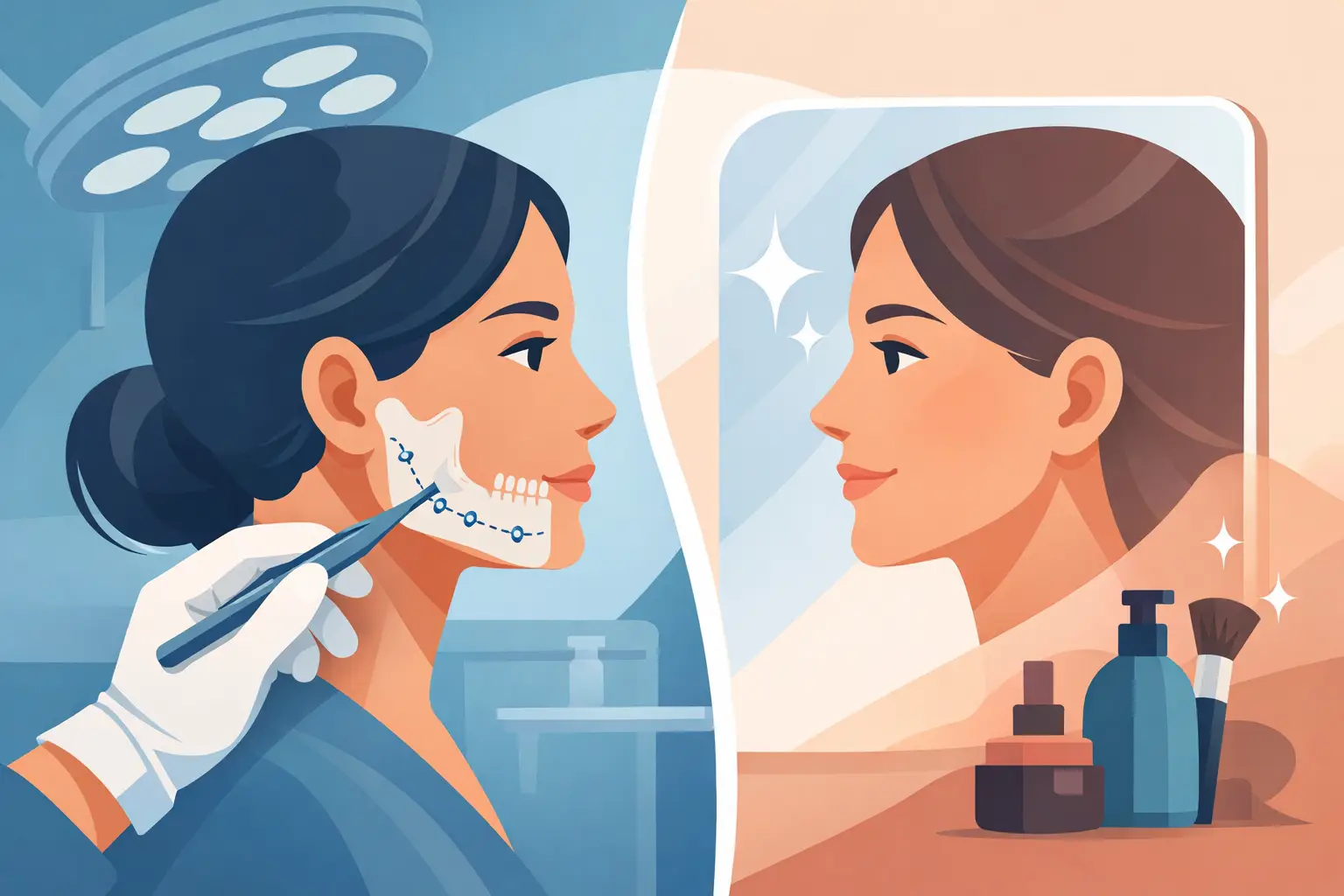
This is why responsible before-and-after assessment is based on proportion, symmetry, and function, not on chasing a trend. A well-planned result should still look like you. It should simply look more balanced.
Which changes are most common before and after jaw surgery?
The answer depends on the original jaw relationship and the surgical plan. Patients with a recessed lower jaw often notice a stronger chin-neck angle, better lower facial projection, and less facial convexity after treatment. Patients with a prominent lower jaw may see a softer, more balanced profile and improved lip posture. Those with vertical maxillary excess, sometimes described as a gummy smile or a long-face pattern, often notice a reduction in gum show and improved facial proportion.
Asymmetry is another common reason patients explore surgery. In these cases, before-and-after changes may include a straighter chin point, improved dental midline alignment, and a more even jaw contour. The result can be subtle in photographs but very meaningful in daily life, especially for patients who have noticed unevenness for years.
There are also patients whose main concern is not the side profile but the front view. They may feel the lower face is too narrow, too long, too shifted, or not well centered. Orthognathic surgery can address these concerns when they are driven by skeletal structure rather than soft tissue alone.
Why photos do not tell the whole story
Before-and-after images can be useful, but they have limits. Swelling, camera angle, lighting, head posture, and facial expression can all exaggerate or minimize the apparent change. More importantly, a photograph cannot show whether a patient can now bite comfortably, breathe more freely, or close the lips without strain.
That is why a proper evaluation involves much more than visual comparison. Specialist planning typically includes clinical examination, facial analysis, dental records, imaging, and bite assessment. In a consultant-led maxillofacial practice, the goal is not simply to move bone. It is to understand how facial aesthetics, occlusion, airway, and long-term stability interact.
For many patients, the most impressive after result is not that they look like a different person. It is that their face appears more natural, at rest and in motion.
The timeline of aesthetic jaw surgery before and after
One of the most common misunderstandings is expecting the final after result immediately. That is not how jaw surgery recovery works.
In the early postoperative phase, swelling is expected and can temporarily distort the face. During the first one to two weeks, patients often look fuller than they anticipated. This does not mean the surgery was overdone. It means tissues are healing. Bruising and stiffness may also affect facial expression.
By several weeks, swelling usually improves enough for patients to appreciate the general direction of change. By a few months, the facial contours become more refined. Minor residual swelling, especially around the midface or lower jaw, can take longer to settle. Final soft tissue adaptation may continue for many months.
This is one reason careful counseling matters. The real before-and-after journey includes planning, orthodontic coordination when needed, surgery, healing, and follow-up. It is a process rather than a moment.
Who is a good candidate?
Good candidates are patients whose aesthetic concerns are rooted in jaw position rather than surface-level soft tissue issues alone. They may have a noticeable overbite, underbite, open bite, facial asymmetry, weak chin appearance related to mandibular deficiency, or disproportion in facial height. Many have already been told that braces alone will not correct the underlying skeletal pattern.
Candidates also need realistic expectations. Jaw surgery can create significant improvement, but it is still a medical procedure with recovery time, cost, and planning requirements. It is not appropriate for every concern, and in some cases a less extensive procedure may be more suitable.
Older adolescents and adults often ask whether they are too late for treatment. In many cases, once facial growth is complete, corrective jaw surgery becomes a valid option. The exact timing depends on growth status, dental condition, general health, and the specific deformity being treated.
The balance between aesthetics and function
The best surgical plan does not force a trade-off between looking better and functioning better. In fact, these goals usually support each other. When the jaws fit together more correctly, the facial soft tissues often rest more naturally. When the bite is improved, the lower face may appear less strained. When the airway is considered, the profile plan can be safer and more stable.
That said, there are nuances. A movement that looks ideal on a quick profile simulation may not be the best choice if it compromises occlusion, joint health, or long-term stability. Similarly, a plan designed only around dental correction may miss an opportunity to improve facial proportion.
This is why specialist assessment matters. The most reliable outcomes come from planning that respects both cephalometric principles and individualized facial aesthetics. At Aesthetic Reconstructive Jaw Surgery, this dual focus is central to how complex jaw cases are evaluated.
Questions to ask when reviewing before-and-after results
Patients are right to look closely at outcomes, but it helps to know what to look for. Ask whether the before-and-after images reflect similar head posture and facial expression. Ask what exact procedure was performed and whether orthodontics was part of the treatment. Ask how long after surgery the after photo was taken.
Most importantly, ask what problem the surgery was solving. A narrower nose base, a stronger jawline, or a shorter lower face may look appealing in isolation, but the real measure of success is whether the treatment addressed the patient’s actual skeletal and functional diagnosis.
A trustworthy surgeon should be able to explain why the change occurred, what trade-offs were considered, and how the result was planned to suit that individual face.
Recovery, expectations, and emotional adjustment
Even when the result is positive, recovery can be emotionally demanding. Swelling, temporary numbness, dietary restrictions, and the unfamiliar appearance in the mirror can create anxiety in the short term. Some patients need time to adjust to a face that is improved but different.
This is normal. Supportive follow-up and clear preoperative education make a real difference. Patients tend to cope better when they understand the expected stages of healing and know that the early postoperative appearance is not the final result.
It also helps to remember that meaningful improvement is often recognized gradually. Friends may comment that you look well-rested or more balanced before they can identify exactly what changed. That is often a sign of good planning rather than a lack of impact.
Choosing the right specialist for jaw surgery
If you are evaluating aesthetic jaw surgery before and after results, do not focus only on the most dramatic transformations. Look for consistency, sound diagnosis, and outcomes that appear balanced rather than exaggerated. Jaw surgery is a highly specialized field, and expertise in facial bone surgery matters.
An experienced oral and maxillofacial surgeon should be able to assess your facial proportions, bite relationship, airway considerations, and treatment goals as part of one coordinated plan. You should feel informed, not pressured. The consultation should leave you with a clearer understanding of whether surgery is appropriate, what changes are realistic, and how recovery is likely to unfold.
The most worthwhile before-and-after result is not one that follows a beauty trend. It is one that restores proportion, improves function, and helps you feel more comfortable in your face for years to come.