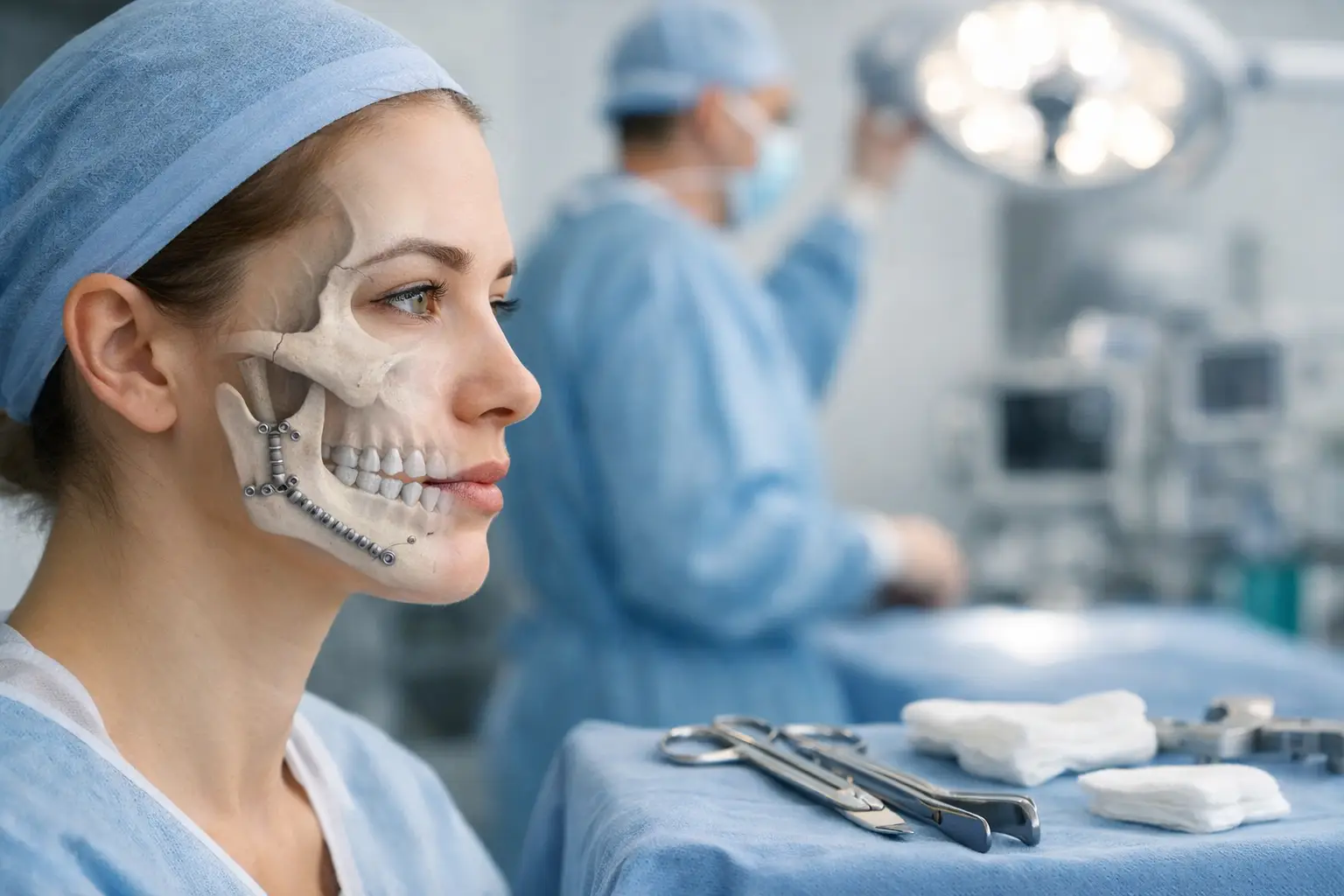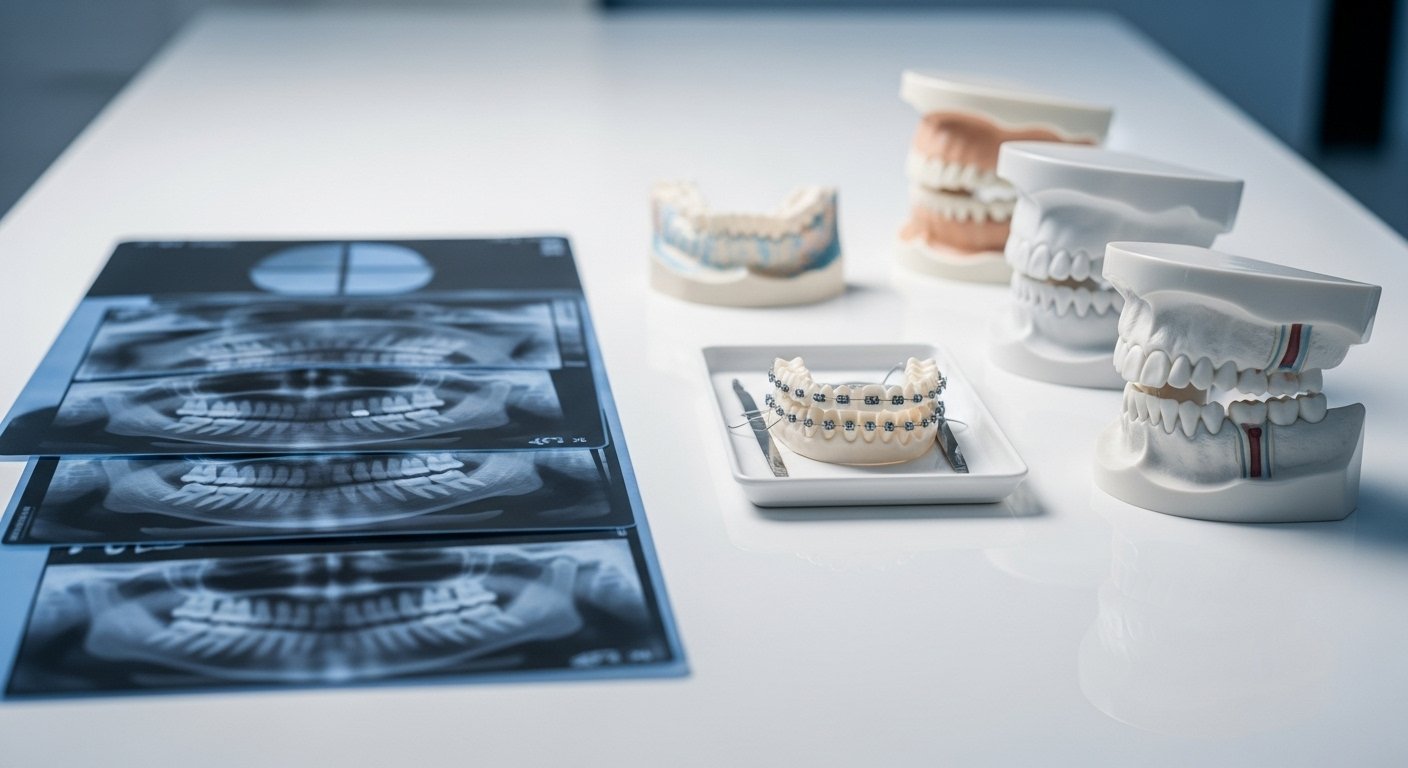
Orthodontic treatment effectively corrects tooth positioning, while corrective jaw surgery addresses skeletal discrepancies in the facial bones. The distinction between these approaches determines whether your condition requires braces alone or surgical intervention combined with orthodontic treatment.
Jaw misalignment manifests through various symptoms including difficulty chewing, chronic jaw pain, breathing problems during sleep, and facial asymmetry. These issues stem from either dental problems (treatable with orthodontics) or skeletal problems (requiring surgery).
Your oral and maxillofacial surgeon evaluates bone structure, while orthodontists assess tooth alignment, often collaborating to determine the optimal treatment pathway.
Conditions Orthodontics Can Address
Orthodontic treatment repositions teeth within existing jaw structures. Braces and aligners apply controlled forces to move teeth gradually over months or years.
Dental malocclusions treatable with orthodontics alone include:
- Crowding: Teeth overlap due to insufficient space in the dental arch
- Spacing: Gaps between teeth from missing teeth or jaw-tooth size discrepancies
- Mild overbite: Upper teeth protrude slightly beyond lower teeth
- Crossbite: Individual teeth sit inside or outside their normal position
- Rotated teeth: Teeth turned from their proper orientation
Traditional metal braces remain effective for complex tooth movements. Ceramic braces offer aesthetic advantages with similar functionality. Clear aligners work well for mild to moderate cases, particularly in adults seeking discreet treatment.
Treatment duration ranges from 12-36 months, depending on case complexity. Younger patients often experience faster movement due to a more adaptable bone structure. Adult treatment may take longer, but it achieves comparable results within dental limitations.
Orthodontists use cephalometric X-rays and digital models to plan tooth movements. These tools predict treatment outcomes and identify cases where dental compensation alone cannot achieve proper function or aesthetics.
When Skeletal Problems Require Surgery
Orthognathic surgery becomes necessary when the jaw bones themselves create the misalignment. These skeletal discrepancies cannot be corrected solely through tooth movement.
Skeletal conditions requiring surgical intervention:
- Severe underbite (Class III): Lower jaw extends significantly beyond the upper jaw
- Severe overbite (Class II): Upper jaw protrudes excessively, or lower jaw sits too far back
- Open bite: Front teeth cannot touch when the back teeth are closed
- Facial asymmetry: One side of the jaw grows differently from the other
- Sleep apnea: Jaw positioning restricts the airway during sleep
Cephalometric analysis reveals specific measurements indicating surgical need. The ANB angle (the relationship between the upper and lower jaws) exceeding certain thresholds confirms skeletal discrepancy. Soft tissue analysis examines lip position, chin projection, and facial profile harmony.
Functional problems often accompany skeletal issues. Patients may experience TMJ disorders, chronic headaches, difficulty speaking clearly, or the inability to close their lips comfortably. These symptoms typically persist or worsen without surgical correction.
Age considerations affect surgical timing. Jaw growth must be complete before surgery, typically around age 16 for females and 18 for males. Growth prediction methods using hand-wrist X-rays confirm skeletal maturity.
The Combined Approach: Surgery Plus Orthodontics
Most jaw surgery patients require orthodontic treatment before and after surgery. This coordinated approach achieves optimal functional and aesthetic results.
Pre-surgical orthodontics (12-18 months):
- Aligns teeth within each jaw
- Removes dental compensations masking skeletal problems
- Creates space for surgical movements
- Coordinates upper and lower dental arches
During this phase, your bite may temporarily worsen as teeth move to their ideal positions within malpositioned jaws. This “decompensation” reveals the actual skeletal discrepancy and enables precise surgical planning.
Surgical phase:
The surgeon repositions jaw bones according to the treatment plan. Common procedures include:
- Le Fort I osteotomy: Repositions the upper jaw
- Bilateral sagittal split osteotomy (BSSO): Moves the lower jaw forward or backward
- Genioplasty: Reshapes the chin for facial balance
Surgery occurs in a hospital setting under general anaesthesia—titanium plates and screws secure bones in their new positions. Most patients stay 1-2 nights for monitoring.
Post-surgical orthodontics (6-12 months):
- Fine-tunes tooth positioning
- Settles bite into optimal occlusion
- Maintains surgical results
- Addresses any minor discrepancies
Total treatment time spans 2-3 years from initial orthodontics through final retention. This investment yields a permanent skeletal correction impossible through orthodontics alone.
Treatment Outcomes and Recovery Timelines
Orthodontic treatment provides predictable tooth movement within the existing skeletal framework. Results remain stable with proper retention, though some age-related changes occur naturally.
Orthodontic recovery involves:
- Mild discomfort for 3-5 days after adjustments
- Dietary modifications to protect appliances
- Monthly appointments for adjustments
- Immediate improvement in tooth alignment
- Full results are visible upon appliance removal
Corrective jaw surgery produces dramatic facial changes alongside functional improvements. The skeletal repositioning affects breathing, chewing efficiency, speech clarity, and facial aesthetics.
Surgical recovery timeline:
- Week 1-2: Liquid diet, facial swelling peaks then subsides
- Week 3-4: Soft diet begins, most swelling resolved
- Week 6-8: Return to regular diet, jaw function improves
- Month 3-6: Final swelling resolves, sensation returns
- Month 12: Complete bone healing confirmed
Numbness in the lips and chin commonly occurs post-surgery due to nerve stretching. Sensation typically returns gradually over 3-12 months. Permanent numbness affects a small minority of patients.
Function improves progressively during healing. Patients report easier breathing, reduced jaw pain, improved sleep quality, and enhanced confidence from facial harmony.
Making the Right Treatment Decision
Your condition’s severity and underlying cause determine whether orthodontics alone suffices or surgery becomes necessary. Several diagnostic tools guide this decision.
Clinical examination reveals:
- Jaw relationship in three dimensions
- Facial symmetry and proportions
- TMJ function and symptoms
- Airway adequacy
- Soft tissue drape and lip competence
Imaging studies provide:
- Lateral cephalometric X-rays showing skeletal relationships
- Panoramic X-rays displaying tooth roots and jaw structures
- CBCT scans offering 3D bone visualisation
- Photographs documenting facial aesthetics
Virtual surgical planning technology allows surgeons to simulate various movements and predict outcomes. These simulations help patients visualise potential results and make informed decisions.
Consider lifestyle factors when choosing treatment. Orthodontics requires less time off work or school but takes longer. Surgery involves an intensive recovery but achieves results that are impossible with tooth movement alone.
Financial planning differs between options. Orthodontic fees are spread across the treatment duration through payment plans. Surgical fees include hospital costs, surgeon fees, and anaesthesia charges, often partially covered by medical insurance for functional problems.
💡 Did You Know?
Modern jaw surgery techniques use minimally invasive approaches when possible, reducing scarring and recovery time compared to traditional methods. Most incisions remain hidden inside the mouth.
What Our Oral and Maxillofacial Surgeon Says
Patients often arrive believing they need extensive surgery when orthodontics alone may suffice. Conversely, some pursue years of unsuccessful orthodontic treatment when their skeletal pattern necessitates surgery.
Accurate diagnosis, distinguishing dental from skeletal problems, is essential. Imaging and careful clinical assessment reveal whether tooth movement alone can achieve functional occlusion and facial harmony.
Timing matters significantly. Attempting orthodontics first in obvious surgical cases wastes time and money and may damage tooth roots through excessive movement. Early consultation with both the orthodontist and the surgeon ensures appropriate treatment sequencing.
Patient motivation and compliance affect outcomes regardless of treatment choice. Both pathways require commitment to appointments, oral hygiene, and post-treatment retention protocols.
Putting This Into Practice
- Schedule consultations with both an orthodontist and an oral surgeon for a comprehensive evaluation of your jaw concerns.
- Compile a list of functional problems (chewing difficulty, jaw pain, breathing issues) alongside aesthetic concerns.
- Request specific diagnostic imaging, including lateral cephalometric X-rays, to assess skeletal relationships.
- Ask each provider to explain whether your condition stems from dental or skeletal causes.
- Compare treatment timelines, recovery requirements, and expected outcomes between orthodontic and surgical options.
When to Seek Professional Help
- Difficulty chewing or biting food effectively
- Chronic jaw pain or clicking, unresponsive to conservative treatment
- Facial asymmetry affecting appearance or function
- An open bite prevents the front teeth from touching
- Sleep disruption from breathing difficulties
- Speech impediments related to jaw position
- Inability to close lips without strain
- Severe overbite or underbite affecting daily activities
Commonly Asked Questions
Can invisible aligners fix jaw problems?
Clear aligners effectively move teeth, but cannot alter jawbone position. They work well for dental corrections within properly positioned jaws, but cannot address skeletal discrepancies requiring surgery.
At what age is it too late for jaw surgery?
No specific age limit exists for orthognathic surgery. Healthy adults in their 50s and 60s successfully undergo these procedures. Overall health status matters more than chronological age.
Will insurance cover jaw surgery?
Medical insurance often covers orthognathic surgery for functional problems like sleep apnea, TMJ disorders, or severe malocclusion affecting eating. Documentation of functional impairment strengthens insurance claims.
How long before I look normal after jaw surgery?
Most swelling resolves within 3-4 weeks, allowing return to work or school. Final facial contours emerge around 6 months as residual swelling dissipates and soft tissues adapt.
Can jaw problems return after surgery?
Proper surgical technique and post-operative orthodontics create stable results. While minor age-related changes occur, significant relapse remains rare with appropriate treatment planning and execution.
Next Steps
Both orthodontic and surgical treatment pathways offer significant results when properly matched to your specific condition.
If you’re experiencing functional jaw problems or facial asymmetry affecting your quality of life, our oral and maxillofacial surgeon can evaluate your condition and discuss whether surgical intervention would benefit you.