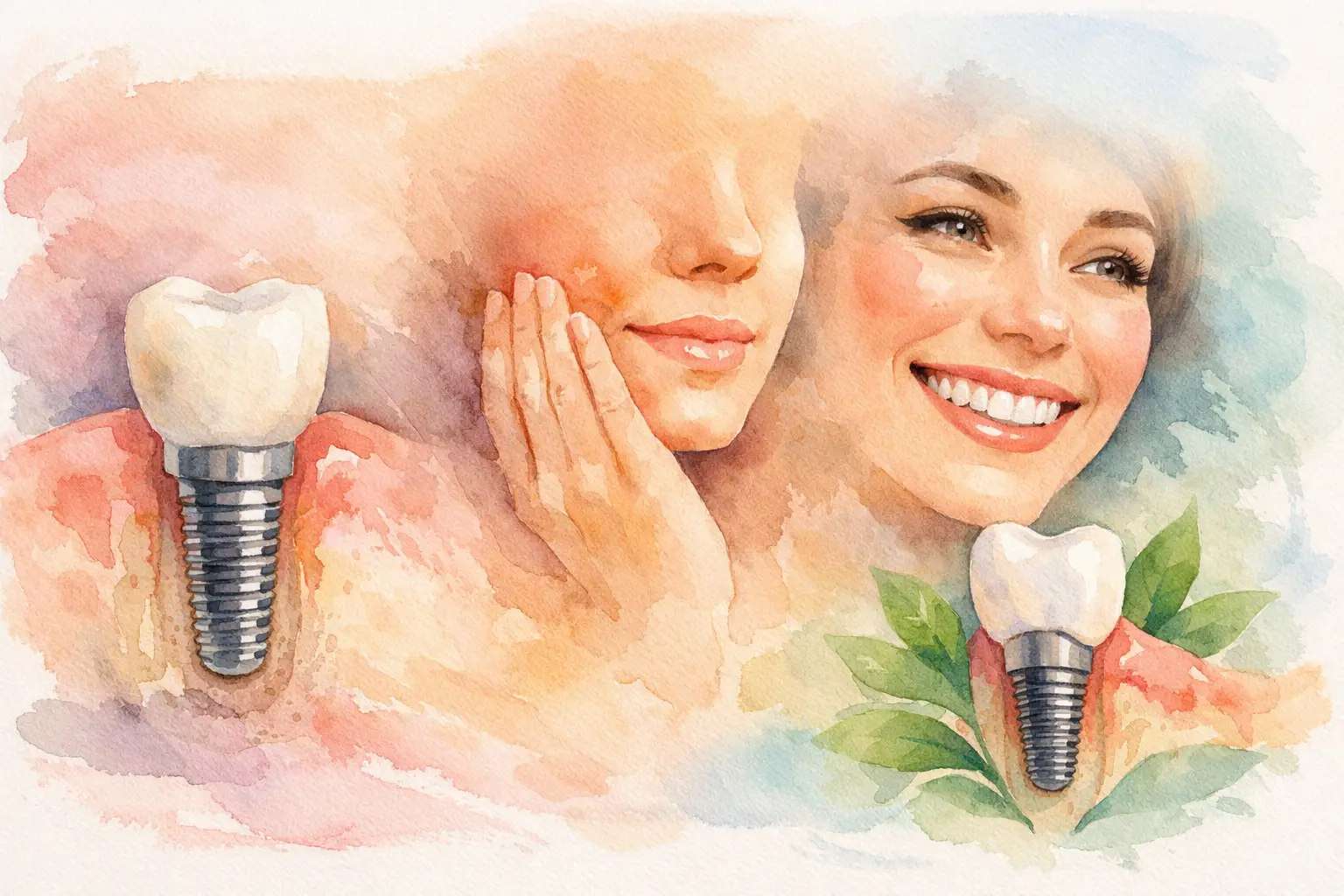
A dental implant is designed to feel and function like part of your natural dentition, but the surgical site needs time to establish that stability. This dental implant recovery guide explains what most patients can expect after implant placement, how to protect early healing, and when a symptom needs prompt attention from your surgeon.
Recovery is not identical for every patient. A straightforward single-tooth implant often involves a relatively short initial recovery, while treatment involving bone grafting, sinus augmentation, multiple implants, or tooth extraction may require additional healing time. Your surgical plan, medical history, bone quality, and the location of the implant all influence the timeline.
The first 24 to 72 hours after implant placement
The first few days are usually when swelling, soreness, and minor bleeding are most noticeable. Local anesthesia may leave the lip, cheek, tongue, or chin numb for several hours. Take care not to bite these areas while sensation is reduced.
A small amount of blood-tinged saliva or light oozing is common on the first day. Bite gently on the gauze provided by your surgical team as directed. Avoid repeated spitting, vigorous rinsing, or using a straw, as suction and pressure can disturb the blood clot that protects the wound.
Swelling commonly reaches its peak at about 48 to 72 hours before gradually improving. A cold pack placed against the cheek, with a cloth barrier to protect the skin, can reduce swelling during the first day or two. Use prescribed or recommended pain medication exactly as instructed. Many patients are comfortable with a planned combination of medication, but individual needs vary.
Rest is helpful, although complete bed rest is not necessary. Keep your head elevated when lying down, particularly on the first night. Avoid strenuous exercise, heavy lifting, alcohol, and smoking. These can increase bleeding, worsen swelling, or interfere with the body’s healing response.
Eating without placing pressure on the implant
For the first several days, choose soft, nourishing foods that require little chewing. Yogurt, eggs, soups that are not hot, mashed vegetables, soft fish, oatmeal, and smoothies eaten with a spoon are practical options. Hydration matters as much as food intake, especially if discomfort has reduced your appetite.
Do not chew directly on the implant area until your surgeon confirms that it is appropriate. If a temporary tooth or restoration has been placed, it may be intended mainly for appearance rather than full biting force. Even when it looks natural, it should not be treated as a permanent chewing surface during early healing.
Very hot foods and drinks may prolong bleeding on the day of surgery. Hard, crunchy, sticky, or seeded foods can irritate the surgical area or become trapped near the incision. As tenderness settles, you can gradually return to a more varied diet, usually favoring the opposite side of the mouth at first.
Why smoking and vaping deserve special attention
Nicotine restricts blood flow and can compromise the healing of gum and bone around an implant. Smoking also exposes the wound to heat and contaminants, while the inhalation action may disturb the surgical site. Vaping is not a risk-free alternative during recovery because it can still expose tissues to nicotine and irritants.
For the best chance of predictable healing, stop smoking and vaping before surgery and remain nicotine-free throughout the healing period recommended by your surgeon. This is especially significant when bone grafting or more extensive reconstruction has been performed.
Keeping the surgical area clean
Good oral hygiene supports recovery, but the surgical site must be cleaned gently. On the day of surgery, avoid forceful rinsing. From the following day, you may usually begin gentle saltwater rinses if advised, allowing the solution to move around the mouth without aggressive swishing.
Brush the teeth away from the surgical area as normal, using a soft toothbrush. Near the implant site, follow the specific instructions provided by your surgeon. Some patients are asked to use a prescribed antimicrobial rinse for a limited period. Others may be shown how to clean around a temporary restoration without pulling on sutures or disturbing the gum tissue.
Do not assume that an implant cannot develop problems because it is not a natural tooth. Healthy gum tissue and careful plaque control remain essential. Once your final restoration is in place, ongoing professional maintenance and home cleaning protect the bone and soft tissues that support the implant.
A realistic dental implant recovery timeline
Days 1 to 7
Pain and swelling should begin to improve after the first few days, although bruising can become more visible before it fades. You may return to sedentary work quickly if you feel well, but physical demands vary. Patients whose work involves lifting, outdoor heat, or strenuous movement may need more time.
If dissolvable stitches were used, they may loosen or disappear over one to two weeks. Non-dissolving sutures are typically removed at a scheduled review appointment. Do not pull at a loose stitch yourself.
Weeks 2 to 6
The gum tissue usually becomes more comfortable, and many patients resume most routine activities. This does not mean the implant is ready to bear normal chewing forces. Beneath the gum line, bone is continuing to heal around the implant surface.
If an extraction was performed at the same visit, the appearance of the gum changes gradually as the socket heals. If you have a removable temporary appliance, wear and cleaning instructions are particularly important because pressure on the surgical area can affect healing.
The months of osseointegration
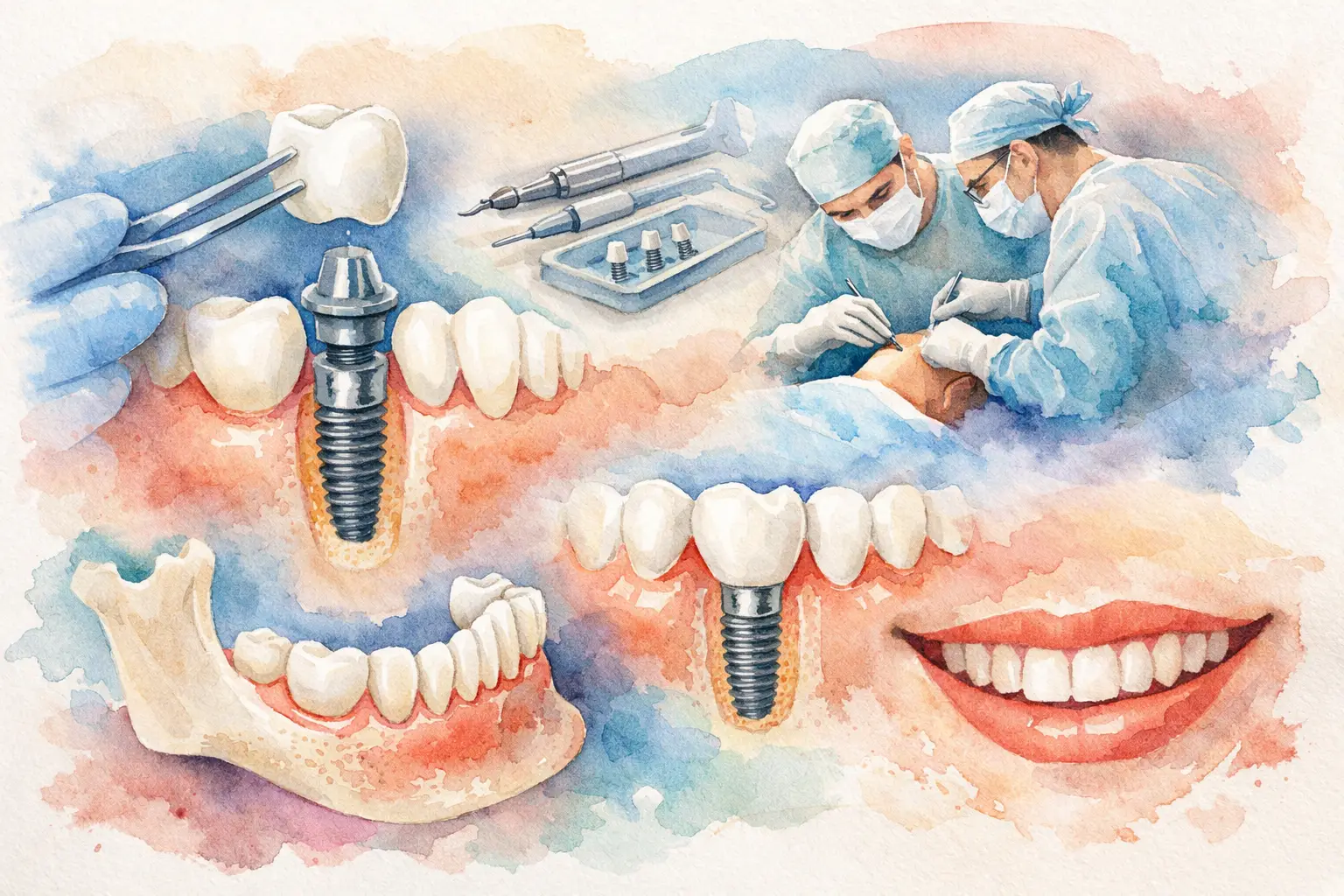
Osseointegration is the biological process in which bone bonds with the implant. It is the foundation for a stable, long-term result. Depending on the site, bone condition, implant stability at surgery, and whether grafting was required, this process may take several months.
Some implants can receive a temporary tooth early in treatment, while others are left covered or fitted with a healing cap until integration is complete. Neither approach is automatically better. The correct plan depends on whether early loading can be performed without placing the implant at unnecessary risk.
Your surgeon will assess healing through clinical examinations and, when appropriate, imaging before moving forward with the final crown, bridge, or full-arch restoration.
When symptoms are not part of normal healing
Mild soreness, swelling, and sensitivity are expected. However, contact your surgical team promptly if pain becomes more severe after initially improving, swelling continues to worsen after the third day, or bleeding does not settle with the instructions you were given.
You should also seek advice for fever, pus, a persistent bad taste or odor, increasing redness, numbness that does not improve as expected, a loose implant or temporary tooth, or difficulty swallowing or breathing. Breathing difficulty, significant facial swelling, or uncontrolled bleeding requires urgent medical attention.
Avoid diagnosing an infection or implant failure from online photographs or isolated symptoms. Early review allows your surgeon to examine the area, identify the cause, and advise the appropriate next step.
Follow-up visits are part of the treatment
Dental implant surgery is not complete on the day the implant is placed. Review appointments allow the surgical team to check wound healing, remove sutures when needed, monitor gum contours, and confirm that the implant is integrating as planned.
These visits also support the aesthetic outcome. The gum line around a visible front tooth requires careful management so that the final restoration has natural proportion and support. For complex cases, treatment may involve coordination between the oral and maxillofacial surgeon and the restorative dentist to ensure that implant position, bite, function, and appearance are aligned.
At Aesthetic Reconstructive Jaw Surgery, implant treatment is planned with both surgical stability and the final functional result in mind. That includes looking beyond the missing tooth to assess bone volume, bite forces, neighboring teeth, and the health of the surrounding tissues.
Protecting your implant after recovery
Once healing is complete, treat an implant as a long-term investment in oral function. Brush twice daily, clean between teeth using the method recommended for your restoration, and attend regular dental reviews. A night guard may be advised if you clench or grind your teeth, as excessive bite forces can affect the restoration and supporting components.
The most useful recovery plan is the one tailored to your procedure. Keep your post-operative instructions accessible, take medications as prescribed, and contact your surgeon rather than waiting if something feels wrong. Calm, attentive care in the early weeks gives the implant the best environment to become a stable part of your smile.