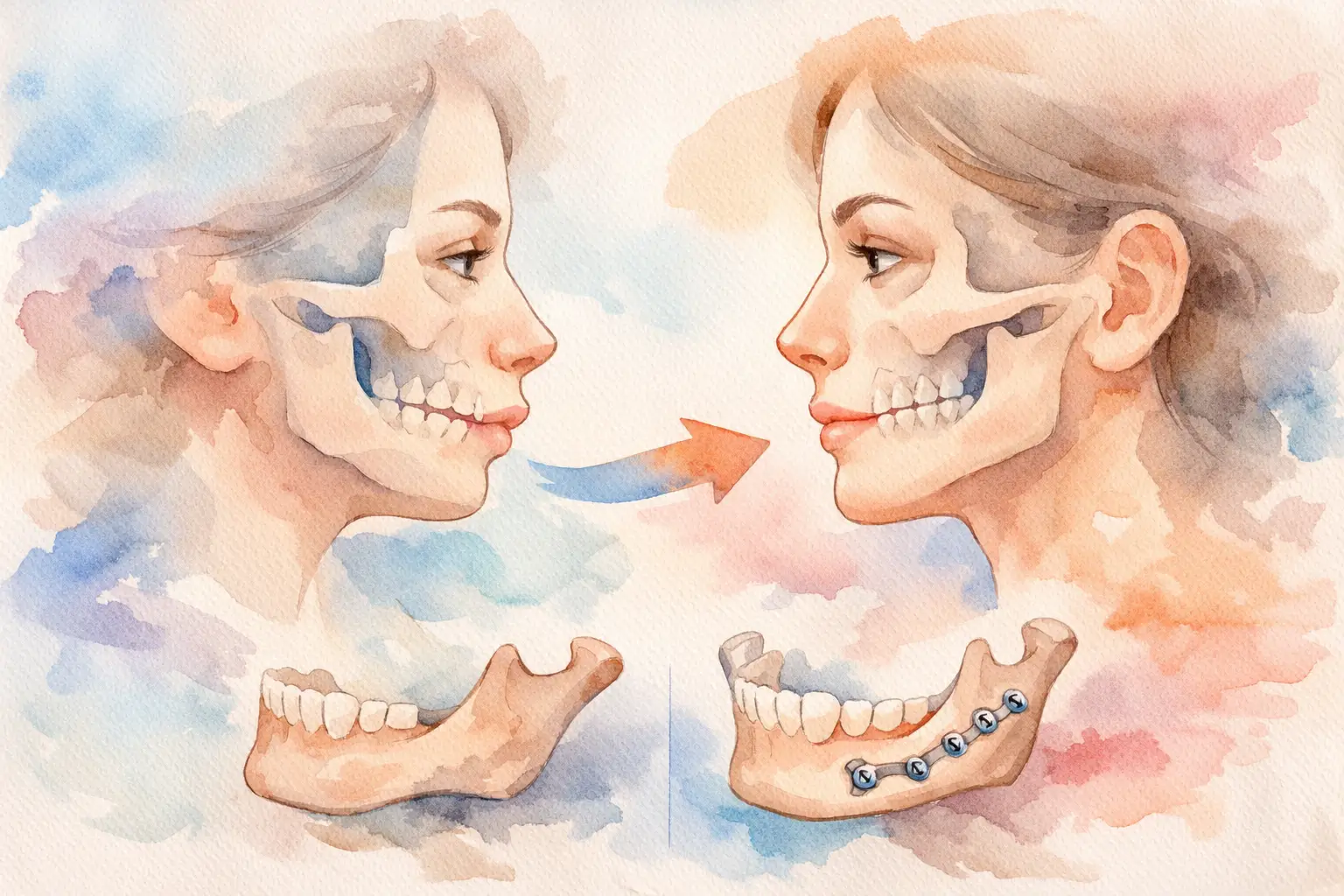
A face can appear uneven for many reasons, but when the underlying jawbones have developed differently, makeup, fillers, or dental adjustments alone cannot correct the source of the imbalance. For patients researching jaw asymmetry surgery singapore, the central question is usually not simply whether the face can look more balanced. It is whether treatment can improve the bite, comfort, breathing, and long-term health of the jaw at the same time.
Jaw asymmetry is highly individual. A chin that sits to one side, a smile that slopes, one jaw angle that appears more prominent, or teeth that meet unevenly may reflect a difference in the upper jaw, lower jaw, chin, joint, or a combination of these structures. A careful specialist assessment is essential before deciding whether surgery is appropriate.
What jaw asymmetry surgery is designed to correct
Corrective jaw surgery, also called orthognathic surgery, repositions one or both jaws when their size, position, or relationship cannot be adequately corrected with orthodontics alone. It is a reconstructive procedure planned around the facial skeleton, dental bite, jaw joints, and soft-tissue profile.
The goal is not to create a perfectly symmetrical face. Natural faces have small differences from one side to the other, and complete symmetry is neither realistic nor always desirable. The aim is to address clinically meaningful skeletal imbalance while preserving a natural appearance and achieving a stable, functional bite.
In some patients, asymmetry is primarily cosmetic and does not affect chewing or jaw comfort. In others, it is associated with a crossbite, open bite, difficulty bringing the teeth together, uneven tooth wear, speech concerns, facial strain, or obstructive sleep-related symptoms. The presence and severity of these concerns help guide treatment planning.
Why a specialist diagnosis matters
A shifted chin does not automatically mean that the lower jaw is the only issue. The upper jaw may be tilted or positioned asymmetrically, causing the lower jaw to adapt. In other cases, uneven lower-jaw growth, previous trauma, a developmental condition, or changes in the temporomandibular joints may be contributing factors.
A proper evaluation commonly includes a clinical examination, bite assessment, facial photographs, dental records, and three-dimensional imaging when indicated. These records allow the surgeon to assess the jaws in relation to the skull base, teeth, airway, and jaw joints. Digital surgical planning can then help map intended movements with precision before treatment begins.
This diagnostic stage also distinguishes skeletal asymmetry from concerns caused mainly by teeth, muscle bulk, soft tissue, or facial volume. Those conditions may require a different approach. Surgery should be recommended only when it offers a meaningful benefit that less invasive treatment cannot reliably provide.
The jaw joints need careful consideration
For patients with jaw clicking, locking, pain, limited opening, or a changing bite, the temporomandibular joints deserve particular attention. Active joint disease can affect jaw position and long-term stability. Depending on the findings, joint management may need to be addressed before, alongside, or separately from corrective jaw surgery.
This is one reason a consultation should look beyond facial photographs. An attractive planned profile is not enough if the bite is unstable or the joint condition has not been understood.
Treatment options for jaw asymmetry
Treatment depends on the cause, degree, and impact of the asymmetry. Mild dental asymmetry may be managed with orthodontic treatment, restorative dentistry, or selective dental adjustments. Where the concern is largely related to soft tissue or muscle volume, non-surgical aesthetic treatment may sometimes be considered, although it will not reposition the jawbone or correct the bite.
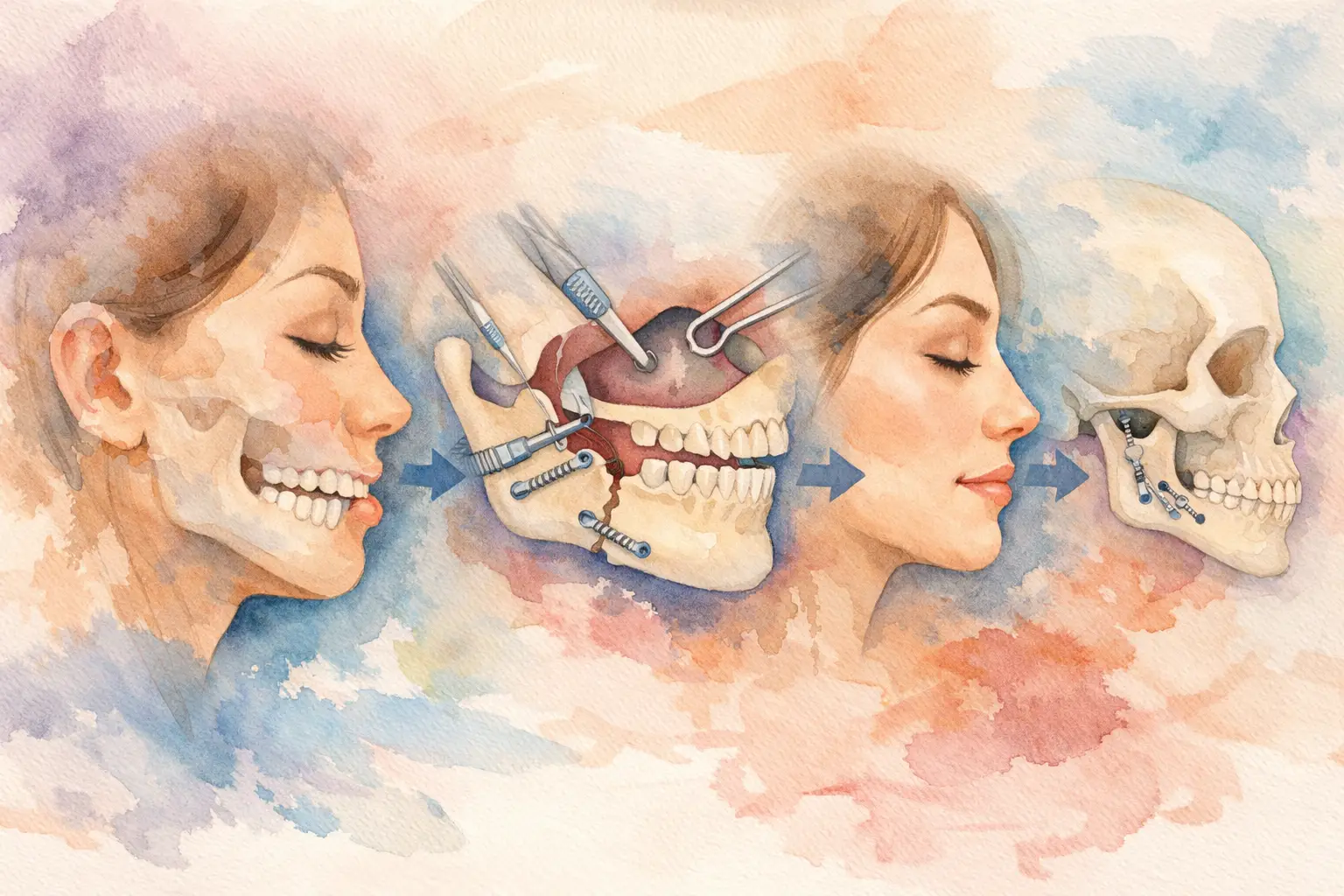
When skeletal differences are substantial, orthognathic surgery may involve the upper jaw, lower jaw, or both. Moving the upper jaw can level an uneven smile line or correct a cant. Repositioning the lower jaw can improve a deviated chin and bite relationship. In selected cases, genioplasty, which reshapes or repositions the chin, is used as an additional procedure to refine lower-face balance.
The treatment plan should be individualized. A patient with an asymmetric lower jaw but a stable upper jaw may need a different procedure from someone whose upper jaw is tilted and whose lower jaw has shifted in compensation. The best plan is not necessarily the smallest operation. It is the approach that addresses the true source of the imbalance while supporting stable function.
The role of orthodontics before and after surgery
For many patients, braces or clear aligners are part of the surgical journey. Teeth often adapt over time to a jaw discrepancy, so they may be angled in a way that masks the underlying skeletal problem. Orthodontic preparation places the teeth in positions that allow the jaws to be moved into the correct relationship during surgery.
This can be a surprising phase for patients because the bite may look temporarily less compensated before surgery. It is a planned step, not a sign that treatment is failing. After the jawbones have healed, orthodontic finishing refines how the teeth meet.
The timing varies considerably. Complex movements, previous orthodontic treatment, missing teeth, periodontal health, and the need for dental implants or restorative work can all influence the sequence. Coordinated planning between the oral and maxillofacial surgeon, orthodontist, and restorative dentist is particularly valuable in complex cases.
What to expect from surgery and recovery
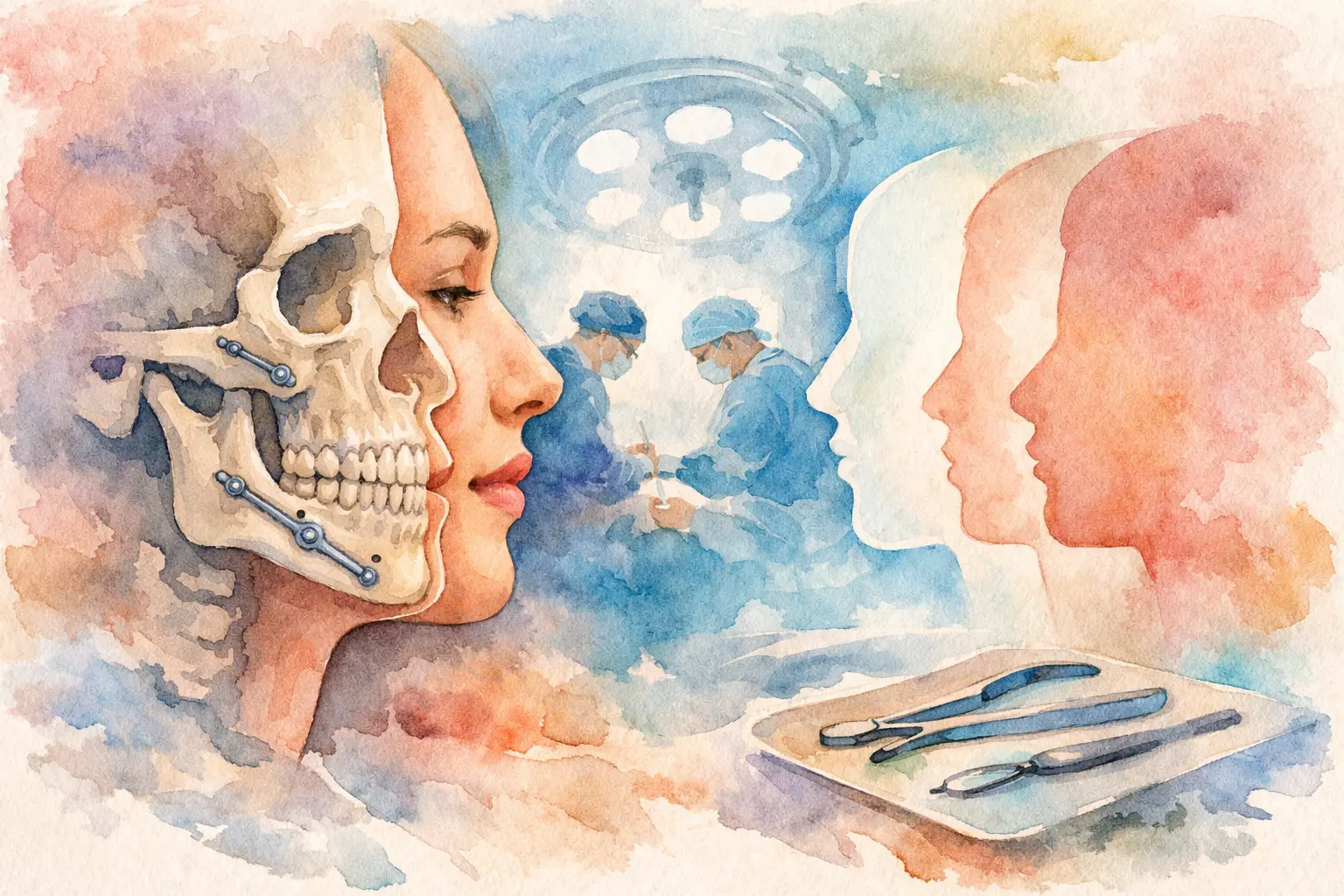
Corrective jaw surgery is performed in a hospital setting under general anesthesia. The surgical cuts are usually made inside the mouth, so there are generally no visible facial scars. The jawbones are repositioned according to the surgical plan and stabilized with small plates and screws designed to remain in place unless there is a specific reason to remove them.
Swelling, tightness, tiredness, and temporary changes in sensation are expected during early recovery. Most visible swelling improves substantially over several weeks, but subtle swelling and soft-tissue settling can continue for months. Numbness, particularly around the lower lip and chin after lower-jaw surgery, is a recognized risk and should be discussed in detail before treatment.
Patients typically begin with a modified diet and progress gradually as healing allows. Follow-up visits are important for monitoring the bite, wound healing, jaw movement, and oral hygiene. Time away from work or school depends on the procedure and the individual’s recovery, but patients should plan for a period of reduced activity rather than expecting an immediate return to normal routines.
Balancing benefits with surgical risks
Every operation involves trade-offs. Potential benefits may include better chewing, improved dental function, a more balanced facial appearance, and greater confidence in social settings. However, surgical planning must also account for risks such as bleeding, infection, relapse, nerve-related sensory changes, bite changes, joint symptoms, and the possibility of further treatment.
A trustworthy consultation makes room for these discussions. Patients should understand what surgery can reasonably improve, what it cannot guarantee, and what commitment is involved from orthodontic preparation through recovery. Clear expectations are part of safe care.
Who may be a suitable candidate?
Jaw surgery is usually considered after facial growth is largely complete, though the appropriate timing depends on the individual. Adults of many ages can also be candidates when their general health, dental condition, and treatment goals are suitable.
A patient may benefit from an assessment if they notice a chin deviation, persistent uneven bite, difficulty chewing, facial imbalance that has become more noticeable, or jaw symptoms alongside a visible asymmetry. Previous trauma, congenital conditions, and a history of changing bite patterns should also be raised during consultation.
At Aesthetic Reconstructive Jaw Surgery, planning for facial asymmetry is approached as both a functional and aesthetic question. The objective is to understand the whole facial and dental picture, then recommend treatment that is proportionate to the patient’s needs.
If jaw asymmetry affects how you bite, speak, breathe, or feel about your appearance, a specialist assessment can provide clarity before you commit to any treatment. The right next step is a plan built around your anatomy, your health, and the result that matters most to you.