A bite that never feels comfortable can affect far more than chewing. Some patients live with persistent jaw strain, worn teeth, speech concerns, facial imbalance, or sleep-disordered breathing despite years of orthodontic treatment. Understanding how corrective jaw surgery works can make the decision feel less overwhelming: it is a carefully planned process that repositions the jawbones to improve how the teeth, jaws, airway, and facial structures work together.
Corrective jaw surgery, also called orthognathic surgery, is not a one-size-fits-all procedure. The surgical plan is individualized around the patient’s skeletal anatomy, bite, facial proportions, symptoms, and long-term dental goals. In most cases, treatment is coordinated between an oral and maxillofacial surgeon and an orthodontist.
When corrective jaw surgery may be recommended
Braces move teeth within the jawbone. They cannot correct a significant difference in the size, position, or relationship of the upper and lower jaws. When the underlying issue is skeletal, orthodontics alone may create a compromise rather than a stable, functional bite.
Surgery may be considered for an underbite, overbite, open bite, crossbite, facial asymmetry, or a jaw that is too far forward or backward. It may also form part of treatment for obstructive sleep apnea when a recessed jaw structure contributes to a narrowed airway. Some patients seek treatment because of visible facial imbalance; others are primarily concerned about chewing difficulty, jaw fatigue, speech, or tooth wear. Often, functional and aesthetic concerns are closely connected.
A specialist evaluation determines whether symptoms arise from jaw position, tooth position, temporomandibular joint concerns, airway anatomy, or another cause. Not every bite discrepancy requires surgery, and surgery is not an appropriate solution for every type of jaw pain. A thorough diagnosis prevents treatment from being based on appearance alone.
How corrective jaw surgery works from diagnosis to planning
The process begins with a detailed consultation. The surgeon reviews the bite, facial proportions, dental health, medical history, jaw function, and patient priorities. Clinical photographs, dental scans or impressions, X-rays, and three-dimensional imaging may be used to assess the jaws and surrounding structures accurately.
The central question is not simply, “Where should the teeth meet?” A well-designed plan considers several relationships at once: the upper jaw to the skull base, the lower jaw to the upper jaw, the chin to the lips and nose, and the jaws to the airway. These measurements help the team identify movements that can improve bite function while respecting facial harmony.
Orthodontic preparation creates the right foundation
Most patients need orthodontic treatment before surgery. This stage can take many months because the teeth must be placed in positions that allow the jaws to be moved correctly. In some cases, the bite may appear temporarily less balanced during preparation. That can be frustrating, but it is often necessary because teeth that have compensated for an underlying jaw discrepancy need to be aligned with their own jawbones before surgery.
The orthodontist and surgeon communicate throughout this phase. Before the operation, updated records are reviewed, and the surgical movements are finalized. Digital planning and surgical splints can improve precision by allowing the team to simulate the intended jaw position before the procedure.
The operation repositions bone, not just teeth
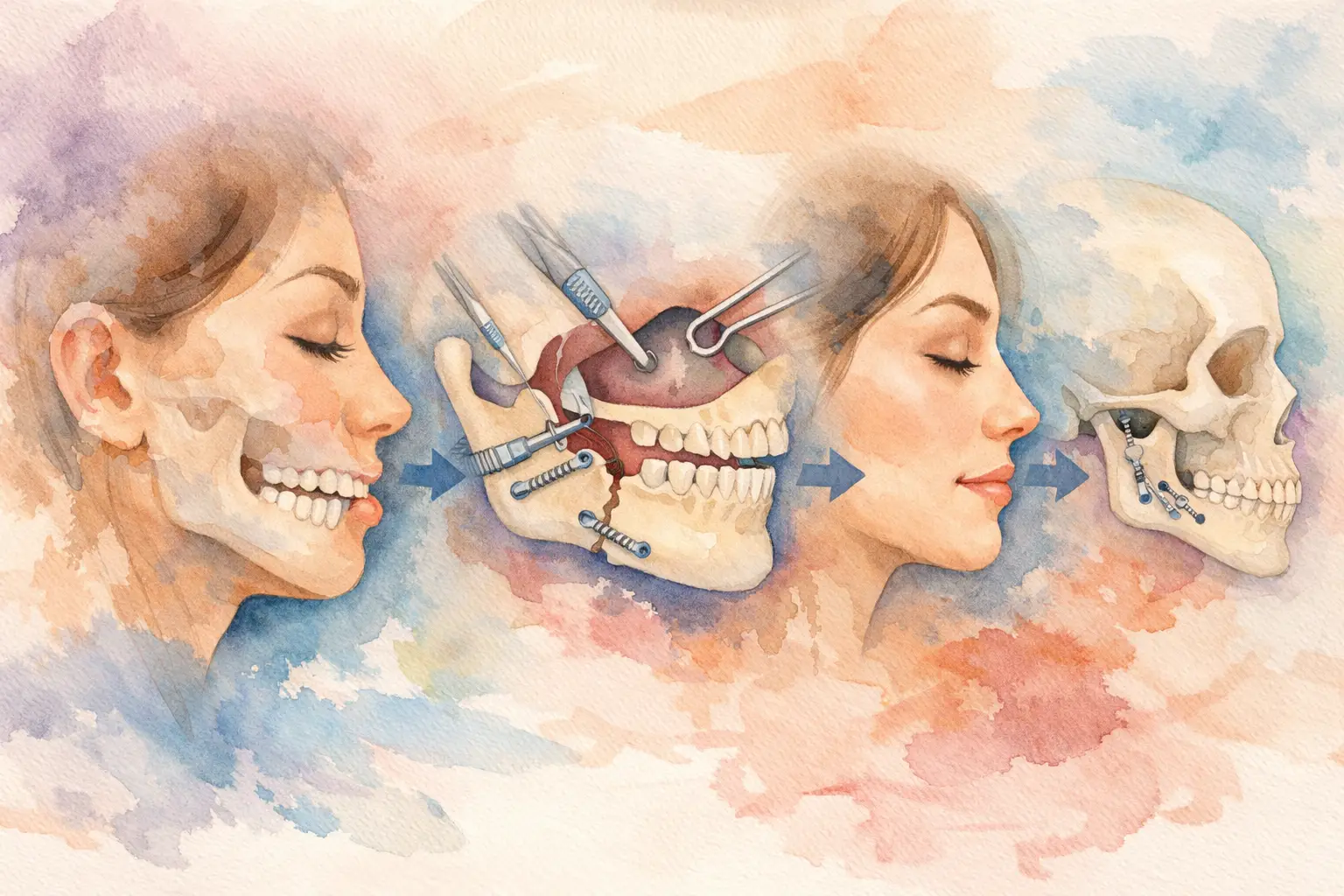
Corrective jaw surgery is performed in a hospital setting under general anesthesia. The operation may involve the upper jaw, lower jaw, chin, or a combination of these structures.
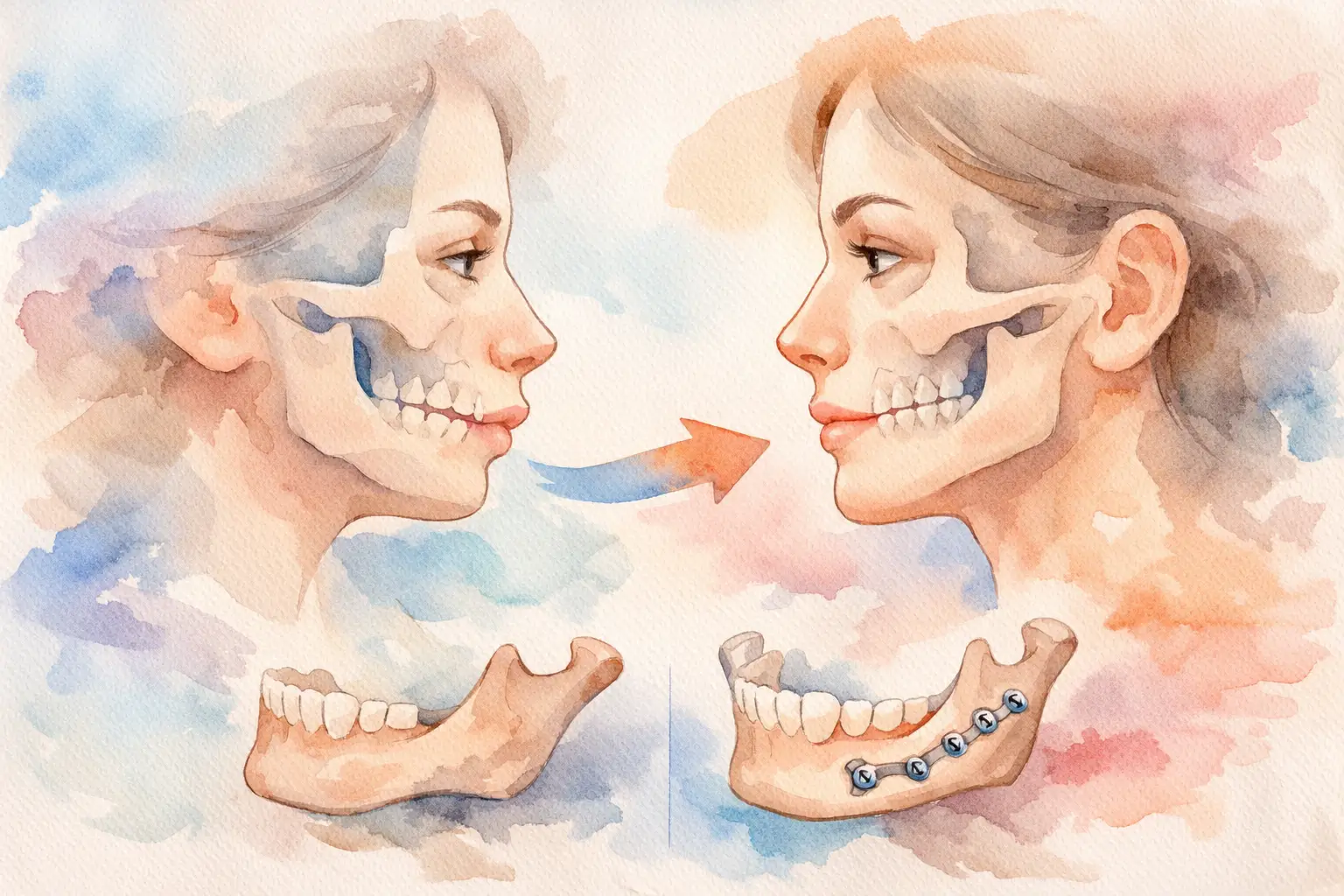
For upper-jaw surgery, the surgeon makes controlled bone cuts to mobilize the maxilla and reposition it in three dimensions. This may address an open bite, crossbite, excessive gum display, midface deficiency, or certain facial asymmetries. For lower-jaw surgery, controlled cuts are made in the mandible so the lower jaw can be moved forward, backward, rotated, or centered. Small titanium plates and screws hold the bone securely in its new position while healing occurs.
When chin proportion or contour remains a concern after the jaws are positioned, a genioplasty may be recommended. This procedure moves the chin bone independently and is distinct from placing a chin implant. It can improve lower facial balance without changing the bite.
In contemporary jaw surgery, the incisions are commonly made inside the mouth, so there are usually no visible facial scars. The exact technique, hospital stay, and duration of surgery depend on the complexity of the movements and whether one or both jaws are treated.
What changes after the jaws are moved
The immediate goal is a stable, functional bite. Yet moving the jaws also changes the support for the lips, cheeks, chin, and lower face. This is why corrective jaw surgery requires both functional analysis and careful attention to facial aesthetics.
For example, advancing a recessed lower jaw may improve an underbite relationship in one patient, while advancing both jaws may be more appropriate for another patient with airway concerns and a more generalized retrusive facial profile. Similarly, an upper-jaw movement can change tooth display, lip support, and facial length. The best plan depends on the individual anatomy, not on a standard measurement or a single ideal facial shape.
Patients should also understand the trade-offs. Larger skeletal movements can produce more substantial functional or aesthetic changes, but they may involve greater swelling, a longer recovery, or specific risks that require careful discussion. The goal is not to pursue the greatest possible movement. It is to select the movement that is safe, stable, and appropriate for the patient’s clinical needs.
Recovery is gradual and closely monitored
Swelling is expected after jaw surgery and is usually most noticeable during the first one to two weeks. Bruising, temporary stiffness, nasal congestion after upper-jaw surgery, and changes in sensation are also common. Lower-lip and chin numbness can occur after lower-jaw surgery because sensory nerves run close to the surgical site. Sensation often improves over time, although the degree and pace of recovery vary.
Patients generally begin with a liquid or modified soft diet and progress according to the surgeon’s instructions. Good oral hygiene is particularly important while the mouth is healing. Early follow-up visits allow the surgeon to monitor healing, bite stability, swelling, nutrition, and comfort.
Most people need time away from regular work, school, and strenuous activity. The precise timeline depends on the procedure and the individual’s recovery. Bone healing continues for several weeks, while final refinement of orthodontic treatment often continues after surgery. Facial swelling also resolves gradually, so the final appearance should not be judged in the early postoperative period.
Safety, stability, and realistic expectations
Corrective jaw surgery is a significant procedure, and informed consent should include a clear discussion of potential risks. These can include bleeding, infection, changes in sensation, bite changes, delayed healing, sinus-related concerns after upper-jaw procedures, relapse, and the possible need for additional treatment. Serious complications are uncommon, but they must be considered in relation to the expected benefits.
Long-term stability depends on several factors: the diagnosis, the surgical movements, bone quality, orthodontic coordination, bite finishing, and following recovery instructions. Patients with clenching, joint problems, untreated gum disease, smoking exposure, or certain medical conditions may need additional preparation or risk management.
The strongest outcomes are usually achieved when patients are clear about what surgery can and cannot change. Orthognathic surgery can improve skeletal balance and function; it does not guarantee perfection, eliminate every source of facial asymmetry, or resolve jaw symptoms unrelated to jaw position.
Choosing the right time for treatment
Jaw growth should generally be complete before corrective jaw surgery is performed, which is why treatment is often planned in late adolescence or adulthood. Adults of many ages can still be suitable candidates if their oral health, bone condition, and general medical health support surgery.
If you are considering treatment, bring practical questions to your consultation: What is causing my bite problem? Would orthodontics alone be enough? Which jaw or jaws would need to move? How could the plan affect breathing, sensation, facial appearance, and recovery? A specialist should be able to explain the reasoning in terms you can understand, not simply show a technical plan.
Corrective jaw surgery is ultimately a planned reconstruction of the relationship between the teeth, jaws, and face. When it is recommended for the right reasons and performed within coordinated specialist care, it can provide a more comfortable bite, stronger function, and facial balance that feels naturally your own.