Waking up exhausted after what should have been a full night of sleep is frustrating. For some patients, the problem is not simply poor sleep habits – it is a structural airway issue, and sleep apnea jaw surgery may be one of the most effective ways to address it when the jaws themselves contribute to obstruction.
What sleep apnea jaw surgery actually treats
Obstructive sleep apnea happens when the upper airway narrows or collapses during sleep. In many patients, this narrowing is influenced by anatomy. A smaller lower jaw, a retruded upper jaw, a narrow facial skeleton, or a tongue position crowded by jaw structure can all reduce the space available for airflow.
This is why treatment is not always one-size-fits-all. Some people do well with CPAP. Others benefit from oral appliance therapy, weight management, or nasal treatment. But when the underlying problem is skeletal, non-surgical care may improve symptoms without fully correcting the cause.
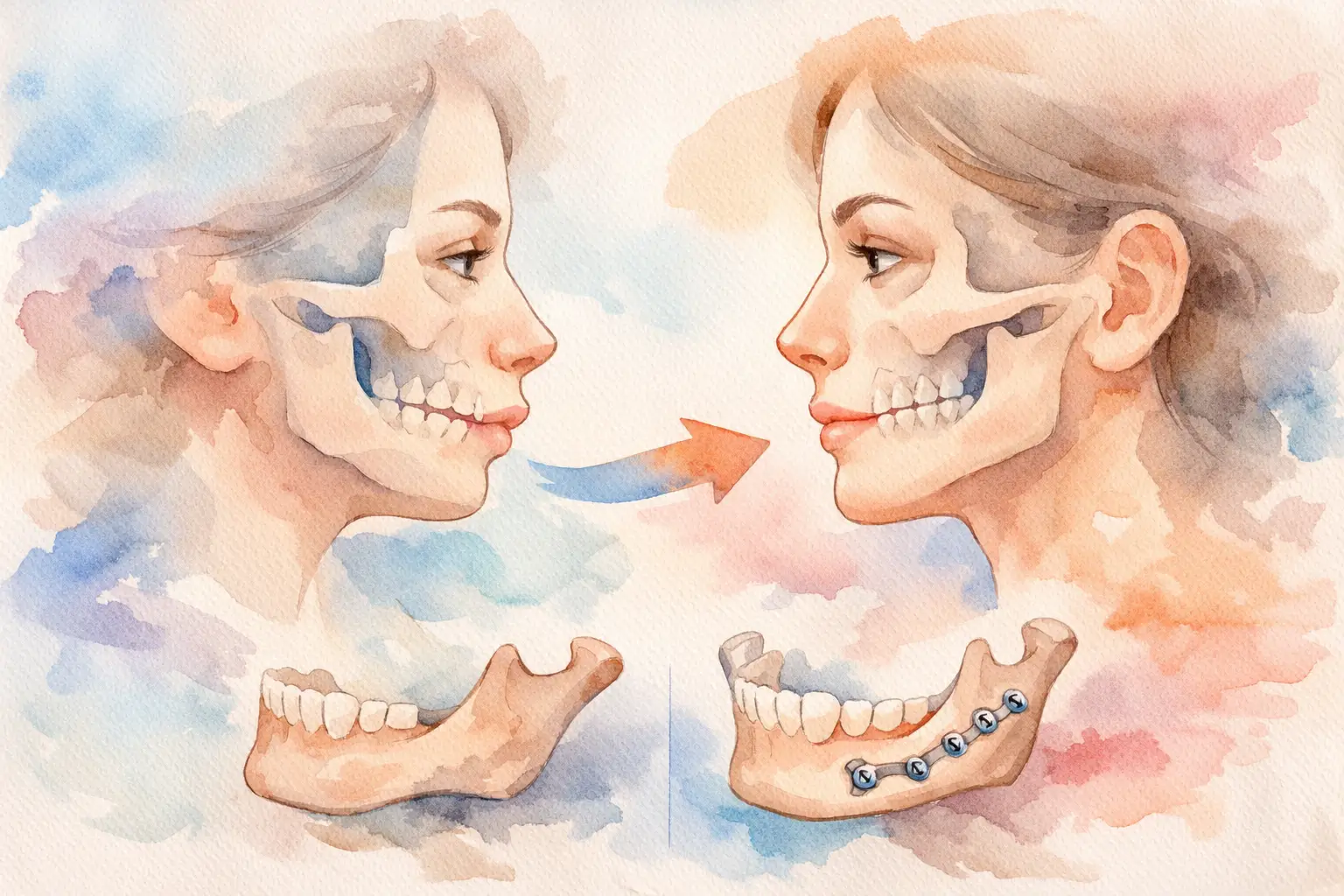
Sleep apnea jaw surgery is designed to enlarge the airway by repositioning the upper jaw, lower jaw, or both. Rather than trying to hold the airway open from the outside, the surgery changes the internal framework that supports breathing.
Who may be a candidate for sleep apnea jaw surgery
Jaw surgery is not the first step for every patient with sleep apnea, and that is an important distinction. The best candidates usually have confirmed obstructive sleep apnea plus signs that jaw position is part of the problem.
This often includes patients with a recessed chin, a small lower face, bite irregularities, or persistent sleep apnea despite attempts with CPAP or oral appliances. It can also be relevant for patients who cannot tolerate CPAP long term. Younger adults and older adolescents with jaw underdevelopment may be especially appropriate candidates when breathing concerns overlap with bite or facial balance issues.
That said, candidacy depends on more than appearance. A proper assessment typically includes sleep study results, medical history, airway evaluation, facial and dental analysis, and imaging. In some cases, surgery may offer a major improvement. In others, a different treatment plan may be safer or more predictable.
Types of jaw surgery used for sleep apnea
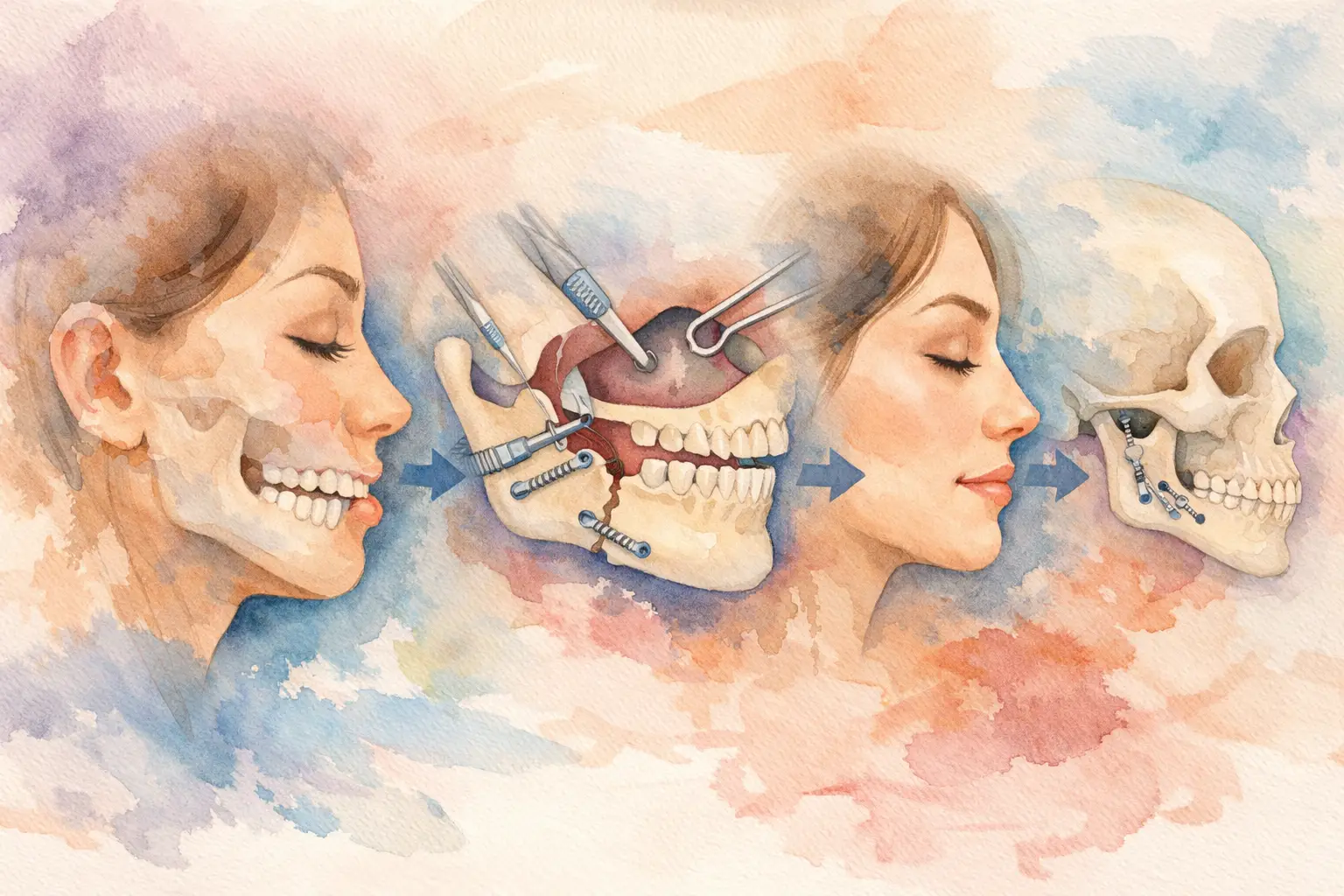
The procedure most often associated with severe obstructive sleep apnea is maxillomandibular advancement. This involves moving both the upper jaw and lower jaw forward. Advancing both jaws also brings the attached soft tissues forward, including structures that influence tongue position and the space behind the palate. The result is often a larger, more stable airway.
Some patients may require genioglossus advancement or chin-related procedures as part of a broader airway strategy, but these are not interchangeable with comprehensive jaw advancement. If the airway collapse is driven by a more significant skeletal deficiency, limited procedures may not provide enough benefit.
For patients who also have jaw misalignment, difficulty chewing, or facial imbalance, orthognathic surgery can address both function and airway concerns within a single treatment plan. This is one reason specialist evaluation matters. The goal is not simply to move bones, but to create a balanced result that supports breathing, bite function, and facial harmony.
How sleep apnea jaw surgery is planned
Good outcomes depend heavily on planning. This is not a procedure that should be approached in a generic way.
The process usually starts with diagnosis and confirmation of obstructive sleep apnea, followed by a detailed examination of the jaws, bite, and facial structure. Digital imaging, dental records, and surgical planning tools help determine how much advancement is needed and whether both jaws should be repositioned.
In many cases, orthodontic preparation is part of the process. Teeth may need to be aligned before surgery so the jaws can be moved into the correct functional position. For patients who are mainly focused on sleep quality, this can feel like an unexpected part of treatment. However, stable airway surgery also needs a stable bite.
A careful surgical plan also considers soft tissue effect, facial proportions, and long-term joint function. That matters because success is not only defined by a better sleep study. It also includes whether the patient can chew comfortably, maintain the result, and feel confident in the postoperative appearance.
What to expect during recovery
Most patients want to know two things right away: how painful recovery is, and how long normal life is disrupted. The honest answer is that recovery is significant, but manageable with proper support and preparation.
Jaw surgery is typically performed under general anesthesia. Swelling is expected, especially in the first one to two weeks. A temporary change in diet is standard, and speech may feel different early on because of swelling and limited jaw movement. Fatigue is also common in the initial recovery period.
Most patients improve gradually over several weeks, with continued refinement over months. Returning to desk-based work or school may be possible within a few weeks depending on the extent of surgery and individual healing. Full bony healing takes longer, and follow-up is important to monitor progress, bite stability, and airway outcome.
Temporary numbness, especially in the lower lip or chin region, can occur because sensory nerves run through the jaw. In many patients this improves over time, but the degree and duration vary. This is one of the reasons a detailed preoperative discussion is essential.
Benefits and trade-offs to understand
When sleep apnea is linked to jaw anatomy, surgery can offer benefits that go beyond symptom control. Many patients experience meaningful improvement in breathing during sleep, reduced snoring, better daytime alertness, and less dependence on device-based treatment. For selected patients, it can be one of the most definitive treatment options available.
There can also be added benefits when jaw position affects the bite or facial balance. Improved chewing function, correction of jaw discrepancy, and a more proportionate lower face may be part of the outcome.
Still, surgery involves trade-offs. It is invasive, recovery takes time, and no responsible surgeon should promise a perfect result for every case. Some patients need a multidisciplinary plan that includes a sleep physician, orthodontist, and maxillofacial surgeon. Others may have medical factors, weight-related issues, or airway patterns that make surgery less predictable as a standalone solution.
The right question is not whether surgery is the strongest option in general. It is whether it is the right option for your anatomy, your sleep study findings, and your treatment goals.
Sleep apnea jaw surgery versus CPAP and oral appliances
CPAP remains highly effective when it is used consistently. For many patients, it is the first-line treatment because it is non-surgical and can control airway collapse well. The difficulty is long-term tolerance. Masks, pressure settings, dryness, and disrupted sleep experience can make adherence challenging.
Oral appliances may help patients with mild to moderate obstructive sleep apnea, particularly when the lower jaw can be brought forward enough to improve airflow. These devices can be helpful, but their effectiveness depends on the severity of collapse and the structure of the airway.
Jaw surgery differs because it changes anatomy rather than managing it night by night. That can be a major advantage for the right patient, but it also means the decision requires more careful evaluation. Surgery is not better simply because it is more aggressive. It is better only when the anatomical diagnosis supports it.
Questions worth asking at your consultation
A good consultation should leave you with more clarity, not more confusion. Ask whether your jaw structure is a meaningful cause of your sleep apnea, what type of skeletal movement is being proposed, and how success will be measured after surgery. It is also reasonable to ask about orthodontic needs, expected facial changes, recovery milestones, and nerve-related risks.
Patients often worry that jaw advancement means looking dramatically different. In reality, surgical planning is individualized. In a specialist setting, airway goals and facial aesthetics are considered together, not as competing priorities. That balance is especially important in procedures that affect the lower face and profile.
At Aesthetic Reconstructive Jaw Surgery, this kind of discussion is part of responsible patient care. The decision to proceed should feel informed, not rushed.
When surgery makes sense
The patients who tend to feel most satisfied after sleep apnea jaw surgery are those who understand why it is being recommended. If your breathing problem is strongly tied to jaw position, and if non-surgical treatment has been ineffective, intolerable, or incomplete, surgery may offer a structural solution with lasting value.
The decision deserves careful thought, but it should not be avoided simply because it sounds major. When the airway, bite, and facial structure are all part of the same problem, treating them together can be the most logical path forward. A thorough specialist evaluation can tell you whether that path fits your anatomy and your life.