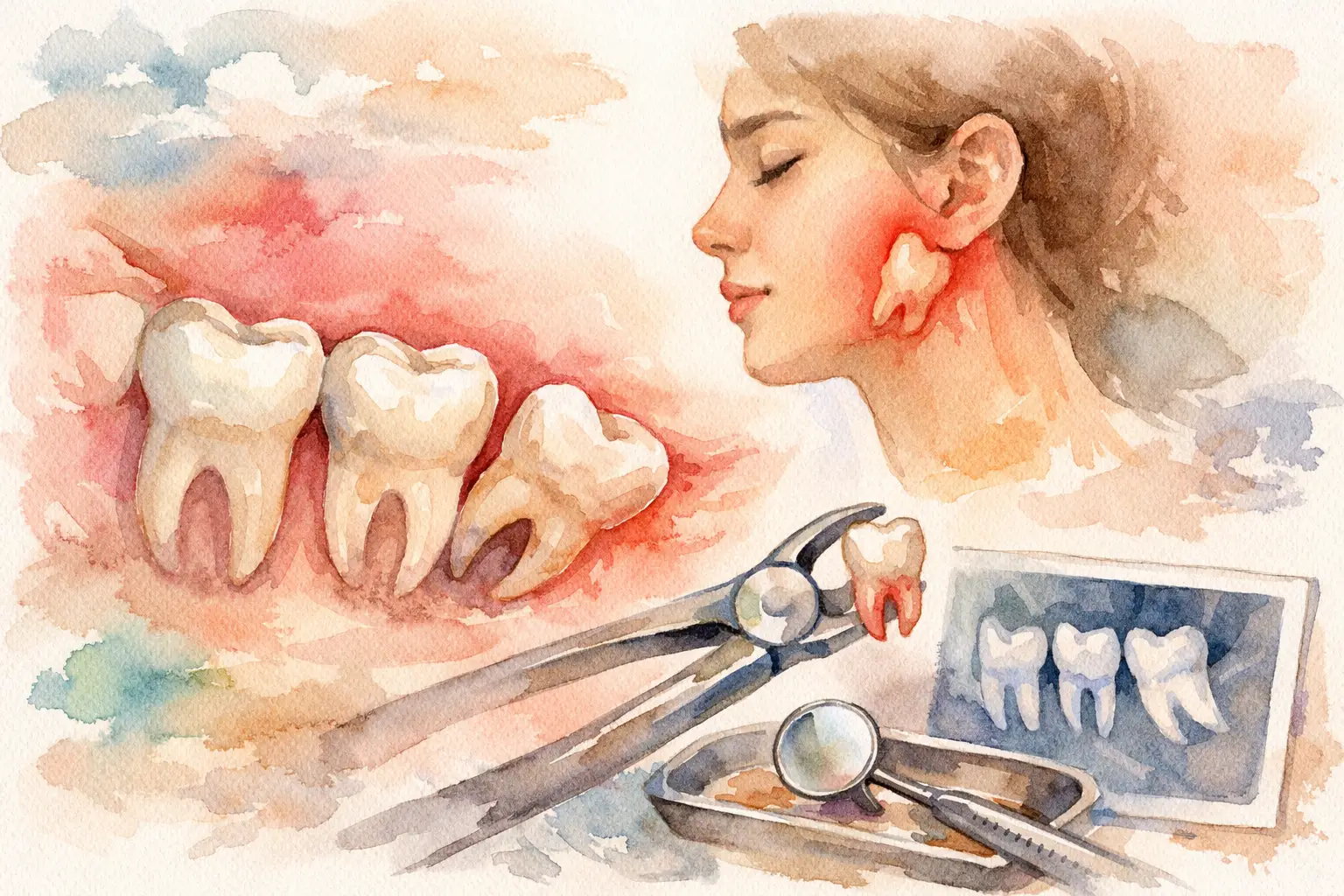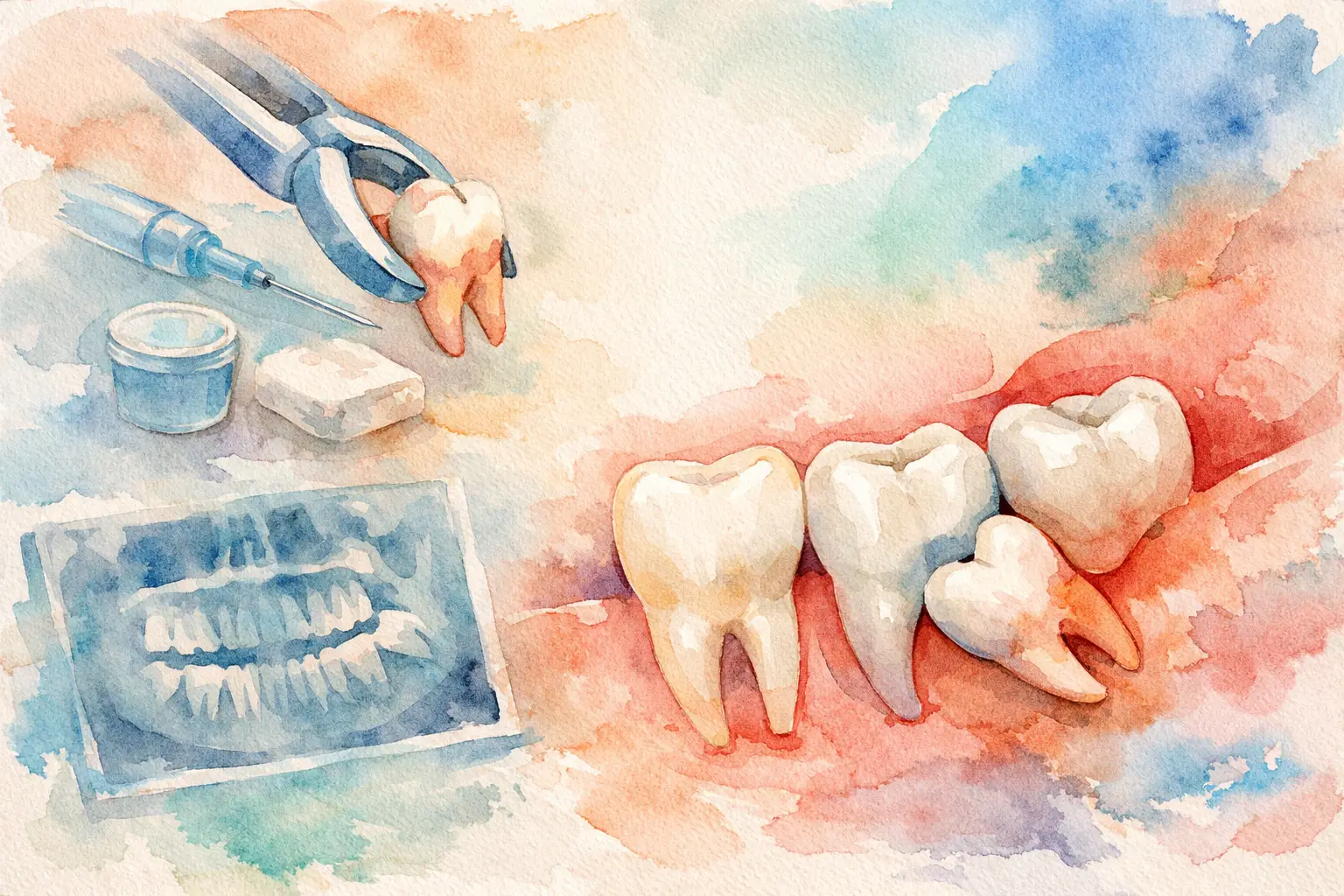
A wisdom tooth removal guide should do more than tell you that the procedure is common. Most patients want to know something more practical: Do I really need it, what happens during surgery, and how difficult will recovery be? Those are reasonable questions, especially when the tooth is painful, partially erupted, or has been flagged on an X-ray before it has caused any symptoms.
Wisdom teeth, or third molars, are the last teeth to develop and usually emerge in the late teens or early twenties. Some come in normally and remain easy to clean. Others stay trapped in the jawbone or gum, press against neighboring teeth, or create areas where food and bacteria collect. The right treatment depends on position, symptoms, oral hygiene access, and the risk of future disease.
When this wisdom tooth removal guide applies
Not every wisdom tooth needs surgery. Removal is often recommended when a tooth is impacted, partly erupted, repeatedly infected, decayed, damaging the adjacent molar, or associated with cyst formation or gum disease. In other cases, a wisdom tooth may be monitored over time if it is healthy, fully erupted, functional, and straightforward to clean.
This is where specialist assessment matters. Two patients can have similar symptoms but very different anatomy on imaging. One may need a simple extraction, while another has a deeply impacted lower wisdom tooth close to the inferior alveolar nerve and requires a more careful surgical approach.
A consultation usually includes a clinical examination and imaging, often with a panoramic X-ray. If the roots appear close to important structures, additional three-dimensional imaging may be advised. The purpose is not to make treatment sound more complex than it is. It is to plan surgery accurately and reduce avoidable risk.
Common reasons wisdom teeth are removed
Pain is the reason many patients seek help, but it is not the only one. A partially erupted wisdom tooth can create a flap of gum tissue that traps bacteria and leads to pericoronitis, a localized infection that may cause swelling, bad taste, difficulty chewing, and limited mouth opening. These episodes can recur and often become more frequent over time.
Some wisdom teeth do silent damage. They may contribute to decay on the back of the second molar, bone loss between teeth, or gum inflammation in areas that are difficult to clean. Impacted teeth can also be associated with cystic change, although that is less common. If a wisdom tooth is already affecting the health of the adjacent tooth, delaying treatment can make future care more involved.
There are also cases where removal is advised before orthodontic, orthognathic, or restorative treatment. Timing can matter. If another planned procedure will affect the same region of the mouth, coordinating care can improve healing and simplify the overall treatment sequence.
What happens before surgery
A good wisdom tooth removal guide should make the preoperative stage feel predictable. Before surgery, your surgeon will review your symptoms, medical history, medications, allergies, and imaging. If you have a history of facial swelling, jaw stiffness, recurrent infections, or prior difficult extractions, that should be discussed early.
The position of the tooth influences the surgical plan. Upper wisdom teeth are often more straightforward, though not always. Lower wisdom teeth can be more technically demanding because of root shape, depth of impaction, and proximity to the main sensory nerve of the lower lip and chin.
You will also be advised about anesthesia options. Many removals are performed comfortably with local anesthesia, sometimes with sedation if anxiety is high or multiple teeth are being treated. The best choice depends on the complexity of the surgery, your medical history, and your comfort level. There is no single correct option for every patient.
Wisdom tooth removal guide to the procedure itself
The procedure is usually shorter and more controlled than patients expect. Once the area is anesthetized, the surgeon may make a small incision in the gum to access the tooth. If the tooth is impacted, a limited amount of bone may need to be removed. In many cases, the tooth is sectioned into smaller parts so it can be removed with less pressure on the surrounding tissues.
After removal, the area is cleaned and stitched if needed. Dissolving sutures are commonly used. You may feel pressure during the procedure, but sharp pain should not occur. If anything feels uncomfortable, the anesthetic can be adjusted.
Surgical difficulty varies. A fully erupted tooth with straight roots is different from a deeply impacted tooth angled toward the neighboring molar. That is why recovery stories from friends or online forums are not always helpful comparisons. The anatomy of your case drives the experience more than the label of the procedure.
Recovery after wisdom tooth removal
Most patients do well with clear instructions, appropriate medication, and a realistic idea of what the first few days will feel like. Swelling is common and usually peaks around the second or third day before gradually settling. Mild bleeding or blood-tinged saliva can occur in the first 24 hours. Jaw stiffness is also common, especially after lower wisdom tooth surgery.
Pain should improve progressively, not worsen each day. A soft diet, good hydration, and careful oral hygiene are important. Rest helps, but complete inactivity is not always necessary for long. The exact advice depends on how many teeth were removed and how complex the surgery was.
Patients are often most concerned about dry socket. This occurs when the protective blood clot at the extraction site is lost too early, exposing the bone underneath. It can cause significant pain a few days after surgery. Not every patient is at equal risk. Surgical difficulty, smoking, and vigorous rinsing or spitting too soon can increase the chance of this complication.
Recovery is also affected by age. Younger patients often heal more predictably because the roots may be less fully formed and the surrounding bone is generally less dense. That does not mean older adults cannot have wisdom teeth removed safely. It simply means treatment planning and recovery expectations may need to be more individualized.
Risks and trade-offs to understand
Every surgical procedure has risks, and a trustworthy wisdom tooth removal guide should say that plainly. The most common short-term issues are swelling, bruising, discomfort, limited mouth opening, and temporary difficulty eating normally. Infection can occur, though it is not routine.
With lower wisdom teeth in particular, there can be a risk of altered sensation in the lower lip, chin, or tongue if nearby nerves are irritated. In many cases, if altered sensation occurs, it is temporary and improves with time. The degree of risk depends heavily on the tooth position and root anatomy seen on imaging.
There are also trade-offs in timing. Removing a problematic tooth earlier may reduce the chance of repeated infections or damage to the second molar. On the other hand, operating on a tooth that is symptom-free and stable requires a sound clinical reason. The decision should not be automatic. It should be based on present findings and future risk.
When specialist care may be the better option
Some wisdom teeth are routine. Others are not. Deep impactions, proximity to the nerve canal, unusual root form, associated pathology, previous failed extraction attempts, or significant medical complexity may justify treatment by an oral and maxillofacial surgeon.
Patients often feel reassured when they understand why referral matters. Specialist care is not about making a common procedure seem dramatic. It is about surgical judgment, advanced imaging interpretation, and the ability to manage more difficult anatomy safely. In a practice such as Aesthetic Reconstructive Jaw Surgery, that specialist perspective also sits within a broader understanding of jaw function, facial structures, and long-term oral rehabilitation.
Questions patients should ask
Before proceeding, ask whether the tooth is impacted, whether the neighboring tooth is at risk, what imaging shows about the nerves or sinus, what anesthesia is appropriate, and what your recovery is likely to involve. These questions are not signs of hesitation. They are signs that you are making an informed decision.
It is also reasonable to ask what happens if you wait. In some cases, monitoring is entirely appropriate. In others, delay may make surgery more difficult or allow damage to progress quietly. The right answer is specific to your anatomy and oral health, not a general rule from the internet.
If you are weighing whether to move forward, focus less on whether wisdom tooth removal is common and more on whether it is indicated in your case. A careful assessment, a clear surgical plan, and proper follow-up usually make the process far less daunting than patients imagine.