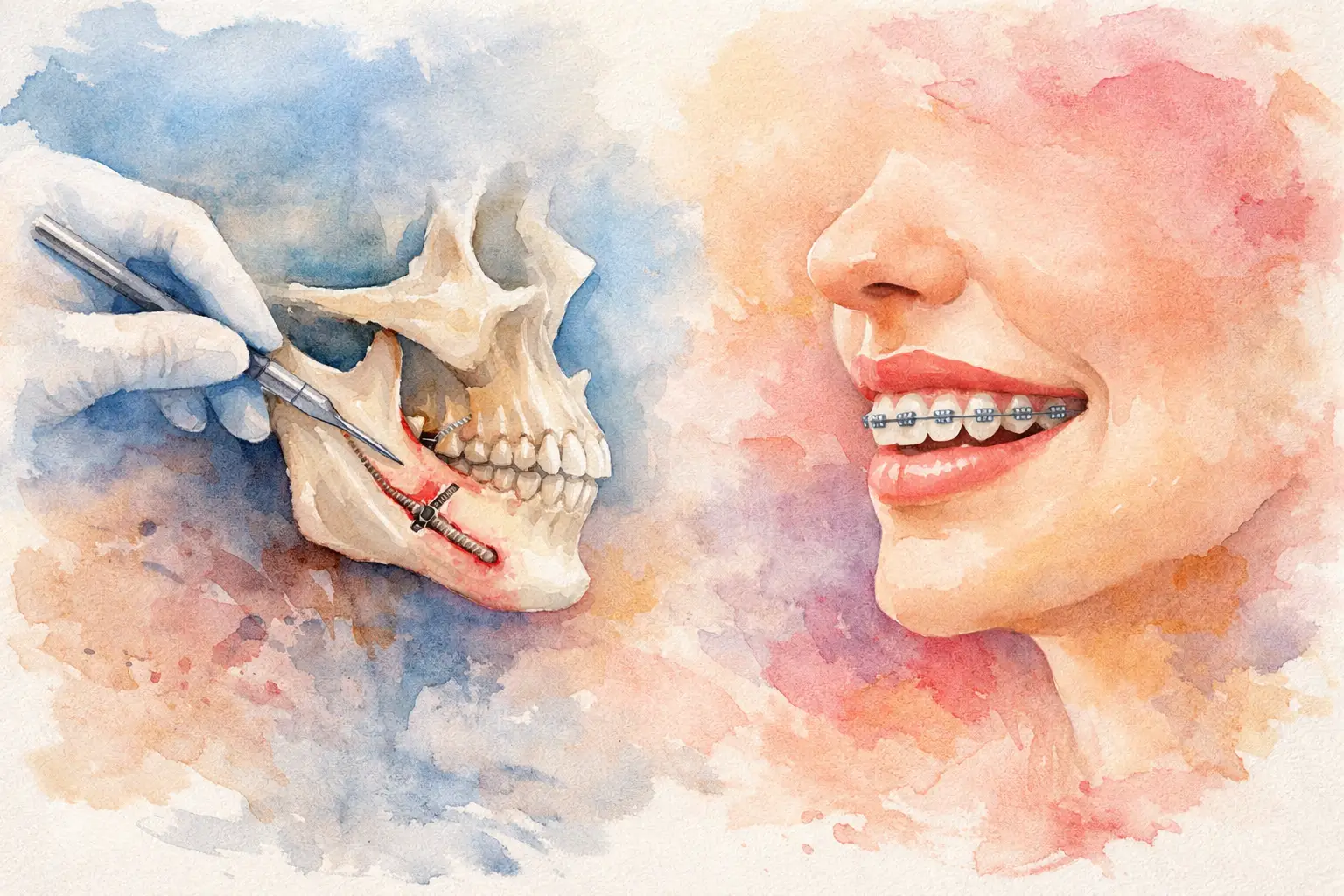
A straight smile can still hide a bite problem. That is why the question of jaw surgery vs braces is not really about choosing the less intimidating option. It is about identifying where the problem actually starts – in the teeth, in the jaws, or in both.
For some patients, braces alone can align teeth very well. For others, braces can improve dental crowding while leaving the underlying jaw imbalance unchanged. If your concerns include difficulty chewing, a very prominent overbite or underbite, facial asymmetry, speech issues, or airway problems, the difference matters.
Jaw surgery vs braces: what is the real difference?
Braces move teeth through the bone. They are designed to correct dental alignment, spacing, rotation, and certain bite issues that come from tooth position. Orthodontic treatment can be highly effective when the jaws themselves are proportionate and the problem is mainly dental.
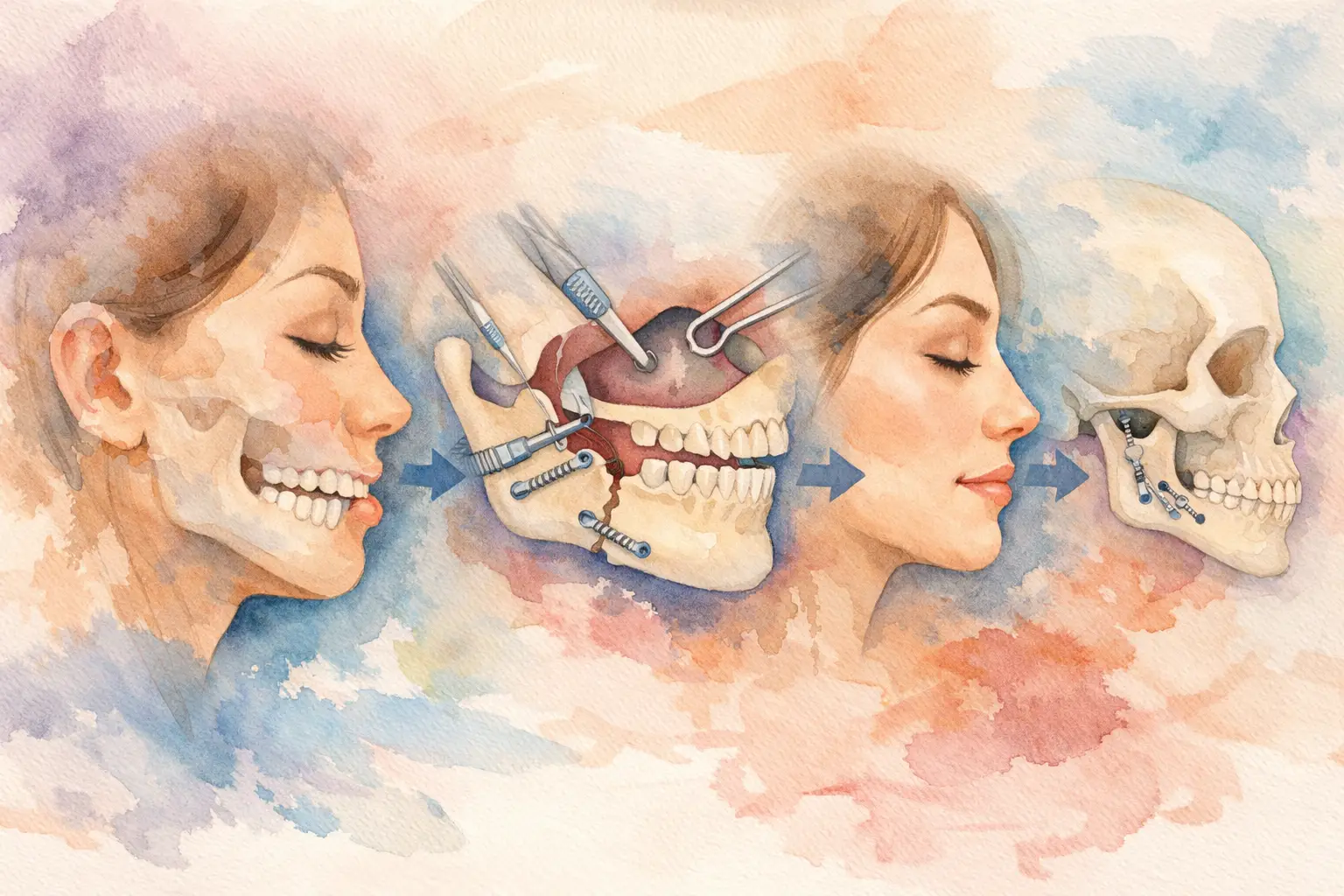
Jaw surgery, also called orthognathic surgery, repositions the upper jaw, lower jaw, or both. This addresses skeletal discrepancies that braces alone cannot correct. In many cases, surgery is combined with orthodontic treatment because the teeth must be aligned properly before and after the jaws are moved.
This is the key distinction. Braces treat tooth position. Jaw surgery treats jaw position. When patients compare the two, they are often comparing treatments that solve different levels of the same problem.
When braces may be enough
If your bite problem is mild to moderate and caused mainly by dental crowding or tooth angulation, braces or clear aligners may be the most appropriate treatment. This is often the case when the upper and lower jaws are well related to each other, facial proportions are balanced, and there are no major functional concerns.
Braces may be suitable if your main goals are to straighten crooked teeth, close gaps, correct minor overbite or crossbite patterns, and improve oral hygiene by making teeth easier to clean. In these situations, orthodontic treatment can produce stable, healthy results without surgery.
For younger patients who are still growing, some jaw-related concerns can also be guided to a degree with growth modification appliances. That window is limited. Once facial growth is complete, however, true skeletal discrepancies usually cannot be corrected with orthodontics alone.
When jaw surgery may be necessary
Jaw surgery becomes part of the discussion when the mismatch between the upper and lower jaws is significant. This may present as an underbite, severe overbite, open bite, gummy smile, long-face pattern, recessed chin, facial asymmetry, or difficulty bringing the lips together comfortably at rest.
Functional symptoms often matter just as much as appearance. Patients may struggle with chewing, bite instability, excessive tooth wear, jaw strain, speech concerns, or even obstructive sleep apnea. In these cases, straightening the teeth without addressing the jaw foundation can leave the core issue unresolved.
A common example is camouflage orthodontics. This means using braces to make the bite look better by tipping teeth into compensation for an underlying jaw discrepancy. For selected patients, that may be reasonable. But in more severe cases, camouflage can compromise facial balance, periodontal support, or long-term bite function. It can create improvement on paper while leaving the patient dissatisfied in daily life.
Why some patients need both
The choice is not always jaw surgery or braces. Often, it is jaw surgery and braces.
Before surgery, orthodontic treatment aligns the teeth within each jaw so the surgeon can move the jaws into the correct skeletal relationship. This stage can temporarily make the bite look worse because dental compensations are being removed. That can be frustrating, but it is often necessary for an accurate surgical correction.
After surgery, braces or aligner refinement help settle the bite into a stable final result. This combined approach is common in adults with moderate to severe skeletal malocclusion.
Appearance, function, and the limits of camouflage
Many patients first seek treatment because of appearance. They may feel their chin is too far back, their lower face looks asymmetrical, or their smile shows too much gum. These are valid concerns, and they often overlap with functional findings.
Braces can improve smile alignment, but they do not reposition the jawbones to change facial proportions in a meaningful way. If the upper jaw is too prominent, the lower jaw is retruded, or the chin point is off-center because the jaw is asymmetrical, orthodontics alone has clear limits.
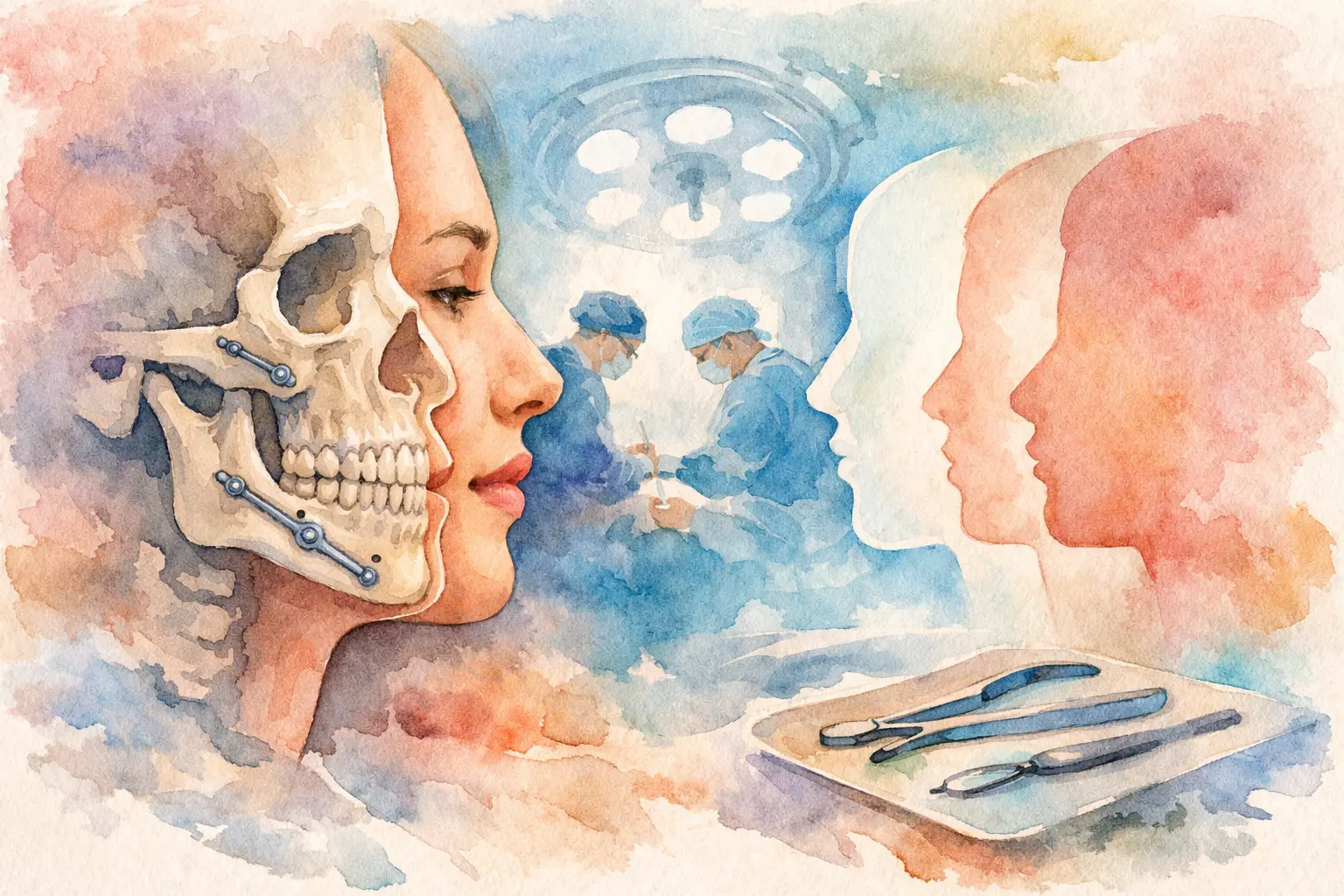
Jaw surgery can improve facial balance because it changes the underlying bony framework. That said, surgery is not a cosmetic shortcut. It is a medically planned procedure based on bite analysis, facial assessment, airway considerations, imaging, and long-term stability. The best surgical outcomes are both functional and aesthetic, not one at the expense of the other.
How bite and airway concerns change the decision
One of the biggest reasons to consider surgery is that jaw position affects more than tooth alignment. A retruded lower jaw or narrow jaw relationship can contribute to airway narrowing, mouth breathing, and sleep-disordered breathing in selected patients. Similarly, a severe open bite or asymmetrical bite may place abnormal stress on the jaw joints and chewing muscles.
Braces can improve occlusion to a point, but they do not enlarge the airway or reposition a deficient jaw in a fully grown patient. When breathing, joint loading, or skeletal imbalance are central concerns, a surgical assessment becomes more relevant.
This is where specialist evaluation matters. The right treatment plan depends on what the clinical examination, photographs, radiographs, and bite analysis show together. A treatment that sounds less invasive is not always the one that best protects long-term health.
What treatment feels like from the patient side
Braces are familiar to most people. They involve regular adjustments, gradual tooth movement, and a treatment timeline that often spans many months. Discomfort is usually manageable and temporary, and daily function is largely maintained.
Jaw surgery is more involved. It requires planning, coordination with orthodontic treatment when needed, and a recovery period that includes swelling, dietary modification, and time away from normal routine. Understandably, many patients hope to avoid surgery if possible.
That hesitation is normal. But a decision should not be based on fear alone. It should be based on whether braces alone can realistically achieve a healthy, stable, and proportionate result. If they cannot, avoiding surgery may simply delay the treatment that actually addresses the problem.
Questions that help clarify jaw surgery vs braces
A useful consultation usually explores a few core issues. Is the problem mainly dental, mainly skeletal, or mixed? Are there functional symptoms such as chewing difficulty, speech changes, jaw discomfort, or airway concerns? Is the facial imbalance mild enough to accept orthodontic camouflage, or significant enough that surgery would offer a more complete correction?
The answers are individual. Two patients can both have an overbite and need very different treatment. One may do well with braces alone. Another may have a small lower jaw, lip incompetence, chin deficiency, and a constricted airway pattern that makes surgery the more appropriate option.
Making the right decision
If you are comparing jaw surgery vs braces, the most important step is not choosing a treatment online. It is getting a diagnosis that separates tooth position from jaw position.
A careful assessment should examine your bite, facial proportions, jaw symmetry, dental compensations, joint function, and any related breathing or speech concerns. From there, the treatment plan can be tailored to your anatomy and goals rather than based on a one-size-fits-all preference for or against surgery.
At a specialist practice such as Aesthetic Reconstructive Jaw Surgery, this conversation is built around both functional correction and facial balance, because patients usually care about both. They want to chew comfortably, breathe well, and feel confident in how they look.
If you have been told that braces will fix everything, or that surgery is your only option, it is worth asking one more question: what exactly is being corrected, and what will still remain? That question often brings the clearest path forward.