A stronger jawline is often discussed as a cosmetic ideal for men, but facial balance is not just about one angle or one feature. In many cases, aesthetic jaw surgery men ask about is tied to deeper structural issues – a retruded chin, a weak lower jaw, facial asymmetry, a long face pattern, or a bite that has never been properly aligned. When jaw structure is the underlying cause, nonsurgical treatments can only do so much.
For the right patient, jaw surgery can improve both appearance and function in a meaningful, lasting way. The key is understanding that this is not a one-size-fits-all procedure. It is a highly individualized surgical plan based on bone position, dental bite, airway considerations, soft tissue response, and the patient’s goals.
What aesthetic jaw surgery means for men
When men seek jaw surgery for aesthetic reasons, they are rarely asking for appearance alone. Many also describe difficulty chewing, lip incompetence, snoring, mouth breathing, TMJ symptoms, or a sense that the lower face looks out of proportion in photographs. These concerns often overlap.
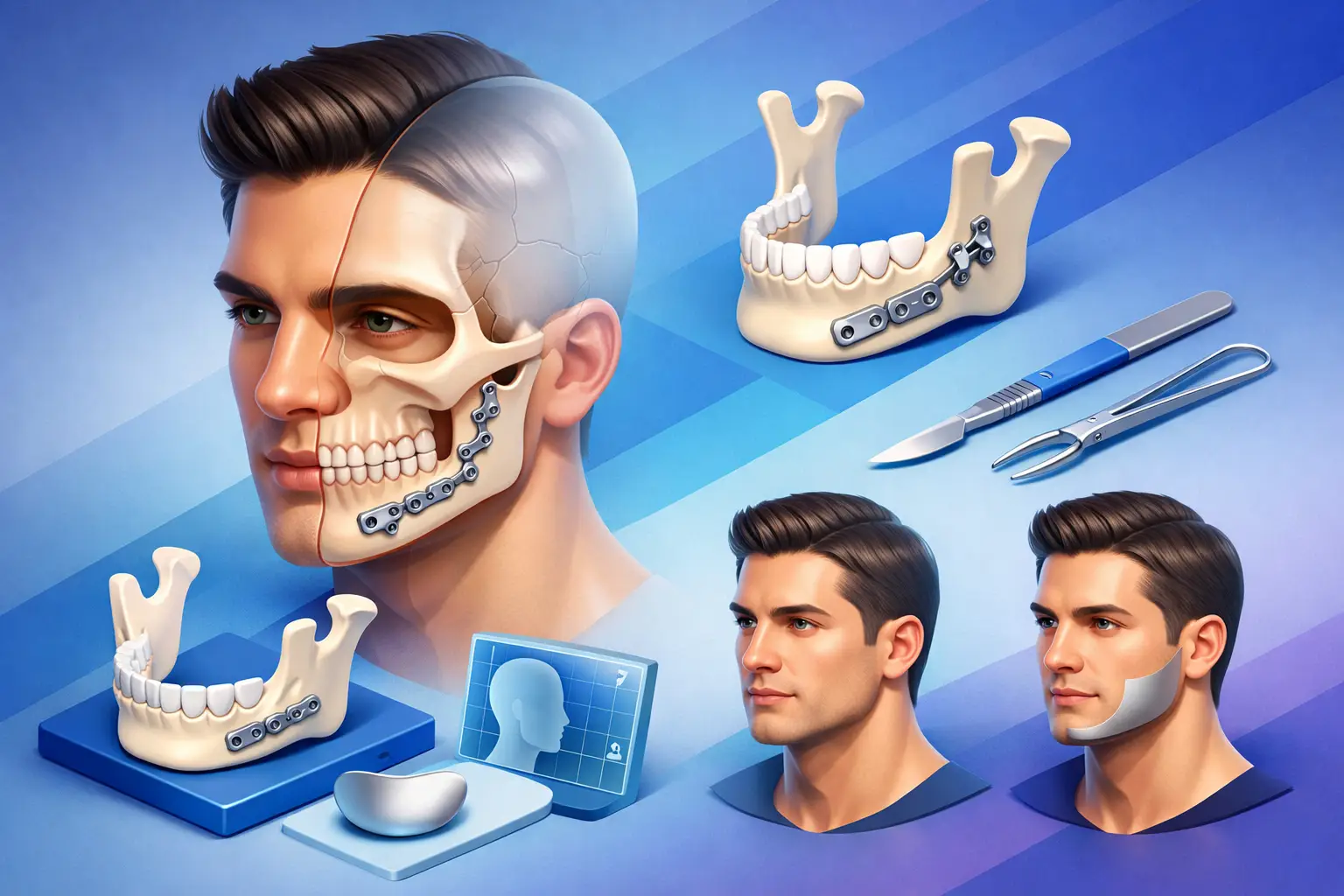
Aesthetic jaw surgery focuses on repositioning the upper jaw, lower jaw, chin, or a combination of these structures to improve facial harmony. Unlike fillers or surface-level treatments, it addresses the foundation of the face. That distinction matters. If the skeletal framework is contributing to a weak profile, chin strain, or lower facial imbalance, bone-based correction is often the most precise solution.
For men in particular, treatment planning usually pays close attention to profile definition, chin projection, jaw width and shape, occlusion, and how surgical movement will affect the neck-jaw transition. However, masculine aesthetics should never be reduced to making the jaw simply larger or more angular. The goal is proportion, not exaggeration.
When aesthetic jaw surgery men consider may be appropriate
Not every man who wants a sharper jawline needs surgery. A proper assessment starts with the reason the jaw appears weak, uneven, or poorly defined.
If the concern is mostly soft tissue fullness, skin laxity, or minor contour irregularity, jaw surgery may not be the right path. But if the issue comes from jaw position itself, surgery may be worth considering. This is especially true when cosmetic concerns are accompanied by a functional problem.
Common examples include a recessed lower jaw, an overbite or underbite, vertical maxillary excess, facial asymmetry, or a small chin that is part of a larger skeletal imbalance. Some patients also have airway narrowing or sleep-disordered breathing related to jaw position. In these cases, treatment may support not only facial aesthetics but also oral function and breathing.
That is why specialist evaluation is essential. Clinical photographs alone do not tell the full story. A surgeon will typically assess facial proportions, dental bite, speech, smile line, airway, jaw joints, and imaging before recommending any procedure.
Procedures commonly involved
The exact operation depends on the anatomy. Some men need only chin surgery, while others benefit from full orthognathic correction.
Orthognathic jaw surgery
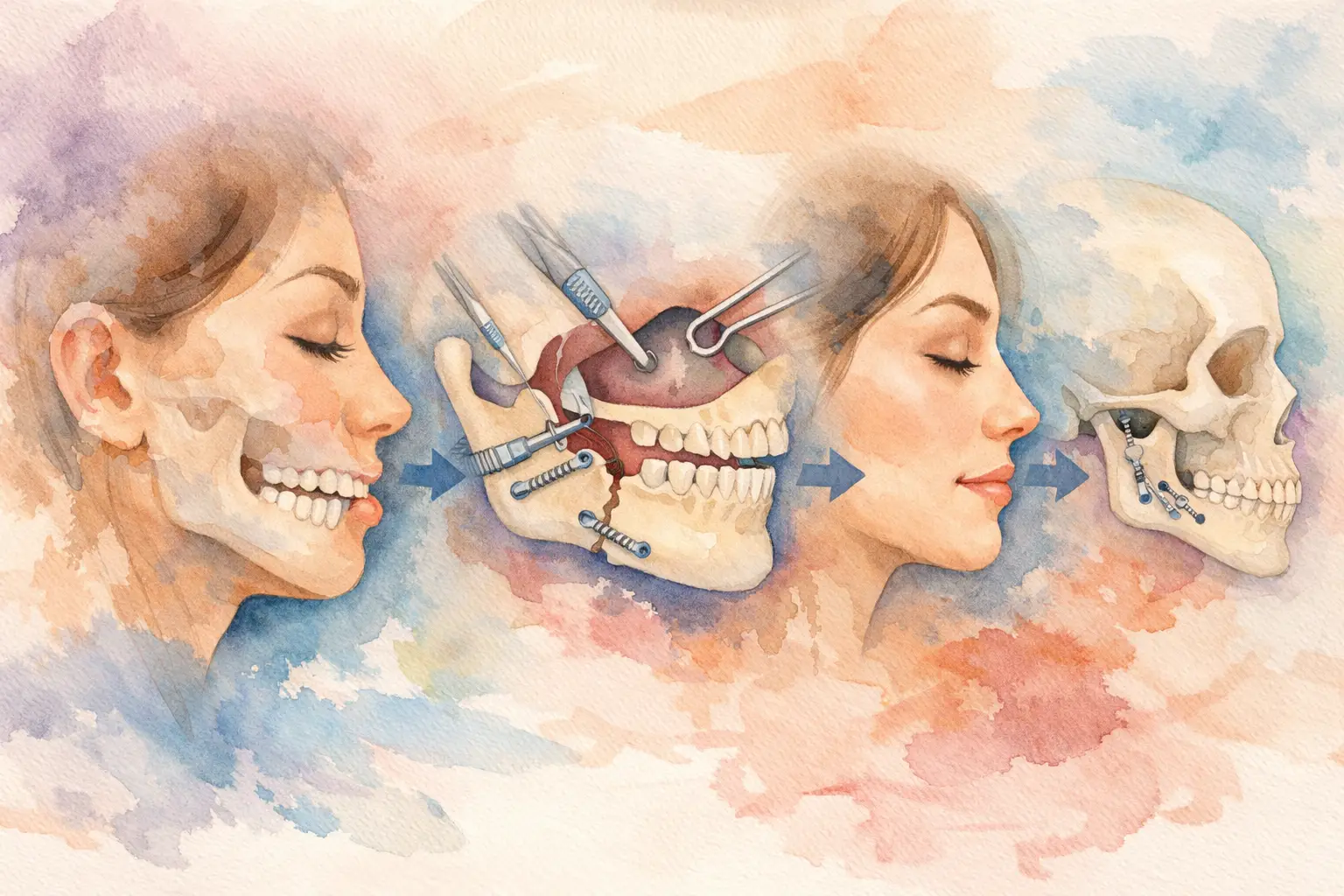
Orthognathic surgery repositions the upper jaw, lower jaw, or both. It is often recommended when the bite is significantly misaligned or when facial imbalance is driven by the overall jaw relationship rather than the chin alone.
For example, advancing the lower jaw may improve a weak profile and bite at the same time. In other patients, moving both jaws can create better facial projection, improve lip support, reduce strain around the mouth, and enlarge the airway. When the upper jaw is too prominent, too narrow, or vertically excessive, correcting it can have a major effect on facial balance.
Genioplasty
Genioplasty reshapes or repositions the chin. It can improve chin projection, height, and symmetry. For some men, this is enough to create a stronger lower facial profile. For others, genioplasty is used together with jaw surgery to refine the result.
A common mistake is assuming the chin is the only problem when the lower jaw itself is retruded. Advancing the chin alone may help appearance in selected cases, but it will not correct a significant bite discrepancy or address airway issues. This is where careful diagnosis matters.
Adjunctive procedures
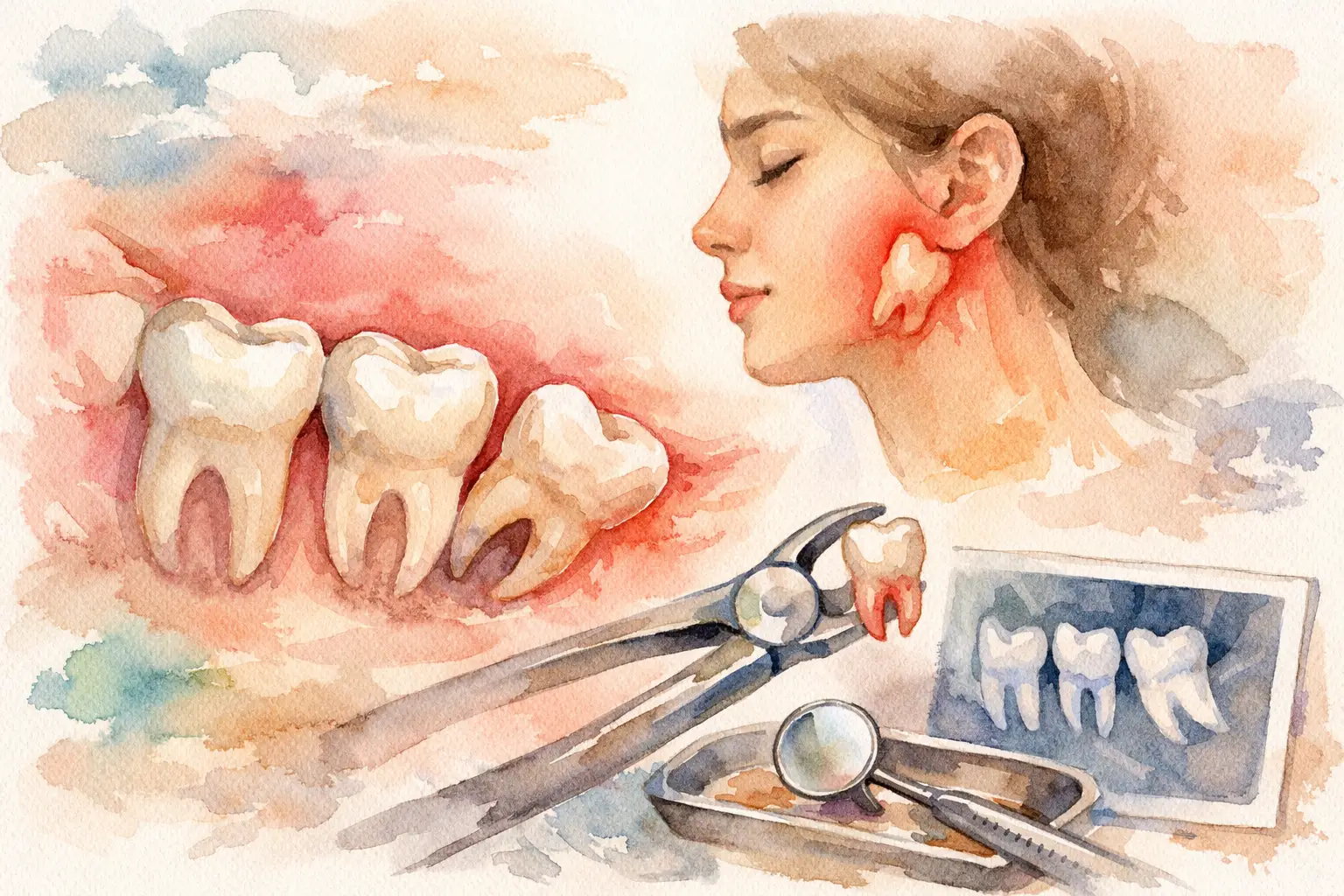
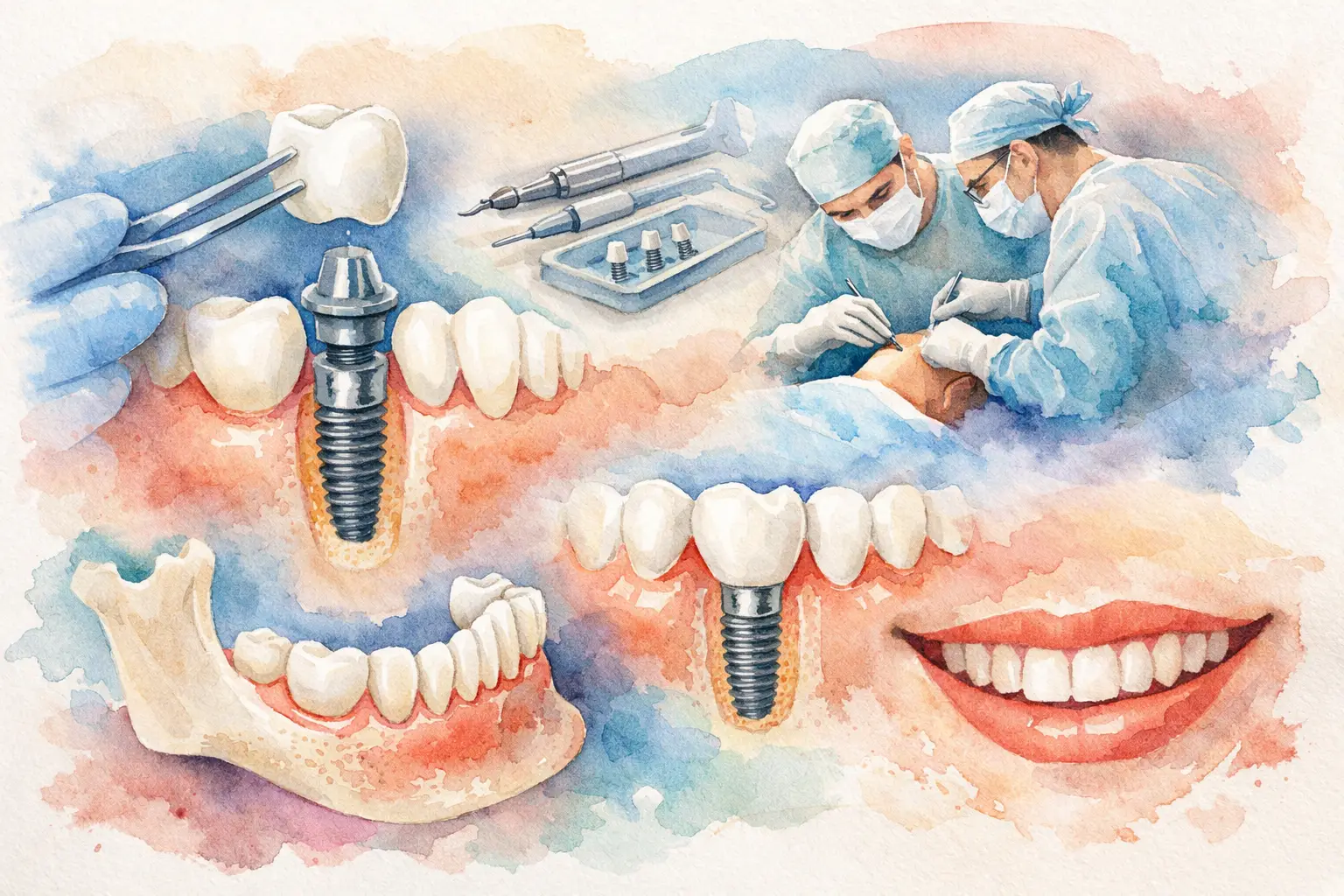
Some treatment plans include additional procedures such as wisdom tooth management, dental extractions, bone grafting, or implant-related planning, depending on the patient’s broader oral health needs. These are not cosmetic add-ons. They are part of creating a stable, safe surgical outcome when required.
What changes to expect after surgery
Aesthetic improvement after jaw surgery is usually most noticeable in profile and lower facial balance. Patients may see a more defined chin-neck relationship, better lip posture, improved symmetry, and a stronger but more natural facial structure.
That said, results are not fully predictable from a single measurement or a social media reference photo. Bone movement changes the overlying soft tissue, but soft tissue response varies. Age, skin thickness, muscle tone, and baseline anatomy all influence the final appearance.
This is also why experienced planning is so important. Surgical success is not about making dramatic changes for their own sake. It is about selecting movements that suit the whole face, preserve function, and remain stable over time.
Men often ask whether the result will look obvious or artificial. When surgery is well planned, the aim is not to make the face look operated on. It is to make the structure look more balanced, with changes that feel consistent with the patient’s own features.
The treatment journey and recovery
Jaw surgery is a process, not a quick cosmetic procedure. Many patients undergoing orthognathic treatment require orthodontic planning before surgery and sometimes refinement afterward. The full timeline depends on the complexity of the case.
The operation itself is performed with careful attention to skeletal movement, occlusion, fixation, and post-operative healing. Recovery involves swelling, temporary dietary changes, and a period of adjustment as the bite and facial tissues settle. Numbness in parts of the face can occur and may take time to improve. Fatigue is also common early on.
Most patients are concerned about how long they will look swollen. Initial swelling improves significantly in the first few weeks, but finer definition can continue to evolve for months. Returning to work or social activity varies depending on the procedure and the individual, but patients should plan for a real recovery period rather than expecting an immediate cosmetic reveal.
This is one reason patient education matters so much. A well-informed patient tends to cope better with the early healing phase because expectations are realistic from the start.
Risks, limitations, and why selection matters
Any jaw procedure involves important surgical considerations, including bleeding, infection, nerve disturbance, relapse, joint symptoms, healing issues, and the possibility that refinement may be needed in complex cases. There are also practical trade-offs. Surgery can offer structural change that nonsurgical treatments cannot, but it requires commitment, recovery, and careful follow-up.
It also may not be appropriate for every aesthetic concern. If the issue is primarily due to soft tissue volume, skin quality, or unrealistic expectations, surgery may not be the best answer. A responsible consultation should include not only what can be improved, but also what surgery cannot reliably change.
This is particularly relevant for male patients who come in with highly edited images or very specific online trends in mind. Good surgical planning does not chase a generic ideal. It respects anatomy, function, and ethnic and individual facial characteristics.
Choosing the right specialist for aesthetic jaw surgery men seek
Jaw surgery sits at the intersection of facial aesthetics, dental occlusion, and skeletal reconstruction. That is why specialist oral and maxillofacial expertise is so important. A surgeon performing this kind of work should be able to assess not just the cosmetic impact of jaw movement, but also bite stability, airway implications, jaw joint health, and long-term functional outcomes.
For patients in Singapore, a specialist practice such as Aesthetic Reconstructive Jaw Surgery offers the advantage of consultant-level evaluation with attention to both facial harmony and reconstructive principles. That combination is especially valuable when the goal is to improve appearance without compromising function.
The best consultation is usually a detailed one. Patients should expect a careful examination, imaging, discussion of alternatives, and a treatment plan tailored to their anatomy rather than a standard formula.
Aesthetic jaw surgery can be transformative for the right male patient, not because it creates a trend-driven face, but because it addresses the structure that defines how the face looks and works. If you are considering it, the most useful first step is not choosing a procedure. It is getting a precise diagnosis and a plan built around your own anatomy, goals, and long-term health.