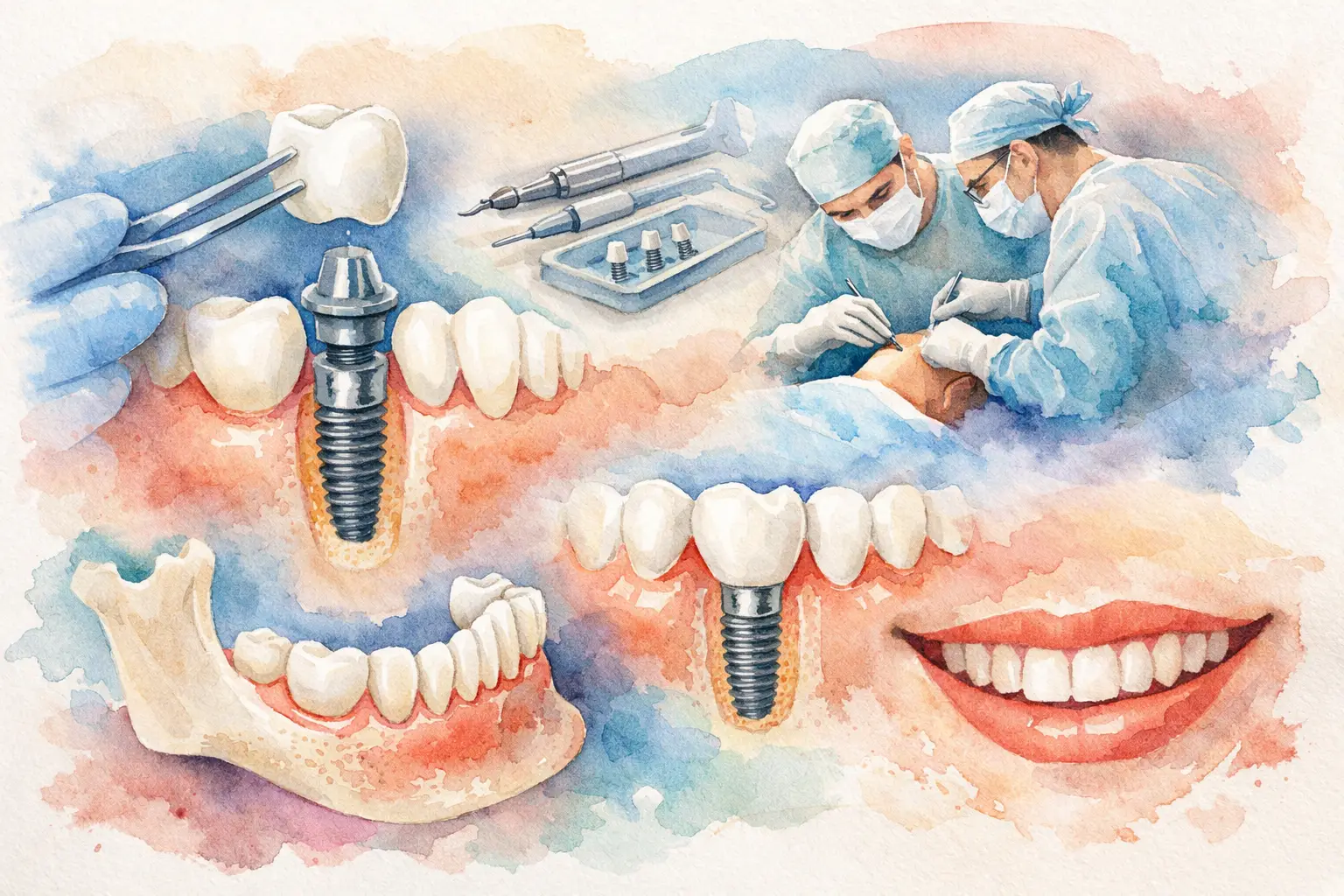
A missing tooth can change far more than a smile. It may affect chewing comfort, speech, neighboring teeth, and the way the jawbone is stimulated over time. Understanding how dental implant surgery works can make a major treatment decision feel more manageable: the process replaces a missing tooth root with a carefully planned implant, then restores it with a natural-looking tooth.
Dental implant treatment is not a one-size-fits-all procedure. The number and location of missing teeth, bone volume, gum health, bite forces, medical history, and cosmetic goals all shape the surgical plan. For straightforward cases, treatment may be relatively direct. For patients with bone loss, complex bite needs, or multiple missing teeth, a specialist-led approach helps ensure the implant is placed with both long-term function and facial aesthetics in mind.
How Dental Implant Surgery Works From Planning to Restoration
A dental implant has three main parts. The implant fixture is a small, biocompatible titanium post placed within the jawbone. An abutment connects the fixture to the visible tooth replacement. The crown, bridge, or denture is the custom-made restoration that recreates the visible portion of the tooth.
The implant does not simply sit in the bone. Over time, the surrounding bone heals and bonds with its surface through a biological process called osseointegration. This stable foundation is what allows an implant-supported tooth to withstand normal chewing forces.
The consultation and diagnostic assessment
Treatment begins with a detailed surgical consultation. The clinician assesses the mouth, gums, bite, remaining teeth, and facial structures. Medical conditions, medications, smoking or vaping habits, previous dental treatment, and expectations for the final result are also discussed.
Imaging is central to safe implant planning. Three-dimensional cone beam CT imaging can show the available bone height and width, the position of adjacent tooth roots, and important structures such as the maxillary sinus in the upper jaw or the inferior alveolar nerve in the lower jaw. This information helps the surgeon select the appropriate implant position, length, diameter, and angle.
The goal is not merely to place an implant where there is space. It is to position it so the final tooth can look balanced, support a healthy bite, and be easy to clean. In the front of the mouth, even small differences in gum contour or implant angle can affect the aesthetic outcome.
Preparing the bone and gums when needed
Some patients have enough healthy bone for implant placement without additional preparation. Others need grafting before or at the time of surgery. Bone can shrink after a tooth is lost, particularly when the tooth has been missing for some time, or after infection, trauma, or periodontal disease.
Bone grafting rebuilds or preserves the site so it can better support an implant. The technique depends on the area involved. A socket preservation graft may be placed after a tooth extraction to reduce bone loss. A ridge augmentation may be needed where the jawbone is too narrow. In the upper back jaw, a sinus lift may create adequate bone height below the sinus cavity.
Grafting can add time to treatment because the material must mature and integrate before the implant is placed. However, it may substantially improve implant stability, gum support, and the appearance of the final restoration. The right timing depends on the quality of bone, the condition of the extraction site, and the planned restoration.
Implant placement surgery
Implant surgery is usually performed under local anesthesia, with sedation options considered where appropriate for the complexity of treatment and the patient’s comfort. Once the area is numb, the surgeon makes a small opening in the gum to access the jawbone.
A precise sequence of instruments prepares the implant site. The implant fixture is then placed at the planned depth and angle. In many cases, the gum is closed over the implant while it heals. In others, a small healing cap may remain visible through the gum. The approach is selected according to implant stability, the need for grafting, gum conditions, and the restoration plan.
Patients often expect implant placement to be more difficult than it is. Discomfort is commonly manageable with prescribed or recommended medications, although swelling, tenderness, and minor bruising can occur. More extensive surgery, such as multiple implants or substantial grafting, generally involves a longer recovery period.
Healing and osseointegration
After surgery, the body begins to form bone around the implant surface. This healing period commonly lasts several months, though the exact timeline varies. Bone density, the implant location, whether grafting was needed, and how stable the implant was at placement all matter.
During healing, patients should follow dietary and oral hygiene instructions closely. A softer diet is often advised initially, and the surgical site should not be disturbed. Smoking can impair blood flow and healing, increasing the risk of complications. Maintaining regular reviews allows the surgical team to monitor tissue healing and identify concerns early.
In selected cases, an implant may receive a temporary tooth soon after placement. This is sometimes called immediate provisionalization. It can be valuable in visible areas, but it is not suitable for every patient. The implant must have sufficient primary stability, and the temporary restoration must be designed to avoid excessive bite pressure while osseointegration takes place.
Connecting the final tooth
Once the implant has integrated, the restorative phase begins. If the implant was covered by gum tissue, a short minor procedure may be needed to expose it and place a healing abutment. This helps shape the gum around the future tooth.
A dentist then takes digital or conventional impressions to design the final crown, bridge, or implant-supported denture. Color, shape, bite contact, and gum appearance are considered carefully. For a single front tooth, the process may include additional adjustments to achieve symmetry with the natural teeth.
The final restoration is attached to the implant with either a screw-retained or cement-retained design. Screw-retained restorations can often be easier to retrieve for maintenance, while the preferred option depends on the position of the implant and the restorative plan. A well-designed final tooth should feel comfortable, function predictably, and blend naturally with the smile.
Who Is a Suitable Candidate for Dental Implants?
Many adults with one or more missing teeth may be candidates for implants. Good candidates generally have healthy gums, adequate bone or the ability to undergo grafting, and a commitment to daily oral hygiene and long-term dental maintenance.
Certain factors require additional planning rather than automatically ruling out treatment. Diabetes should be well controlled. Active gum disease needs treatment before implant placement. People who grind or clench their teeth may need a protective night guard to reduce stress on the implant restoration. Patients taking medications that affect bone metabolism, or those with a history of radiation therapy to the jaws, need an individualized risk assessment.
For younger patients, implant placement is usually delayed until facial growth is complete. An implant does not move with developing jawbone in the same way a natural tooth does, so timing is especially important in adolescents.
What Can Affect Long-Term Implant Success?
Dental implants have a strong track record, but they are not maintenance-free. The bone and gum around an implant need consistent care. Plaque accumulation can lead to inflammation around the implant, known as peri-implant mucositis. If bone loss develops, the condition is called peri-implantitis and may require more involved treatment.
Daily brushing, cleaning between teeth or beneath bridges, routine professional reviews, and a well-balanced bite all help protect the result. The restoration itself may eventually need repair or replacement due to normal wear, even when the implant fixture remains stable.
Common questions about implant treatment
Is dental implant surgery painful?
The procedure is performed with anesthesia to keep patients comfortable. Some tenderness and swelling afterward are expected, but many patients find recovery manageable with appropriate medication and post-operative care.
How long does the complete process take?
It depends on the starting condition. An uncomplicated case may take several months from surgery to final crown. Extraction-site healing, bone grafting, and complex restorative planning can extend the timeline.
Can an implant replace several missing teeth?
Yes. Implants can support a single crown, a bridge replacing several teeth, or a full-arch restoration. The number of implants required depends on bone quality, the planned prosthesis, bite forces, and oral hygiene needs.
Dental implant treatment is a carefully sequenced partnership between surgical planning, healing biology, and restorative design. The most useful next step is a thorough assessment that answers the questions specific to your mouth, your health, and the result you hope to achieve.