Aesthetic jaw surgery is not simply about changing a profile or making the jawline appear sharper. For many patients, it is a carefully planned reconstructive procedure that addresses the relationship between the upper jaw, lower jaw, teeth, airway, and facial proportions. The most successful outcome is one that looks natural because it is supported by better skeletal balance and healthy function.
A prominent lower jaw, a retruded chin, a long-face appearance, facial asymmetry, or lips that do not meet comfortably may all have an underlying jaw position concern. When orthodontics alone cannot correct the skeletal foundation, jaw surgery may be considered. The decision should be based on a full clinical assessment, not a single photograph or a trend-driven idea of an “ideal” face.
What Aesthetic Jaw Surgery Can Address
The jaws form the framework for the lower and middle face. Their position affects the bite, tooth display, lip support, chin projection, facial width, and the way the face appears in profile and at rest. A discrepancy may develop during growth, follow trauma, result from congenital conditions, or become more apparent as dental compensation and wear accumulate over time.
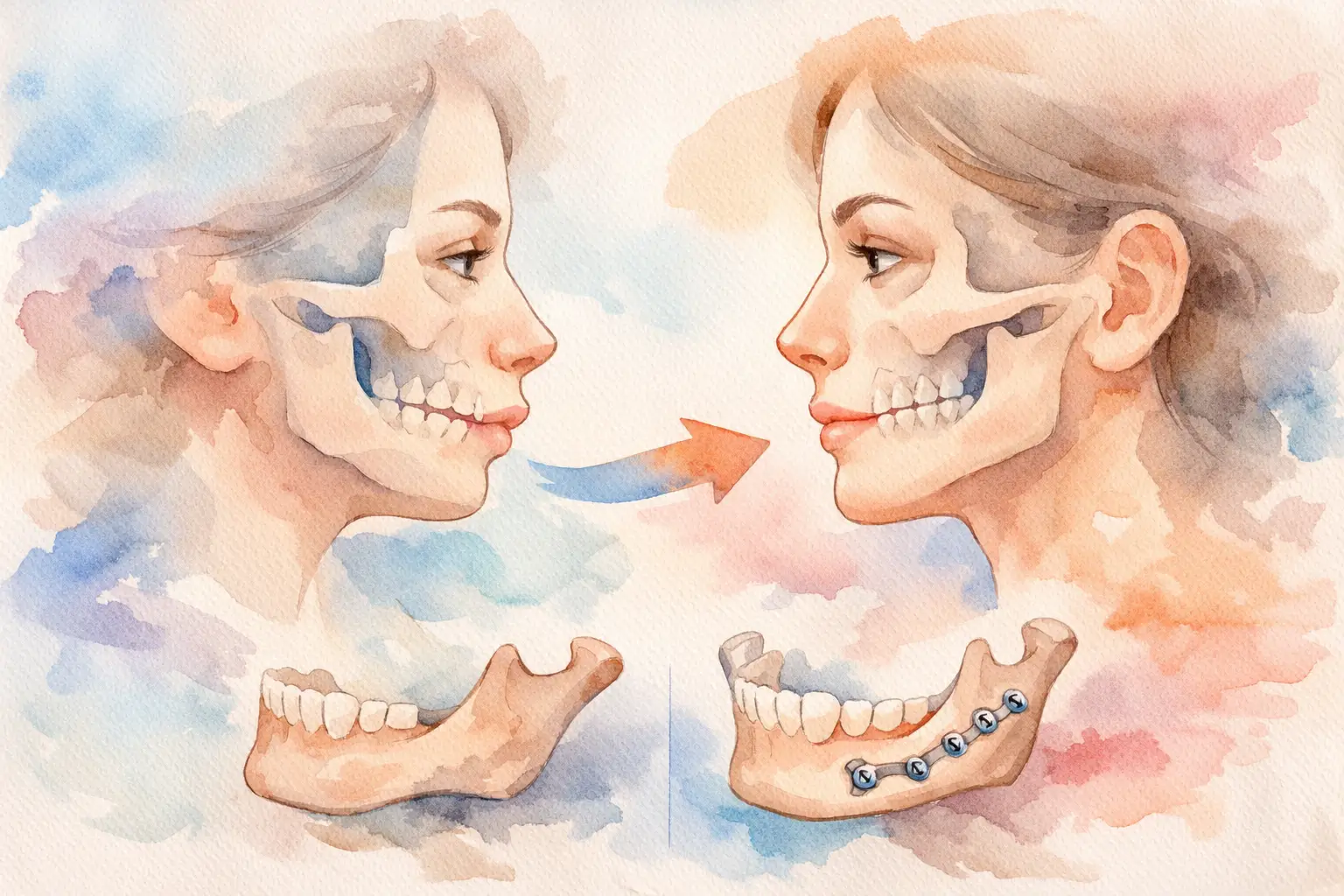
Aesthetic jaw surgery, also called orthognathic surgery when it corrects jaw alignment, may involve repositioning the upper jaw, lower jaw, or both. In selected cases, chin surgery may be performed at the same time to refine the lower facial contour. The objective is not to impose one facial type on every patient. It is to bring the facial skeleton, teeth, soft tissues, and functional needs into better harmony.
Potential concerns that warrant assessment include an underbite or overbite, chronic difficulty chewing, an open bite, marked facial asymmetry, excessive gum display, a weak or overly prominent chin, and facial imbalance that remains after orthodontic treatment. Some patients also have snoring, sleep-disordered breathing, or airway restriction related to jaw position. These concerns can overlap, but they do not always require the same treatment.
Aesthetic Goals Must Work With Function
A change that appears attractive in isolation may not be appropriate if it compromises the bite, joint comfort, breathing, or long-term dental stability. This is why the aesthetic and functional aspects of jaw surgery must be assessed together.
For example, moving a lower jaw forward may improve chin projection and support the airway in an appropriately selected patient. Moving the upper jaw can alter tooth show, lip position, and midface balance while also helping establish a stable bite. In a patient with asymmetry, correction may require careful three-dimensional adjustments rather than a simple forward or backward movement.
Soft tissue response also matters. The nose, lips, cheeks, and chin do not change in exactly the same way as the underlying bone. Age, skin thickness, muscle tone, dental position, and the extent of jaw movement can all influence the visible result. A specialist should discuss these variables honestly, including what can be anticipated and what cannot be guaranteed.
How a Specialist Plans Jaw Surgery
Good planning begins with listening. Patients should be able to explain what they notice in daily life, whether that is bite difficulty, jaw fatigue, an uneven smile, concerns about their side profile, or a combination of issues. A consultation then connects these concerns to a clinical examination and appropriate imaging.
Diagnosis Beyond the Mirror
The assessment commonly includes an evaluation of the teeth and bite, facial proportions, jaw joints, airway considerations, and the health of the gums and supporting bone. Photographs, dental models or digital scans, and three-dimensional imaging may be used to understand the anatomy accurately.
Orthodontic records are particularly important where the teeth have shifted to compensate for the underlying jaw discrepancy. A bite can sometimes look acceptable because the teeth are tilted, even when the jaws themselves are not well aligned. Correcting the skeletal issue often requires coordinated orthodontic treatment before and after surgery.
Digital Planning and Surgical Precision
Modern planning techniques allow the surgical team to simulate jaw movements in three dimensions and design guides or splints that transfer the plan to the operating room. This improves precision, but technology is a planning tool rather than a substitute for clinical judgment.
The plan must account for facial appearance, occlusion, jaw joint health, nerve pathways, airway dimensions, and the stability of the intended movement. It may also need to be adjusted if orthodontic preparation changes the tooth positions or reveals a more suitable final bite relationship.
What the Treatment Journey Often Involves
Orthognathic treatment is a process, not a one-day procedure. The timeline differs between patients, especially when orthodontic preparation is needed. Some patients begin with braces or clear aligner treatment to place the teeth in positions that will fit correctly once the jaws are moved. Others have already completed orthodontics but require further coordinated planning before surgery.
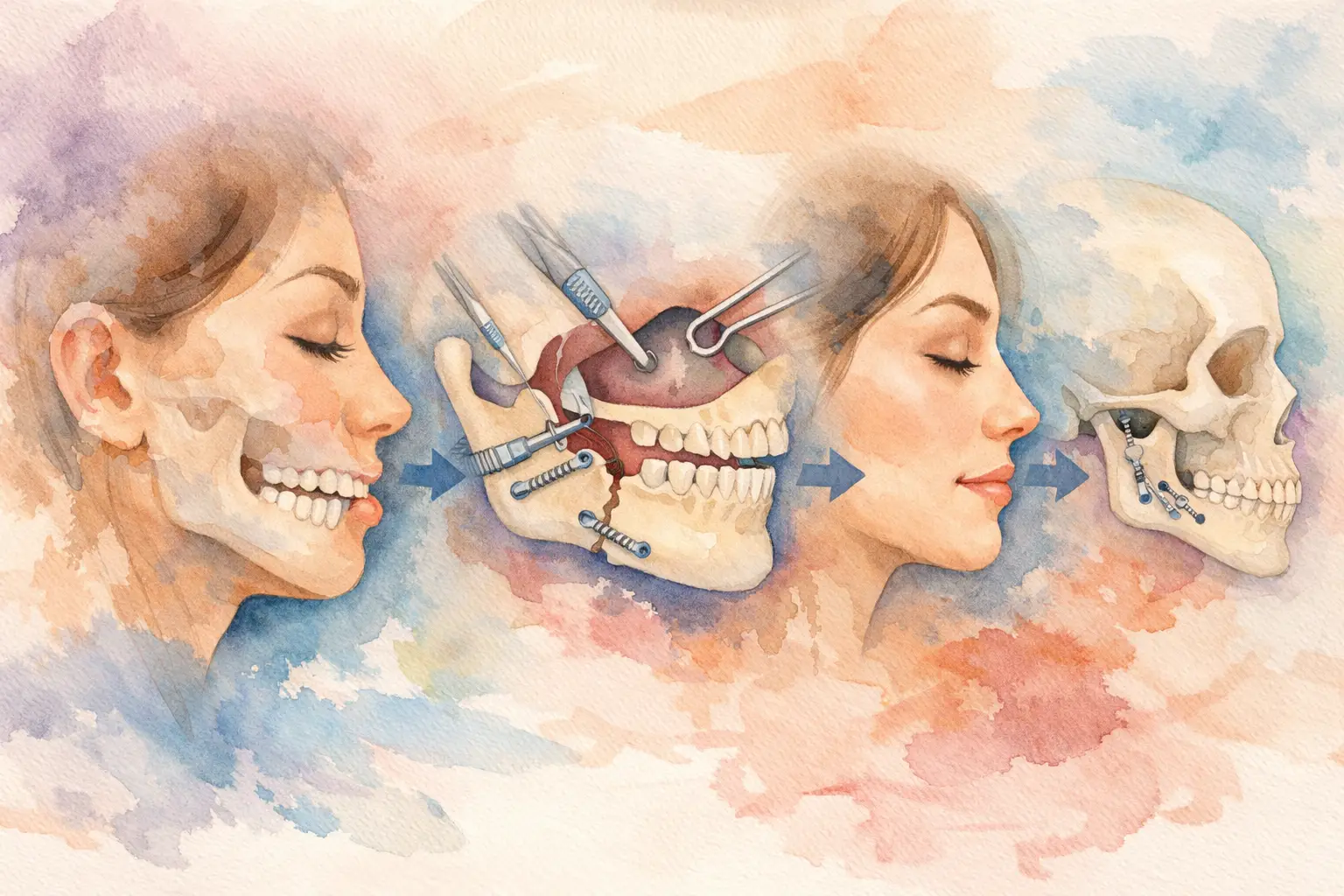
Jaw surgery is performed in a hospital setting under general anesthesia. Incisions are generally made inside the mouth, so visible facial scars are usually avoided. The surgeon repositions the jawbone according to the plan and secures it with small plates and screws designed to remain in place unless there is a clinical reason for removal.
Recovery requires patience. Swelling, temporary changes in sensation, tiredness, and a modified diet are expected parts of early healing. The first weeks focus on protecting the surgical sites, maintaining nutrition and oral hygiene, and attending review appointments. The final facial result develops gradually as swelling resolves and the soft tissues settle.
Patients should also understand the trade-offs before committing to treatment. Any major jaw procedure carries risks, including bleeding, infection, relapse, bite changes, jaw joint symptoms, sinus concerns for upper-jaw surgery, and altered sensation in the lip or chin after lower-jaw surgery. Numbness is often temporary, but in some cases sensory changes can persist. A thorough consultation should explain the risks relevant to the proposed movements and the steps taken to reduce them.
Who May Be a Candidate?
Candidates are not defined by age or appearance alone. Many adults seek treatment after years of adapting to a bite issue or becoming increasingly aware of facial imbalance. Older adolescents may be assessed once facial growth is sufficiently complete, although timing must be individualized.
The best candidates are medically suitable for surgery, have healthy gums and teeth or a clear plan to address dental disease, and understand the commitment involved. Realistic expectations are essential. Surgery can create meaningful improvements in balance and function, but it cannot create perfect symmetry or eliminate every concern related to appearance.
In some situations, a less invasive treatment may be more appropriate. Orthodontics, restorative dentistry, treatment for temporomandibular joint disorders, facial injectables, or isolated chin surgery can have a role for selected concerns. However, these options do not correct a significant skeletal jaw discrepancy. Choosing the right treatment means identifying the source of the problem rather than selecting the quickest visible change.
Questions Worth Asking at Your Consultation
A patient considering surgery should feel comfortable asking whether the concern is dental, skeletal, soft-tissue related, or mixed; whether both jaws need to be treated; how the proposed movement may affect the airway and jaw joints; and what orthodontic treatment is required. It is also reasonable to ask about the expected recovery milestones, dietary restrictions, follow-up schedule, and the surgeon’s approach to managing complications.
Bring photographs if they help explain changes you have noticed, but do not rely on filtered images or a single angle as the basis for treatment. The consultation is an opportunity to replace uncertainty with a plan grounded in anatomy, function, and your individual goals.
The right next step is a specialist evaluation that considers your face as a whole. When the jaw position, bite, airway, and facial proportions are planned together, aesthetic improvement can be meaningful, stable, and unmistakably your own.