A bite that never feels comfortable, a jaw that shifts when closing, difficulty chewing certain foods, or persistent mouth breathing can point to more than a tooth-level problem. Orthognathic surgery is a specialist procedure that repositions one or both jaws when the underlying facial bones are not aligned in a way that supports healthy function, balance, and stability.
For many patients, the decision is not solely about appearance. Jaw position affects how the teeth meet, how efficiently a person chews and speaks, the support around the lips and chin, and in selected cases, the airway during sleep. Corrective jaw surgery is therefore planned with both function and facial aesthetics in mind.
What is orthognathic surgery?
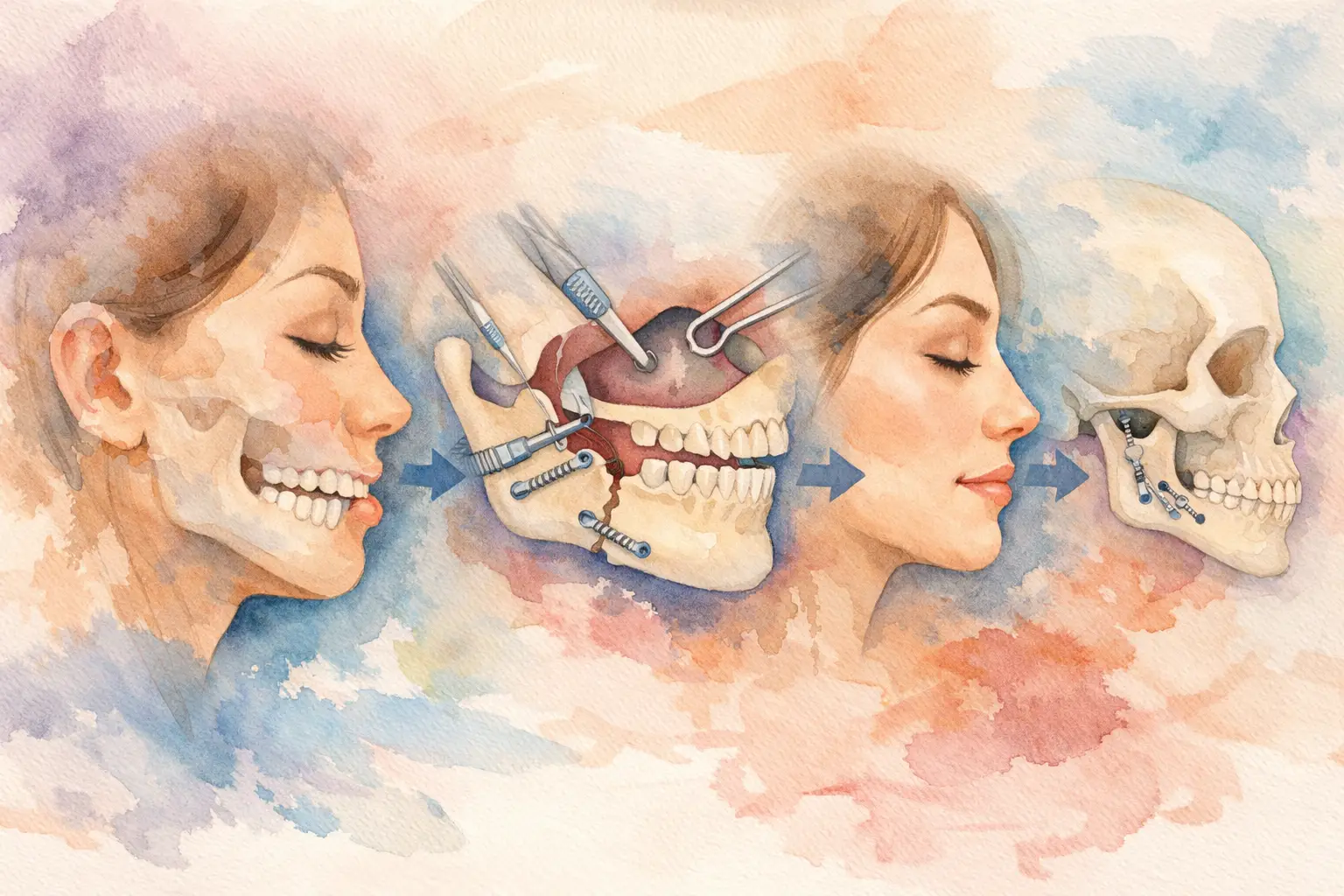
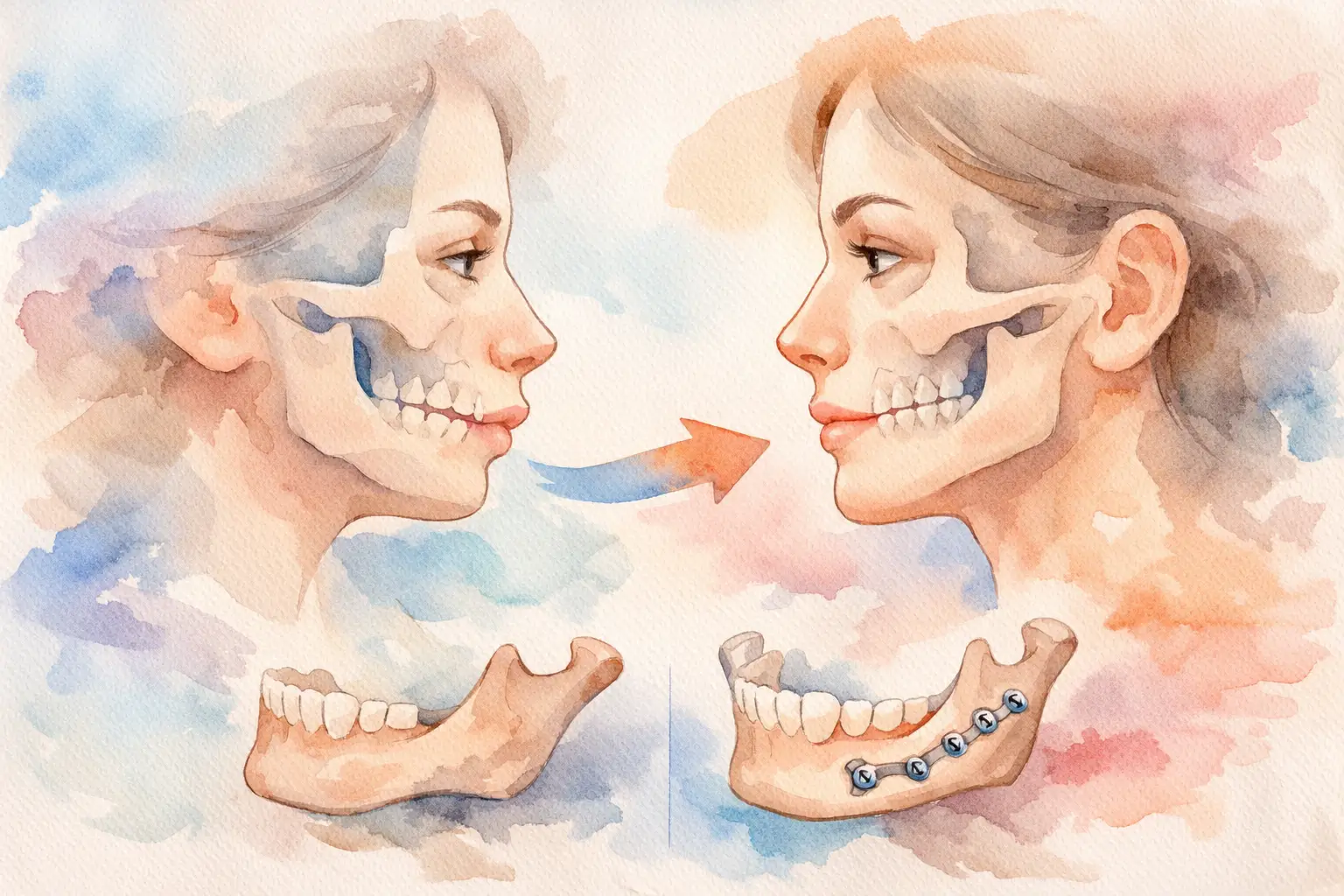
Orthognathic surgery, also called corrective jaw surgery, involves carefully moving the upper jaw, lower jaw, chin, or a combination of these structures into a more appropriate position. The surgeon performs the procedure through incisions inside the mouth, so visible facial scars are generally avoided. Once the bone segments are repositioned, they are secured with small plates and screws designed to remain in place.
The surgery is typically performed after orthodontic assessment and planning. Braces or clear aligners can straighten individual teeth, but they cannot move the upper or lower jawbone. When a significant skeletal discrepancy is present, orthodontics alone may create a compromise rather than a stable, functional bite.
The goal is individual. For one patient, it may be to correct a severe underbite. For another, it may be to address a receding lower jaw, an open bite that prevents the front teeth from meeting, or facial asymmetry associated with an uneven jaw position. A specialist evaluation determines whether surgery is appropriate and what degree of correction is needed.
When jaw surgery may be considered
A mismatch between the jaws can develop as the face grows, be related to a congenital condition, follow trauma, or persist despite previous orthodontic treatment. Patients often seek assessment because they have lived with the issue for years and have reached a point where function, comfort, or confidence is affected.
Signs that warrant a specialist discussion include difficulty biting or chewing, frequent biting of the cheeks, speech concerns related to jaw position, chronic bite instability, and a visibly prominent or recessed jaw. Some patients also experience jaw joint symptoms, although jaw misalignment is not the cause of every temporomandibular joint disorder. A careful diagnosis matters because TMJ pain may require a different treatment approach.
Sleep-disordered breathing is another area where jaw position can be relevant. In selected patients with obstructive sleep apnea, moving the jaws forward can increase airway space. However, orthognathic surgery is not a first-line answer for every patient who snores or has sleep apnea. Sleep testing, medical assessment, airway evaluation, and the severity of symptoms all shape the recommendation.
Common skeletal patterns
An upper jaw that sits too far back may contribute to a crossbite or a hollow appearance through the middle of the face. A lower jaw that sits too far forward may produce an underbite, while a lower jaw that is underdeveloped may create a pronounced overbite or reduced chin projection. In an open bite, the front teeth remain apart even when the back teeth touch.
Facial asymmetry can be more complex. The chin may deviate to one side, the bite may cant, or one jaw may have developed differently from the other. These cases benefit from detailed three-dimensional assessment because the plan must account for both the bite and the broader facial framework.
The planning process is as important as the operation
Corrective jaw surgery is not a one-appointment decision. It is a coordinated treatment journey involving clinical examination, dental records, photographs, imaging, and collaboration between the oral and maxillofacial surgeon and orthodontist.
Modern planning commonly uses three-dimensional scans and digital surgical simulation. This allows the team to study skeletal relationships, tooth position, facial proportions, and the anticipated movements of the jaws. It also supports precise planning of surgical splints or guides that help transfer the planned movements to the operating room.
At consultation, patients should expect a discussion about what surgery can reasonably improve and what it cannot. Facial appearance changes as the jaws move, but the exact soft-tissue response varies among individuals. The most responsible plan does not promise a particular look. It aims for healthy jaw relationships, a stable bite, balanced proportions, and changes that suit the patient’s own facial features.
Orthodontic preparation is often required before surgery. This can feel counterintuitive because the bite may appear to worsen temporarily as the orthodontist places the teeth in their ideal position within each jaw. This step is necessary so the teeth fit correctly after the jaws are repositioned. In some cases, surgery-first treatment may be possible, but candidacy depends on the bite, tooth alignment, and overall treatment objectives.
What happens during and after surgery
Orthognathic surgery is performed under general anesthesia in a hospital setting. Depending on the treatment plan, the surgeon may reposition the upper jaw, lower jaw, chin, or more than one area. The procedure may also be combined with other indicated reconstructive treatment.
A hospital stay is often brief, but the first days require support and close attention to hydration, nutrition, oral hygiene, and prescribed medication. Swelling is expected and is usually most noticeable during the first week. Bruising, nasal congestion after upper-jaw surgery, and temporary changes in speech or comfort can also occur.
The diet progresses gradually from liquids to soft foods as healing allows. Most patients need time away from regular work, school, and social commitments, particularly during the initial recovery period. Although early healing occurs over weeks, bone healing and orthodontic finishing continue for months. It is better to think of treatment as a carefully supervised process rather than a single surgical date.
Numbness is an especially important topic to discuss. Because nerves travel through the jawbones, temporary altered sensation in the lips, chin, cheeks, or gums can occur after surgery. Sensation often improves gradually, but the degree and speed of recovery differ from person to person. Your surgeon should explain the nerve-related considerations specific to the planned movements.
Understanding benefits, limits, and risks
A successful result can provide a more stable bite, better chewing efficiency, improved facial harmony, and relief from the daily strain of trying to make misaligned jaws function together. For appropriately selected sleep apnea patients, jaw advancement may also support meaningful airway improvement.
Like all major surgery, it involves risks. These can include bleeding, infection, swelling, delayed healing, bite changes, relapse, nerve-related sensory changes, and the possible need for further orthodontic or surgical treatment. The precise risks depend on the procedure, the extent of jaw movement, medical history, and individual anatomy.
This is why experience, careful planning, and follow-up matter. The right question is not simply whether jaw surgery is possible. It is whether the expected functional and aesthetic benefits justify the treatment commitment and surgical risks for you.
Questions to ask at your consultation
A productive consultation should leave you clearer, not pressured. Ask what is causing the bite discrepancy, whether non-surgical options would be a reasonable compromise, and what outcome is realistically expected with surgery. It is also helpful to ask about the orthodontic timeline, the hospital and recovery plan, likely dietary restrictions, and how follow-up will be coordinated.
At Aesthetic Reconstructive Jaw Surgery, treatment planning is centered on a detailed understanding of facial structure, bite function, and each patient’s priorities. That personalized approach is particularly valuable when a decision affects how you eat, breathe, speak, and feel about your facial appearance.
Corrective jaw surgery asks for patience, preparation, and a period of recovery. When it is recommended for the right reasons and planned with care, it can offer more than straighter teeth: it can create a foundation for a healthier, more comfortable bite for years to come.