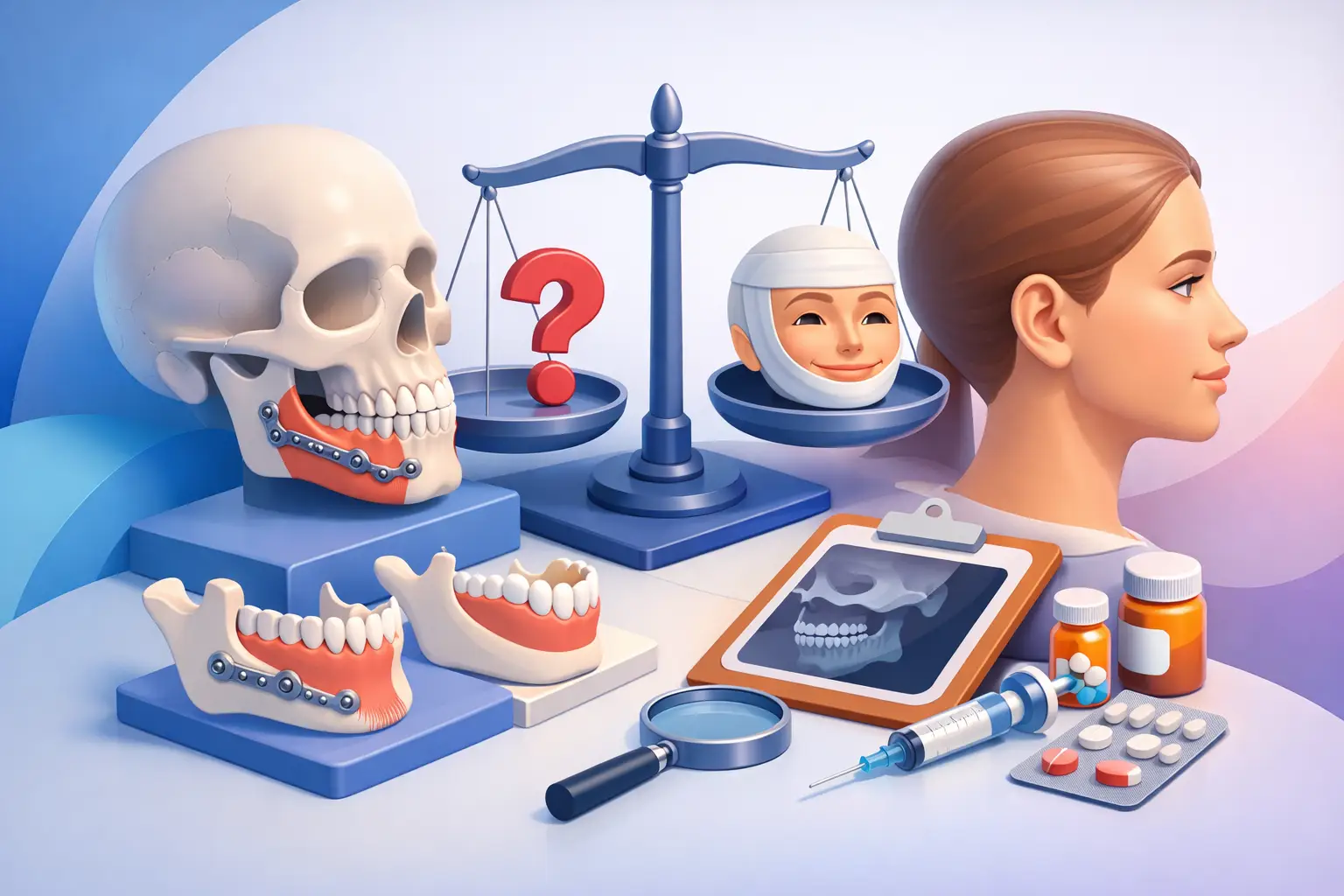
When patients ask, is jaw surgery worth it, they are usually not asking a simple yes-or-no question. They are asking whether the benefits justify a major decision that affects chewing, speech, breathing, facial appearance, recovery time, and daily life. That is the right question to ask, because corrective jaw surgery is not minor treatment. It is a carefully planned procedure with meaningful trade-offs, and the value depends on what the surgery is solving for you.
Is jaw surgery worth it for functional problems?
For many patients, the strongest reason to consider jaw surgery is function. If your jaws are misaligned, braces alone may straighten the teeth without correcting the underlying skeletal problem. That can leave you with an improved smile but a bite that still does not fit properly, or symptoms that continue over time.
Jaw surgery may be worth it when the issue is affecting how you eat, speak, breathe, or close your mouth comfortably. Patients with significant overbites, underbites, open bites, facial asymmetry, or severe crowding caused by jaw position often experience practical limitations every day. Food may be harder to chew. Speech may feel less clear. The jaw joints and muscles may be under constant strain. In some cases, poor jaw position can contribute to obstructive sleep apnea or chronic mouth breathing.
When surgery addresses those structural problems, the improvement can be substantial. A more stable bite can reduce abnormal tooth wear. Better jaw position can improve chewing efficiency and speech mechanics. In selected cases, moving the jaws forward can increase airway space and support better breathing during sleep. These are not cosmetic side benefits. They can materially affect long-term oral health and overall quality of life.
That said, function is not all-or-nothing. Some patients have a visible jaw discrepancy but only mild symptoms. Others have significant discomfort despite a problem that seems less obvious from the outside. Whether jaw surgery is worth it depends on the severity of the condition, how much it interferes with daily life, and whether non-surgical options can reasonably manage it.
The aesthetic question matters too
Patients sometimes hesitate to mention appearance because they worry it sounds superficial. It is not. The position of the jaws has a major influence on facial balance, profile, lip support, chin projection, and lower facial proportions. If the upper jaw is too far back, too long, or too narrow, or if the lower jaw sits too far forward or backward, the effect is often visible as well as functional.
For some patients, aesthetic change is one of the most meaningful outcomes of orthognathic surgery. A balanced jaw relationship can make the face look more harmonious and proportionate. It can soften a strained lip posture, improve chin-neck definition, or correct asymmetry that has been a source of self-consciousness for years.
This is one reason the answer to is jaw surgery worth it can be deeply personal. Two patients with a similar bite problem may value the outcome differently. One may be mainly focused on chewing and stability. Another may feel that facial balance and confidence are just as important. In specialist jaw surgery, both function and appearance should be evaluated together, because the best treatment planning respects both.
What makes jaw surgery feel worth it to patients
Patients who feel positive about their decision usually share one thing in common: the surgery solved a problem that mattered enough to justify the process. That problem may have been physical, emotional, or both.
When treatment is appropriate and properly planned, patients often describe benefits that continue long after recovery. Their bite feels more natural. Their face looks more balanced. Breathing may improve. They stop compensating when they chew or speak. They no longer feel that their jaws are working against them.
The long-term nature of these changes is important. Jaw surgery is not like a short-term cosmetic procedure. It is intended to reposition the facial bones in a stable, meaningful way. If the treatment addresses a true skeletal discrepancy, the result can offer lasting improvement rather than repeated temporary fixes.
This does not mean every patient finds the journey easy. Recovery takes patience. Swelling, dietary restriction, temporary numbness, and time away from routine life are real parts of the process. Even when the final result is excellent, there is still a period when treatment feels demanding. That is why clear preparation matters.
When jaw surgery may not be worth it
Jaw surgery is not automatically the right answer just because a jaw discrepancy exists. There are situations where the burden of treatment may outweigh the expected benefit.
If the problem is mild and can be managed predictably with orthodontics alone, surgery may offer only marginal additional gain. If a patient is primarily seeking a subtle aesthetic refinement without a significant functional issue, a major skeletal procedure may be more than is necessary. Some patients also have medical, dental, or personal factors that make timing difficult, such as untreated gum disease, poor oral hygiene, uncontrolled health conditions, or an inability to commit to the orthodontic and recovery phases.
Expectations also matter. Jaw surgery can create substantial improvement, but it does not create perfection. Recovery is gradual, and final refinement takes time. Patients who approach surgery expecting an instant transformation or a completely effortless recovery are more likely to struggle, even if the clinical outcome is strong.
In those cases, a thoughtful consultation is valuable not because it pushes surgery forward, but because it may show that surgery is not the best path right now.
Risks, recovery, and the real trade-offs
A balanced answer to is jaw surgery worth it has to include the downsides. Corrective jaw surgery is a major operation. It requires detailed imaging, surgical planning, coordination with orthodontic treatment in many cases, anesthesia, and a structured recovery period.
Common short-term effects include swelling, bruising, discomfort, fatigue, and a temporary modified diet. Most patients also need time away from school, work, or social commitments. Numbness in the lips, cheeks, or chin can occur and may take time to improve. As with any surgery, there are risks related to infection, bleeding, healing, or relapse, although careful case selection and specialist management help reduce these risks.
The timeline can also surprise patients. The operation itself is only one phase. Before surgery, there is often orthodontic preparation. After surgery, healing continues for months, even when day-to-day function improves much sooner. So the value of treatment should be judged against the full process, not just the operating room.
That may sound daunting, but it is also why specialist planning matters. When patients understand the roadmap, know what recovery will involve, and see how each step supports the final outcome, the process feels more manageable and more purposeful.
How to decide if jaw surgery is worth it for you
The most useful question is not simply, is jaw surgery worth it. It is, what problem is this surgery meant to solve, and how much would solving it change my life?
If you have ongoing difficulty with your bite, breathing, chewing, facial imbalance, or jaw-related strain, a specialist evaluation can clarify whether the cause is dental, skeletal, or both. That distinction matters because the right treatment depends on the source of the problem. Teeth can be moved orthodontically. Skeletal discrepancies often require surgical correction if the goal is true functional and structural improvement.
A good consultation should explain your diagnosis in clear terms, outline realistic benefits, discuss limitations, and walk through recovery honestly. It should also show how facial aesthetics and function are being considered together rather than treated as separate issues. In a specialist practice such as Aesthetic Reconstructive Jaw Surgery, that planning process is central to helping patients make informed decisions with confidence.
For the right patient, jaw surgery can be worth it because it treats more than appearance. It can improve the mechanics of daily life, support long-term oral health, and bring the face into better structural balance. For others, the better choice may be to monitor, use non-surgical treatment, or defer surgery until the timing and goals are clearer.
The most reassuring answer is often the most honest one: jaw surgery is worth it when the benefit is meaningful, the diagnosis is clear, and the treatment plan fits the person, not just the X-ray. If you are considering it, the next step is not to convince yourself one way or the other. It is to get a careful assessment that helps the decision become clearer.