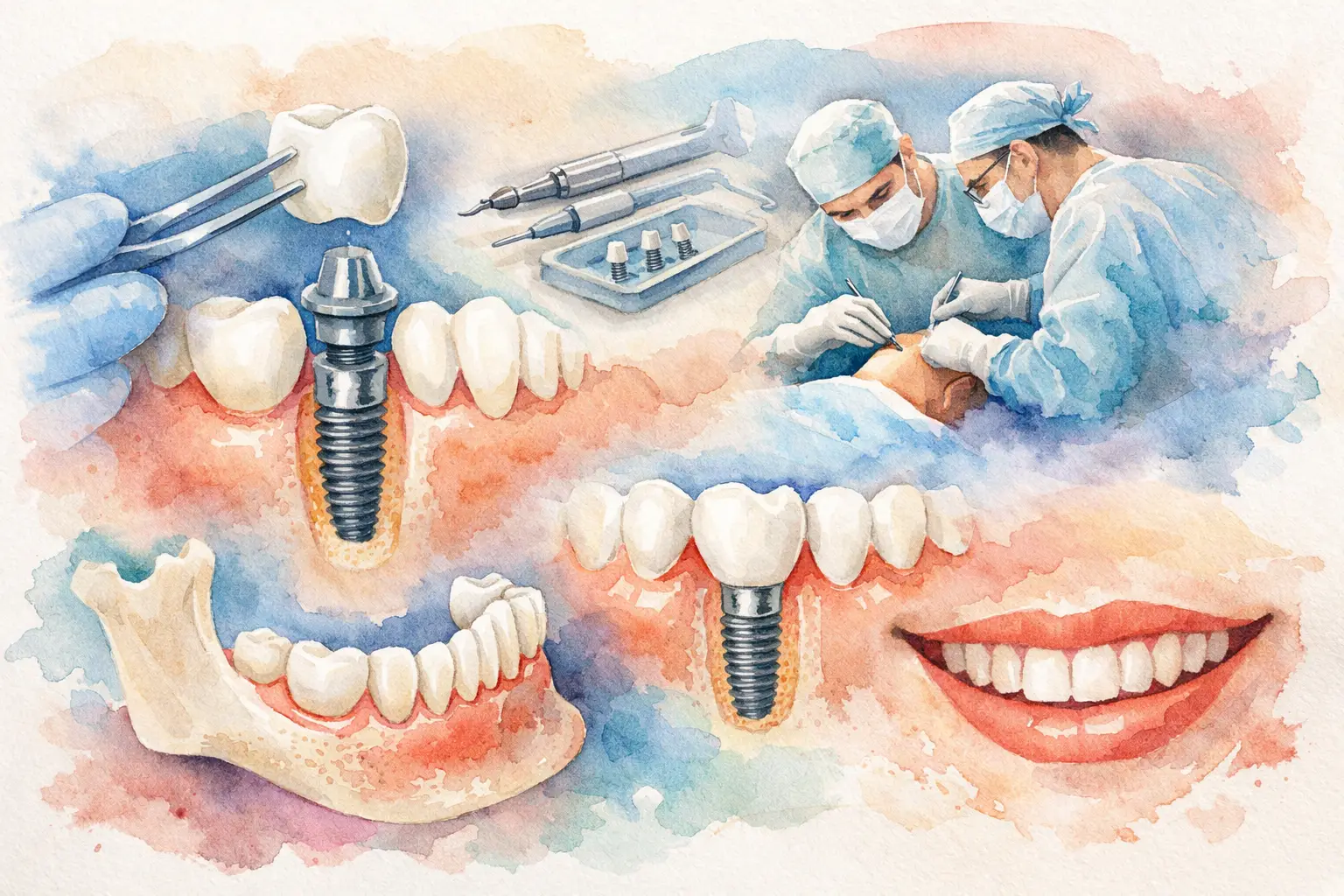
Losing a tooth is not always the end of the problem. In many cases, the bone that once supported that tooth begins to shrink, sometimes quietly and significantly. When that happens, a dental implant bone graft procedure may be recommended before or during implant treatment to rebuild the foundation needed for a stable, long-lasting result.
For many patients, the phrase sounds more intimidating than the procedure itself. Bone grafting is not an unusual extra step. It is a well-established part of implant surgery when the jawbone is too thin, too soft, or too low in volume to support an implant safely. The goal is straightforward – to create enough healthy bone for function, stability, and a natural-looking restorative outcome.
What is a dental implant bone graft procedure?
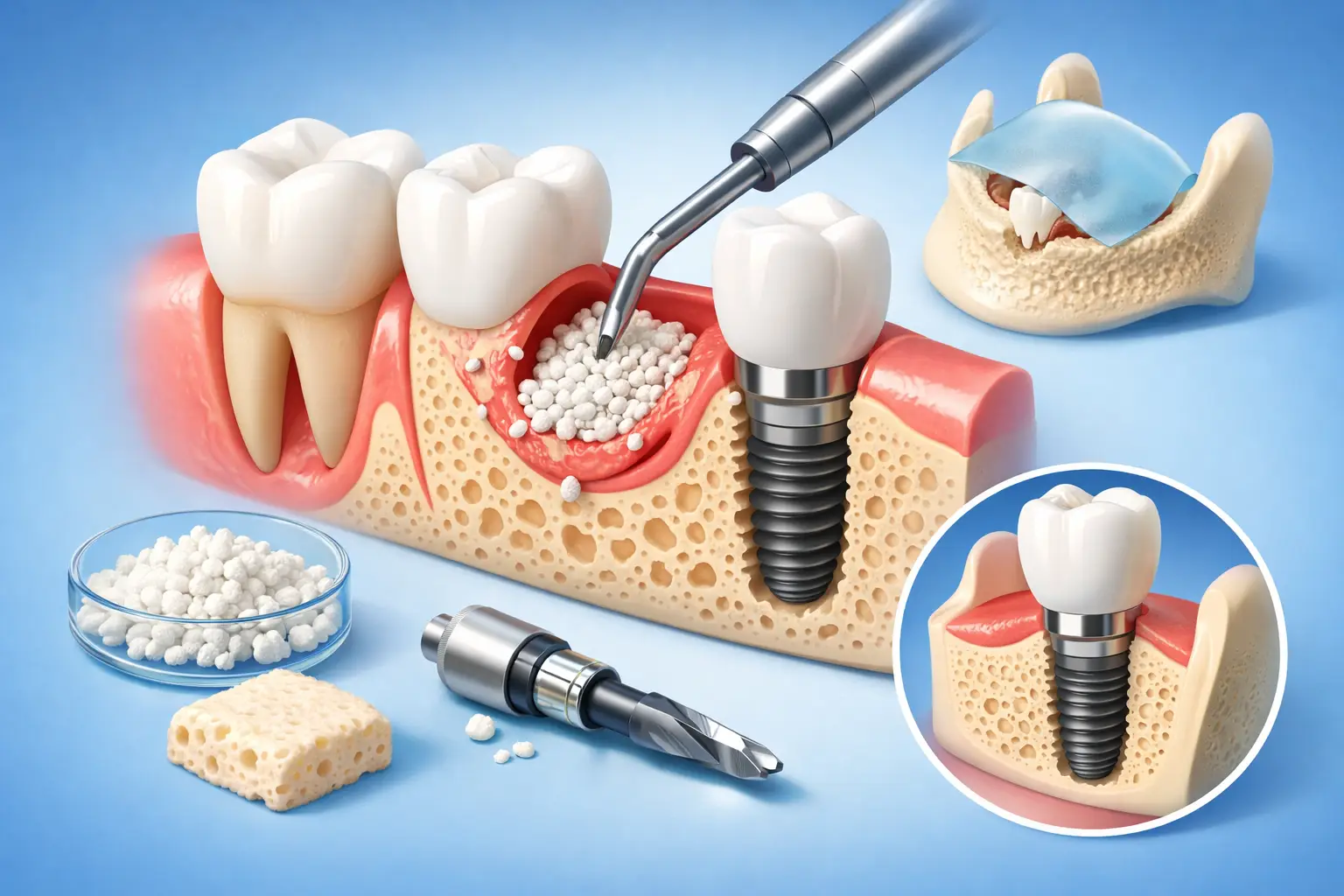
A dental implant bone graft procedure is a surgical treatment used to increase bone volume in the jaw where an implant is planned or where bone has been lost. This may involve placing grafting material into an area of deficiency so the body can regenerate or build new bone over time.
The need for grafting usually develops after tooth loss, gum disease, infection, trauma, or long-term denture wear. In some cases, bone loss is modest and can be managed with a minor graft at the time of implant placement. In others, the deficiency is more advanced and requires a staged approach, with grafting first and implant placement later.
Not every patient needs the same type of graft. The exact method depends on how much bone is missing, where the defect is located, the quality of the surrounding tissue, and the final restorative plan.
Why bone grafting may be needed before implants
Dental implants are placed into the jawbone, so adequate bone is essential. If the site lacks sufficient height or width, the implant may not achieve the initial stability needed for successful healing. Even if placement is technically possible in a limited amount of bone, the long-term result may be compromised.
This is why careful surgical planning matters. A specialist will assess not only whether an implant can be inserted, but whether it can be placed in the correct position for bite function, gum support, and esthetics. A compromised implant position may create difficulties with chewing, oral hygiene, or the appearance of the final tooth.
Bone grafting can help address several common problems. It may restore width in a narrow ridge, increase height in areas near the sinus, repair a socket after extraction, or rebuild bone lost through infection or trauma. In more complex cases, it may also support treatment where both function and facial structure are important.
When a dental implant bone graft procedure is recommended
A recommendation for grafting usually follows clinical examination and imaging. Three-dimensional scans are especially useful because they show the amount and shape of available bone, as well as nearby structures such as the sinus or nerves.
A graft may be advised if a tooth has been missing for a long time, if there was significant bone loss around a failing tooth, or if the jaw anatomy naturally provides limited volume in the implant area. Upper back teeth are a common example, because the maxillary sinus can reduce the amount of bone available. Lower molar sites can also present limitations if the nerve lies close to the intended implant position.
Sometimes patients are surprised to hear they need a graft after having an extraction elsewhere. That is because bone shrinkage can begin soon after a tooth is removed. In selected cases, grafting the socket at the time of extraction can help preserve the ridge and simplify later implant treatment.
Types of bone grafting used in implant treatment
There is no single grafting method that suits every case. Small defects may be managed with localized grafting material and a protective membrane. This technique is often used when minor contour enhancement is needed around an implant site.
If a tooth has just been removed, ridge preservation may be performed to reduce post-extraction shrinkage. This does not stop all bone remodeling, but it can help maintain a better foundation for future implant placement.
For the upper back jaw, a sinus graft may be recommended if the sinus floor leaves inadequate bone height. In this procedure, the sinus membrane is carefully elevated and grafting material is placed beneath it to create additional vertical bone.
In larger defects, block grafting or more advanced reconstructive techniques may be necessary. These cases require careful surgical judgment, because the defect shape, soft tissue condition, and healing capacity all influence the choice of method.
The grafting material itself may come from your own bone, a donor source, animal-derived material, or a synthetic substitute. Often, the choice is based on the clinical situation rather than a single “best” option. Your surgeon will consider healing behavior, defect size, and the level of structural support required.
What happens during the procedure
The procedure is typically performed under local anesthesia, sometimes with sedation depending on the complexity of surgery and patient preference. The area is exposed carefully, and the graft material is placed where bone needs to be regenerated or augmented. In many cases, a membrane is used to protect the graft and guide healing.
If the site has enough native bone for implant stability, the implant may be placed at the same appointment. This is called simultaneous grafting and implant placement. If the deficiency is more significant, grafting is done first and the implant is placed after healing. Neither approach is automatically better. The decision depends on anatomy, stability, and predictability.
The surgical site is then closed with sutures and post-operative instructions are reviewed in detail. Most patients return home the same day.
Recovery and healing timeline
Recovery after a dental implant bone graft procedure varies with the extent of surgery. Mild swelling, tenderness, and temporary bruising are common in the first few days. These are expected surgical responses and usually improve steadily.
Soft food is often advised initially, and patients should avoid pressure or trauma to the treated area. Good oral hygiene remains important, but cleaning instructions may be modified to protect the graft during early healing.
Bone regeneration takes longer than surface healing. While the gums may appear improved within a few weeks, the graft itself usually needs several months to mature before it can reliably support an implant if one was not placed at the same time. Smaller grafts may heal faster, while larger reconstructions can require a longer waiting period.
This part of treatment can test a patient’s patience. However, waiting for proper healing is often what protects the long-term success of the implant.
Risks, limitations, and what patients should understand
Bone grafting is predictable when planned appropriately, but no surgical procedure is entirely without risk. Infection, delayed healing, graft loss, membrane exposure, sinus complications in upper jaw cases, and incomplete bone regeneration can occur. Smoking, uncontrolled diabetes, poor oral hygiene, and active gum disease may increase these risks.
It is also important to understand that grafting improves the foundation, but it does not create identical bone in every patient or guarantee that every site will respond the same way. Some patients need more than one stage of treatment, especially in complex or long-standing defects.
This is where specialist evaluation is valuable. A thorough assessment helps define not only what is surgically possible, but what is most stable and appropriate for the final restoration.
Preparing for a stronger implant outcome
Patients often ask whether grafting is a setback. In reality, it is often the step that makes proper implant treatment possible. Rebuilding lost bone can allow better implant positioning, improved gum support, and a more stable bite relationship over time.
If you have been told you need a graft, the key question is not simply whether bone can be added. It is whether the treatment plan is being designed around long-term function, healthy surrounding tissues, and a result that will hold up well in daily life.
At a specialist oral and maxillofacial surgery practice such as Aesthetic Reconstructive Jaw Surgery, that planning process is centered on careful diagnosis, precise technique, and clear patient guidance at every stage. For patients considering implant treatment, understanding the role of bone grafting can turn an intimidating recommendation into a logical and reassuring part of a well-executed plan.
A good implant result starts below the surface, and the quality of that foundation often determines everything that follows.